Category Archives: chile

Postscript: Reflections on 40 days in Chile

So my trip’s over; what did I learn? Well before I get to that, a little about my trip home:

Coming home

The journey back from Santiago was tiring, of course, but quite pleasant. We flew in EC-LEU, a much more modern A346 than the one we went out on. It had in-seat touchscreen entertainment, and even WiFi and a GSM picocell (though I didn’t investigate the cost of these). On the other hand, I didn’t get much sleep. Iberia had a slightly odd approach to the in-flight service, too: in addition to the basic evening meal (pasta) shortly after take off at around 4pm CLST, and a light breakfast just before landing at 06:30 CET, there was a half-salami sandwich at midnight CET. My body-clock really wasn’t sure what meal that was supposed to be! We were also about an hour late taking off from Santiago as the luggage belt had apparently broken and so we had to wait for two containers of luggage to be delivered to us. At least the plane did wait, though, and we were still away before the strike started. We arrived more or less on time too, thanks to a decent tailwind over the Atlantic, but that did also make the flight a little bumpy, particularly as we crossed the equatorial zone.

The flight back from Madrid in G-BZHC was rather less comfortable. I didn’t know BA still had some really ancient B763s in their fleet but apparently so. It really was quite old. We were also twenty minutes late leaving thanks to an ATC strike in France that had slightly reduced capacity over their airspace, but again, a decent tailwind (which has also been keeping Western Europe very mild for December) meant that we landed about on schedule. I was lucky too: not only did my bag survive, but it was one of the first off too.

There was just one amusing thing to describe from the flight: my Bencher morse code key (which was in my hand-luggage as it’s a little fragile) looks similar to a battery on an X-Ray machine and so throughout my travels it had raised eyebrows in security, but no problems. In Santiago, the same was true again, but this time the X-Ray machine worker was so interested when I showed it to him that he took his eyes off the screen and let the conveyor belt run everyone else’s bags through unchecked, while he and I had a discussion about how it worked!

What I learnt

And so now, here’s the what I learnt about life in Chile. Hopefully this will be useful to anyone else going there:

Money

Credit cards, as I had read before I went, are very widely accepted, and there isn’t any of the ‘major credit cards’ distinction we have in the UK. Anywhere that will take Visa/Mastercard will also take AmEx and Diner’s Club. You are often asked whether it’s a Credit Card (if the merchant doesn’t ask and presses the button for the national RedCompra debit card system, the transaction will be refused) and sometimes you’ll be asked which currency you want to pay in (see below). European chips aren’t generally recognised by the machines and need swiping. Contactless payment, which I only found in one supermarket, doesn’t work with a UK card. When you use a credit card, you need to give your passport number in addition to signing. I’d suggest memorising the number to save time at checkouts as getting passports out can be frustrating. You’re sometimes also asked whether you want the transaction to be sin cuota or con cuota. It seems that Chilean credit card terminals can separate transactions into multiple payments over time, presumably so you can take advantage of interest-free installments offered by the merchant, rather than by the card company. Anyway, I always answered sin cuota, and everything worked fine.

ATMs are also plentiful. I found that Banco Estado machines didn’t work with Visa Debit cards, but both Santander and BBVA did. Watch out though, as Santander add a 5000 CLP (£5) fee to the transaction in addition to any fees charged by Visa / your bank. BBVA don’t charge this fee. When you use a cash machine, there’s an odd question you have to answer, about whether the card is for a Credit Card / Savings Account / Checking Account / Current Account. I found that Checking Account worked for UK current accounts. Machines that had the Current Account option didn’t always approve the transaction.

The one mistake I made was taking US Dollar-denominated AmEx traveller’s cheques (for the additional security these provide). I only found a couple places in Santiago that would exchange these; most places won’t touch them, and where they are exchanged the rates are very disadvantageous. (E.g. 600 CLP = $1 for buying traveller’s cheques, when the same place would buy dollar cash for 706 CLP. I even found one place offering 500 CLP = $1).

If you’re booking hotels, you’ll almost certainly have come across the strange VAT rule: to encourage tourism, hotel stays for foreign tourists are exempt the 19% VAT charge. In theory, to show you’re a foreign tourist, you have to pay in US Dollars (hence why you may be asked what currency to pay in), they have to take a copy of your passport and immigration receipt, and you have to declare that you are staying less than sixty days. That’s the theory, but not all places adhere to these rules in practice. Some places will allow you to pay in Peso cash but will make out the invoice in Dollars, for example. Only one hotel I stayed at didn’t know how to deal with a foreigner under this VAT rule. If that happens, you need to ask for a Factura de Exportación (Export Invoice), which will prompt them to handle it correctly, even if you think that the it would be hard to export a hotel stay! Incidentally, I found that campsites worked on a Peso cash-only (no cards) basis, with no need to show passports. I didn’t get receipts from the campsites either. Hostels (as opposed to hotels) were also generally cash-only but did take passport details and issue Export Invoices.

Driving

This section is, like the rest of this post, based on my experience only. I’m not an expert on Chilean driving law, so you should check what I’ve written here.

I didn’t drive anywhere particularly busy, and certainly not in Santiago, but driving was quite easy. Ruta 5, the Panamerican Highway, is very good quality and is mainly dual carriageway (it goes to single carriageway on Chiloé). Ruta 5 has a general speed-limit of 120 kph, which is generally followed by most drivers.

The main thing to watch out for on Ruta 5 is that, like all other roads in the country, it has bus-stops with pedestrian crossings over it: not what you’d expect on a fast motorway. These are signposted as 30kph zones (see below on speed limits) but everyone ignores that unless a bus is around, as to do 30kph on such a fast road would be dangerous.

Other major roads, where the speed-limit is 100 kph, are of variable quality. Some are good; others may be little more than unsurfaced dirt tracks. Maps do show which roads are surfaced and which aren’t but I found they were often out-of-date.

I soon learnt that the main thing is to watch the line of the driver in front of you and to follow their tyres. Very deep potholes are numerous, even on major roads. Additionally, in roadwork areas, it seems common for the roadworkers just to remove the road surface without warning, or with just a Peligro (‘Danger’) sign. One minute you’re on nice surfaced road and then there may be a gravel/stone surface, which may only be a metre long, or may go on for miles. Bridges are another thing to watch for: in the UK we take it for granted that the road surface will match the bridge. Not so in Chile: if the road approaching the bridge has adverse camber and the bridge is laid completely flat, there will be a massive ledge on one side of the road where you join the bridge. Again, follow the car in front. If it suddenly switches to driving on the left on an approach to a bridge, it’s probably to avoid this!

Built-up areas are more difficult. The speed-limit is 60kph but again this is generally ignored. The 60kph zone may not be explicitly signed either: a Zona Urbana sign at the start of the built-up area also counts as a 60kph sign. Most towns are designed on the US block system with one-way streets. In places, my Tom-Tom satnav had the one-way system completely the wrong way around, which didn’t help. In common with the American layout, crossings are generally four-way stops but there may be a prioritisation implied if some of the approaches have Pare (Stop) signs, and others don’t. An interesting Chilean feature of four-way stops is their habit of putting pedestrian crossings, across them. This means that if you follow the paintwork on the road, and stop at the stop line before the crossing, you can’t see the other roads at the junction. You have to stop on the crossing to have visibility. And then, when you turn, expect there to be a pedestrian crossing on the road you are turning into. You may need to stop in the middle of the junction until they have crossed.

Some towns have a lot of traffic lights. Unlike America, where there are traffic lights, turning right on a red light isn’t generally legal unless explicitly signed. If there are pedestrian lights at four-way stops, it will usually be green for pedestrians at the same time as it is green for cars on the road that’s parallel to the crossing, so again, if you’re turning left or right, you need to expect a pedestrian to be crossing the road you’re turning into, even if the lights are green. I only found a couple roundabouts in the whole country.

In towns, lanes were a particular pain. Often they just aren’t painted, or where there are two lanes painted, taxi and bus drivers will try to squeeze past, making a third lane! It wasn’t uncommon for lanes to change within a few hundred metres either: for example a two-lane road where the left-hand lane is for left-turns only approaching one junction and then the right lane is for right-turns only approaching the next junction, meaning cars going straight on have to do a slalom.

Speed limits, as I’ve said, are often ignored, except that people don’t exceed the 120 kph maximum on Ruta 5. This is partly, I think, due to how difficult it is to tell what the speed limit is in some places. I mentioned the example of a 30 kph zone for a pedestrian crossing across a fast motorway above. That 30 kph zone will never be signed as being cancelled. So, as you drive, you find yourself having to guess what the hazard is that has caused the reduction, so you know when to speed up once you’re past it! Equally, on Ruta 5, I often found that there would often be a 50kph or 40kph sign just before an exit. It turned out that this is because of a sharp bend on the slip-road at that exit, and so traffic continuing on the road didn’t need to slow down anyway. Having said all that, I did see a few police speed traps with radar guns on both Ruta 5 and also on Ruta 64 (the road to Valparaíso). I generally just did something slightly slower than the cars around me if I saw one of these and didn’t know what the current speed limit was!

Security

Chile felt a remarkably safe country, and all the people I met were incredibly friendly. Despite the television news which reported an armed robbery, shooting or carjacking almost every day, only one or twice did I start to feel a little uncomfortable. The police (Carabineros) are very present patrolling in all built-up areas and I got the sense they were well respected. People would have their photos taken with them and chat to them, and indeed their motto is ‘Un amigo siempre’.


So, it was a good trip. Don’t forget: you can read the full set of blog posts I wrote from each place I visited, and my photos are all on Flickr.

13th & 15th December: Santiago

Getting here

I flew from Punta Arenas to Santiago in CC-BEH, another of LAN’s Airbus A321s, but this one fitted with rather more seats than the flights to/from Iquique and Temuco, leading to much reduced leg room for the 3 hour flight. It looked quite a new aircraft, and checking since the flight, I discovered that it had its maiden scheduled flight on 26th November, so it was only a couple of weeks old.

The only problem was that my bag was damaged during the flight, and arrived open with contents exposed. Fortunately, I haven’t yet identified anything significant as missing, but it did mean I had to buy safety pins and duct tape in Santiago to ensure the bag survives the journey back to London later this week!

Estación Central District

I spent Sunday having a quiet day around the Estación Central district, just to the west of the main centre of Santiago. This is also the area nearest my hotel, so it’s easy to reach.

Parque Quinta Normal

The Parque Quinta Normal is a wonderful surprise; a 36-hectare nineteeth century formal park, in the middle of the urban environment. Entry is free, although it was slightly disturbing that the security guards at all the park’s entrances were wearing bulletproof vests. I certainly didn’t feel unsafe, though, and I got the sense this is just part of standard-issue uniform, rather than a response to a specific threat.

The park not only contains paths winding through trees and flowerbeds, but also fountains, a boating lake, tennis courts, football pitch, and plenty of people wondering around selling ice-creams out of large polystyrene boxes with wheels on. I wonder how cool the ice creams can stay without refrigeration; I didn’t try!

Museo Ferroviario

Somewhat bizarrely (but there’s a certain romance to it), a corner of the Parque Quinta Normal is the home of the National Steam Train Museum. For a very modest entrance fee of 800 CLP (80p), you can see a number of steam engines that ran on Chile’s mainline services from the 1850s until the 1970s. The majority of these trains were American-built, but a couple came from the UK.

IMGP7191

Museo de la Memoria y los Derechos Humanos

Opposite the Parque Quinta Normal is the Museum of Memory and Human Rights. This is a really well-done exhibition centre that serves both as a museum telling the history of the rise and fall of the Pinochet Regime, and also as a memorial to The Disappeared, with some of their stories and horrific details of the types of torture that were in practice at the time. In the basement is the document centre, which houses the regime’s archives.

Understandably, in an effort to maintain the sobriety of the place, photography inside the museum is banned. Entrance is free but you are encouraged to give a voluntary donation.

IMGP7194

Central District

On Tuesday, my last day in Chile, I went to the central part of Santiago, where there are a lot of sights very close to each other.
La Moneda

My first stop was at La Moneda, the Presidential Palace. I made a point of getting there just before 10am so I could see the changing of the guard. This is possibly an even more grand event than the one at Buckingham Palace as it involves stopping the traffic on one of the main dual-carriageways through the city so that the band and horse-mounted guards can cross it. It was quite a sight.
IMGP7249

Plaza de Armas

After La Moneda, I went a few blocks north to the Plaza de Armas. This is a lovely open space surrounded by, amongst other things, the Cathedral (below) and Central Post Office (now a postal museum). The Plaza was quite busy but the police were keeping good order, patrolling the square on Segways! Within a couple streets are also the ex-Congress building (which Pinochet moved to Valparaíso just before handing over the the democratic government), and the very interesting Museum of Pre-Columbus Art. This museum has a relatively small collection of Chilean art from the various native populations in the basement, and upstairs, a larger collection from the rest of South America (principally Peru and Mexico). One thing I learnt is that some of the pre-Inca people in modern northern Chile were practising mummification of their dead as early as 6000 B.C., well before the Egyptians discovered the technique.

IMGP7253

Santiago Metropolitan Park

After lunch, I headed to the northern part of the city, to visit the metropolitan park, which is on San Cristóbal hill, about 300m above the rest of the city. You reach the park via a 1920s funicular railway, which costs just 2000 CLP (£2) for a return ticket, and which departs every 15 minutes. The funicular usually stops halfway up the hill, where the city zoo is situated, but that stop is currently closed for renovation (access to the zoo – which I didn’t visit – is by walking up only). On arrival at the top, we were serenaded by a busker playing a mash-up of Silent Night, Jingle Bells and Sloop John B simultaneously on guitar and panpipes. From the park there are some spectacular views over the city, and it’s also the site of the statue of the Virgin Mary, which overlooks the city, much as the more famous Christ the Redeemer statue looks over Rio da Janiero.

IMGP7286

Unfortunately, the cable car which runs from the summit by the Virgin to the other end of the hill was also closed for renovation, so there was a little less to see than I was hoping, but it was still a brilliant sight, and well worth the trip.

It was getting quite hot by now (32C), so I tried some Mote con Huesillo. This is a ‘drink’ I’d seen advertised throughout my travels in Chile, but I’d never yet tried. I put ‘drink’ in quotes as it would be impossible to consume without a spoon, since it contains wheat and whole peaches. It’s quite nice and refreshing, but also very sweet.

To conclude my day, I took the Santiago underground back to my hotel. This is incredibly easy. A flat-price single ticket is 660 CLP (66p). The only thing that confused me is that, because it’s a flat-fare system, tickets are only checked on entry to the underground. You don’t get the ticket back from the barrier, and you don’t have to provide it again to get out at your chosen exit station.


And that’s just about it. Tomorrow, I fly back to London (and I’ve been very lucky, too: I miss a strike by aviation workers by a day!). It’s been a great five-and-a-half weeks in Chile; thanks once again to Redgate for giving me the time to do the trip. Once I’m back, there’ll be one final post in this series, covering some of the things I’ve discovered over nearly 40 days’ travelling through the country. In the meantime, a reminder that all my photos (most of which haven’t been included in this blog) are on Flickr, and you can read all the posts in this series. Finally, there’s a map of where I’ve been on my Chile landing page.

14th December: Valparaíso

I think I first heard of Valparaiso, bizarrely, in a CD of French sea-shanties I was once given. I never thought I’d get to go there:

Puis nous irons à Valparaiso,
«Haul away», hé houlà-t’chalez
Où d’autres laisseront leurs os,
«Haul» matelot, hé ho hisse et ho !

IMGP7219

 Getting there

Valparaíso is easy to reach as a day-trip from Santiago, which is what I did. The Tur-Bus bus service runs very regularly (it seemed to be every 15 minutes at peak times) from Santiago’s central bus station, which handily is just next to my hotel. The 2-hour journey cost me 2000 CLP (£2) having bought an advance ticket.

There’s a good quality motorway, Ruta 68, linking Santiago to the port city. Once you’re out of the capital, the landscape is quite reminiscent of parts of northern Spain – hills that have been parched by the sun (it was in the mid-20s C today, with a very strong sun), other than a few hardy shrubs. Route 68 itself runs mainly in a more fertile valley with vineyards and the occasional field of maize to the sides.

Valparaíso

The city of ‘Valpa’ (as it’s known locally) is a major cargo port, and – despite it taking several pages in my guidebook there didn’t seem to be much more to it than that. Most of the tourist sites are within a small area near the port. I’m glad I was only here on a day-trip, and not staying longer, as I think I would have run out of things to do. As it was, I had seen most of the things I wanted to within a couple of hours.

The tourist areas themselves are pretty enough but turn a corner and its easy to find once-opulent buildings in a severe state of decay very close by. Part of this will undoubtedly be due to earthquakes, of which Valparaíso has suffered a large number of the years, but I also got a sense that some of it was just neglect, or a lack of money. This can easily be seen in the picture above.

IMGP7224

The thing for which Valparaíso is most famous, of course, is that it’s built on a steep cliff-face leading down to the sea, with nineteeth-century funiculars linking the town together. These are somewhat rickety, by all accounts – I didn’t get to go on one personally – but I did claim 161 steep steps to take the first photograph in this post!

IMGP7230

 German influence

You may remember from my writings on Frutillar about the extent of the German influence on Chile. While I was there, I thought I’d seen a fire-engine that was marked ‘Feuerwehr’. I later learnt this was in recognition of the fact that it was German immigrants who founded the first voluntary fire brigades in the country. It seems this is done in Valparaíso, too:

IMGP7223

Evening meal

One of the unique features of the Spanish-speaking world, with which you may not be familiar, is the apparently acceptable habit of random street sellers interrupting your meal in restaurants to try to sell you things. (This tends to be restricted to less-touristy restaurants, it’s mainly in cheaper places.) In my experience, this tends to be limited to flower sellers in Spain, but here in Chile it can be any old ‘tat’.

I must tell you about my experience this evening, once I’d returned to Santiago: I’d gone to a pizza restaurant, which served the oddest pizza I’ve had. It was about 6 inches diameter, with about a 1-inch deep bread base, and about another inch of topping piled on top, all served on a plate that was exactly the same diameter as the pizza itself. You’d have thought a pizza restaurant would have established long ago that melted cheese needs space to spread. It was impossible to avoid it going all over the table as I tried to cut through the massive crust. Anyway, while I was doing battle with this beast, a lady appeared and dumped a load of oversized bank notes on my table, and then on everyone else’s tables. Once she’d been around everyone, she came around again to collect them all up. No-one made an attempt to buy them. I guess, as in the USA, fake bank notes are legal to produce as long as they are oversized, so they can be used for film and television.

Within five minutes, an older man interrupted me with a large bag full of various top-branded perfumes. I suspect they weren’t all genuine. When I ignored him, he moved on to another table. While he was still going around other customers, another boy, probably about 14 years old, came in with the strangest item yet: it was essentially a plastic test-tube, filled with water, with a red plastic heart floating in it. Again, he went to each table and put one of these on the table, then immediately went around collecting them up. One person in the pizzeria did get his wallet out for this odd ‘gift’. I have no idea why, and I decided not to stay any longer. I paid the bill and made a swift exit before anyone came in with anything else.

11th December: Tierra del Fuego

I had been planning to just pay a simple visit to Tierra del Fuego to play radio from there. However, the ferry schedules (which were only published while I was in Chile) turned out to be such that I’d only have had a couple of hours on the island. Given how far from anywhere it is, and the fact I’d have a weak signal, I decided to gave away the battery I’d bought in Temuco (since I couldn’t take it on the plane home anyway), and instead took another full-day tour to the island. The tour also encompassed a visit to the star attraction…

Getting there

The capital of the Chilean part of Tierra del Fuego is Porvenir, 34km across the Magellan Strait from Punta Arenas. The port the ferry departs from is slightly to the north of the city. It’s an easy enough crossing on a comfortable, modern ferry (where all the signs are in Greek, oddly enough!), which takes just under 2 hours.

Once we arrived in Porvenir, the first stop was at a frankly rather tacky monument to the indigenous Selknam people, before we went to the museum to learn more about them. This wasn’t a comfortable story. We learnt all about how European settlers had committed genocide against the population in the late nineteeth century, and how – in their attempts to save the survivors – the Catholic Church inadvertently contributed to killing the remaining people of this race.  An entire native population is now considered extinct, as is their language. It’s a fascinating and horrific history that I was completely ignorant of.

IMGP7106

Penguins

After that hard morning, we drove for about 90 minutes to reach a group of King Penguins. This species had been resident on Tierra del Fuego until about 500 years ago, and then had become constrained to just the Falkland and Sound Georgia Islands. About five years ago, however, a group of penguins returned to Tierra del Fuego, and they have been joined by more since. Today, there are about 100 of them. Luckily, the ranch owners where the penguins came ashore were quick to protect them and there are now scientific research projects monitoring their progress. Undoubtedly, the ranch owners also saw the other benefit of getting extra income from tourism, which the 12,000CLP (£12) site entrance fee certainly exploits!

You’ll notice I’ve been careful to call the penguins a ‘group’ and not a ‘colony’. Apparently, to be a colony, they have to be established in the same place for at least three generations. The sole surviving chick that was born on Tierra del Fuego is now about to reach maturity, so (with penguins’ slow breeding cycle) it will take about another 15 years before they are technically a ‘colony’.

Regardless, it was great to spend about 45 minutes with these fascinating and funny animals, despite the bitterly cold wind. I was very glad I’d brought my telephoto lens, though, as we were kept behind wooden barriers, probably about 30 metres away from the birds, so as not to disturb them. I think those taking photos just on their mobile phones were disappointed.

IMGP7130

Journey back to the mainland

Once we left the penguins, it was another 90 minute drive to the northern coast of the island to return to the mainland. This was a different route from the one we had arrived on as he ferry directly back to Punta Arenas from Porvenir (on the west coast) had already departed. I’m glad we did take the excursion, though, as an orca swam alongside our ferry for part of the journey back. Unlike my previous attempts with dolphins, I was able to get the orca on video, albeit for only a second or so, before it disappeared underwater.

There were a couple less pretty, more mundane, things I noticed on our return drive to Punta Arenas (which took another 2 hours). The first was minefields. I’d read before coming that there are some uncleared minefields that still exist in Chile, mainly in the far north and far south of the country. They were planted as part of Pinochet’s attempts to secure the Chilean border. This road (Road 255) had the first marked minefields I had seen, though.

The other thing I noticed was the telegraph poles. Nothing special about that, you might think, except that every fifth pole seemed to have a coil of wire attached to it, which seemed odd. My guess is that, in a region that’s so remote yet suffers from regular high winds, poles falling over is a fairly common occurrence, and they might not be attended to quickly. I imagine that when this happens, the coils of wire are designed to unwind, ensuring that communication is kept even when the poles are on the ground. I haven’t corroborated this but it seems a reasonable explanation.

Perhaps the most notable thing about the return (other than the orca), though, was the weather. I’d said how bitterly cold the wind was when I was in Punta Arenas in my previous post. Well, it was worse today. Much to the surprise of our local guides (who assure us that the temperature should be at least 12C by now in late spring), it was just 2C in places today. A couple times on the road we had sleet, and at one point it even started to show signs of trying to settle as snow. This is apparently exceptional, and may be related to the ongoing strong El Niño in the Pacific.

Estancia San Gregorio

The final stop on the trip was to Estancia San Gregorio. This had been the first ranch in the area, back in the 1870s. As the gold rush of the 1850s was coming to an end, and people needed other jobs, they set up huge ranches such as this, which essentially had all the facilities of a village, including shop and church, for example. From 1945, petroleum was found in the area and so some of those ranches closed as people we re-employed. Still today, the top two industries in Tierra del Fuego are, in order, petrol and sheep farming. (Sheep had been introduced by the Europeans, and are part of the reason for the demise of the Selknam).

Estancia San Gregorio is now a ghost town, with buildings looking as though they’ve been taken from a Western movie. Regrettably, we only had five minutes here to take photographs. I’d have liked to have had the opportunity to stay a little longer as it’s a fascinating place.

IMGP7158

Was trip worth it?

Overall, yes. I think I got more out of it than I would have had I followed my original plan of just doing radio for a couple of hours. I wouldn’t have seen the penguins and orca for a start. Having said that, it is an expensive excursion for what it is. Inclusive of the £12 penguin entrance fee, the trip cost £60. Given that about five hours of the day were spent driving, that’s quite a bit of money.


And this is as far south as I’ll go on this trip. I’ve travelled from Iquique at 20°S to Porvenir at 53°S. To put that in European, northern-hemisphere terms, it’s the equivalent of a journey from central Mali to Boston, Lincs. in the UK. And there’s more of Chile yet to go: I could go further towards Antarctica, towards the settlements of Puerto Williams and Puerto Navarino but it either involves an incredibly expensive airfare or a 30-hour+ boat trip. And once you’re there, there’s no guaranteed return date because the weather is so unreliable.

So instead, I’m going to escape the cold. Tomorrow I fly north to Santiago (where it’s currently 30C, not 2C) and I’ll spend the fourth and final leg of my journey around the capital. 

9th/10th December: Punta Arenas

Before I start this post, a bit of counter-intuitive trivia: Today, the 10th December, sunrise in Punta Arenas (where we have long summer days) was at 08:12 UTC. In Plymouth, UK (where the days are shorter), it was at 08:05 UTC. That is, on the Pacific coast of southern Chile, sunrise today was at almost the same time as it was in western England!

Getting here

The bus from Puerto Natales with Bus Sur was nice and easy. It cost 6000CLP when I booked it a couple days ago (£6). It was incredibly busy though – so much so that the 10:00 bus had actually become two buses, and there was an additional 10:15, which I was on. This did mean our bus wasn’t completely full, though.

The most surprising aspect of the journey was the scenery. I had expected some mountains and glaciers, but it was completely flat. Initially, there were forests of short trees, their growth apparently stumped by the wind, and cattle ranches, and areas where the former had been cleared and cattle were starting to take over. As we neared Punta Arenas, the landscape became more scrub with sheep grazing on it. Indeed, parts looked a bit like the flatter areas of Dartmoor’s High Moor, but without the granite.

The town

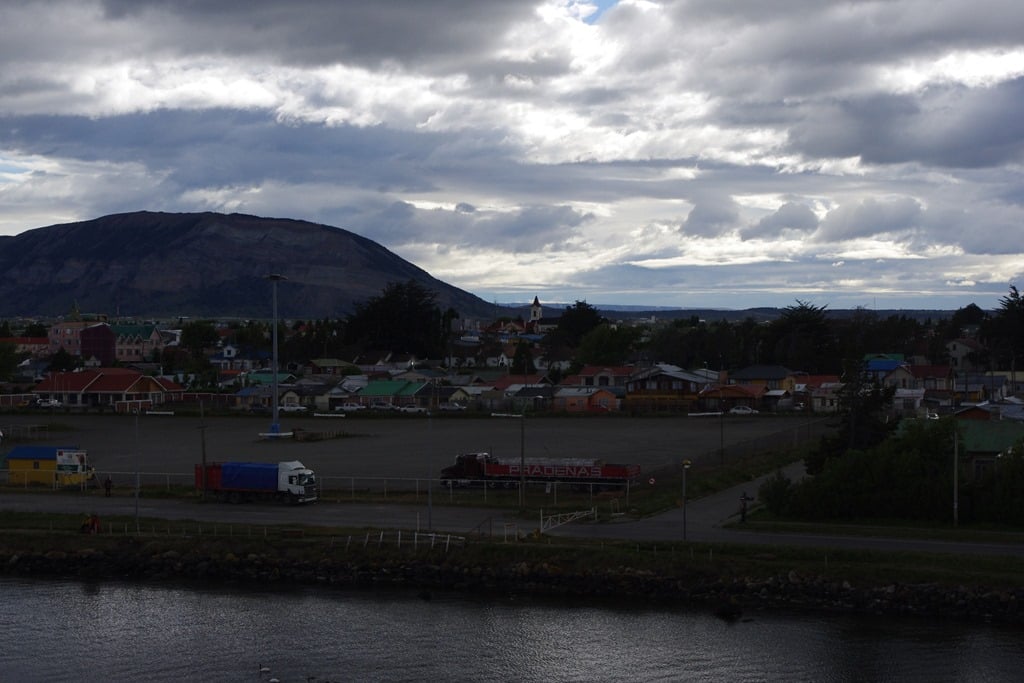
Punta Arenas is the southernmost reasonably large city in Chile (though not the most southern settlements; those are Puerto Navarino and Puerto Williams in the south of Tierra del Fuego). As such, the port is quite busy and is one of the focal points of the areas, with both commercial cargo and cruise liners headed to Antarctic waters.

IMGP7076

Despite the industrial nature of the place, it’s also able to cater to tourists as it has quite a bit of history. A plaque on the site of the former post office, for example, commemorates the day in 1904 that Captain Robert Falcon Scott popped in to post 400 (yes, four hundred) letters announcing that the Discovery had returned safely from the Antarctic! Another plaque celebrates the hotel in which Amundsen stayed before he headed to the Pole. There are also, understandably, plenty of statues to past explorers and some rather ornate buildings.

IMGP7062

Punta Arenas also has a decent number of good restaurants to cater to the tourist trade. While I was in one of them, having a very nice salmon filet with mashed potatoes, I realised that at this time of year it would be almost impossible to get a restaurant table in the UK because of office Christmas parties. I get the sense that such things don’t exist here; at least all the restaurants I have been into on my trip have had plenty of space.

Regional identity

One thing I noticed, both in Puerto Natales and here in Punta Arenas, was a sense of regional identity. Public buildings fly the flag of Magallanes next to the Chilean national flag. This is something I hadn’t seen even up in the Atacama. The only sense of a separate identity from the national one that I had previously encountered was on Chiloé, which is understandable as it’s an island. I suppose that this region, Magallanes (named, of course, after Magellan), is remote, however, and as such it is slightly insular. If it weren’t for the Carretera Austral, there would be no way to reach here other than by air or sea (other than going via Argentina, which is what most people do).

IMGP7069

Weather

Punta Arenas is renowned for being windy. I read somewhere that in the spring, when the winds are typically worst, the local authorities run ropes between the lampposts to enable people to pull themselves along the pavements, and I think I found one example of a piece of rope serving this purpose that hadn’t been removed prior to my trip.

It wasn’t so windy that I needed assistance to walk, but it was incredibly blustery. The thermometer by the port might have read 13c but the strong south-westerly gusts coming from the Antarctic were bitterly cold and made it feel much more like 3c. To add to that, there was a strange fine rain in the air almost constantly. Everything looked dry and the sky was often blue, but as you walked you were aware of some droplets being blown about on the breeze, and it wasn’t just sea spray.

Hostel

My hostel room was quite small with just enough room for a single bed, and small desk, and my holdall. It’s certainly the smallest room of the trip so far, other than the one I was moved out of in Castro. When I got there it was also incredibly dusty: the adjacent room had someone in it doing woodwork to fit a new door and door frame, and a lot of saw dust had entered my room via a series of holes (which I’m sure should have glass in them) above the door. This was soon sorted, however, and the hostel owner was very good in apologising about it and sorting it out.

8th December: Torres del Paine National Park

IMGP6972

I’d been expecting to start this blog post with something like ‘Torres del Paine is justifiably known as the jewel in the crown of Chilean National Parks, and I’d have liked to have spent more time here’. Not so. Whilst it is truly spectacular and I’m definitely glad I made the excursion to see it, I have to say that the one-day tour was probably adequate for me. Let me explain why…

I took a one-day full-day excursion to the park with Comapa, which I can’t fault. Our guide and the organisation of the trip were excellent. The trip started with a visit to the viewpoint into the park at the Sarmiento lake, which is where I took the photo above. After that, we had to pay the rather exorbitant entry fee into the national park: £18 for foreigners. Admittedly, this does give access for three days, but it seems a bit much for just a few hours.

On our way into the park, we did get to see some of the wildlife for which the area is most famous. Guanacos were nearly ubiquitous and we also got to see rhea and a couple condors flying over our bus.

IMGP6984

Salto Grande

The next stop was the Salto Grande waterfall at the end of Lago Nordenskjöld. This is a beautiful waterfall, but rather smaller than its name suggests. It’s also known as an exceptionally windy place, and today was no different. It was very difficult to stand up in the gale that was blowing, and the gravel from the path was flying everywhere, making even trying to stay still quite painful on the face.

IMGP7008

Lago Pehoé

We stopped to eat our packed lunches at Lake Pehoé, just downstream from the waterfall. This was a less windy location, with very handy shelters to eat in. It’s also a campsite, although there was only one tent visible. Most people seemed to be eating in the restaurant, or photographing the rather docile doe who was wondering around.

IMGP7025

Lago Grey

Our last stop inside the park was at Lago Grey at the end of the Grey glacier. It was here that I realised what had been disturbing me about Torres del Paine since we had arrived. There had been the entry fee, the gravel path at Salto Grande, the restaurant and empty campsite at Pehoé, and wildlife that wasn’t as wild as it probably should be. Here at Grey, there was a perfectly well-kept path to follow that took you down to a beach that led to the viewing point looking over the glacier.

IMGP7045

I realised that in an attempt to make the park sustainable given the number of tourists visiting, the park authorities had sanitised the natural elements. I like the wild to be wild, not a regimented place where you are told to keep to a certain track and have toilet blocks provided at every viewing point. Granted, it might be that the nature of quick tours is that you visit the most popular areas, and so had I stayed for longer, I might have uncovered the less spoilt areas, but I don’t think so: Back on the Navimag ferry, Percy had stressed the need not to camp in unauthorised areas, and also told us that if you set out on a particular path you have to sign in and out at the start and end of the path, so they know if they need to start a rescue mission.

In a way, the park authorities had tried too hard on safety and sustainability, much like the mass of stainless steel to improve wheelchair access at Fuerte de Niebla.

Lago Grey itself was also a disappointment. The beach where you are encouraged to walk is far too far from the glacier to get a real sense of its size. It’s just a mass in the distance. If anyone wanted to see a glacier, I’d have to recommend they go to Svalbard or Iceland instead.

IMGP7037

Cueva del Milodón

Outside of the park, we stopped at the Mylodon cave on our way back to Puerto Natales. I’d read on other peoples’ blogs before I came to Chile that this cave really isn’t worth even the £4 entry fee, and I’d tend to agree. The point of the cave is that it is an archaeological treasure-trove, with many fossilised remains of animals, including Mylodons (a sloth-like creature that became extinct about 10,000 years ago). What makes the cave so disappointing is that there is no hint of the remains there at all. Not a single unearthed fossil has been left in situ. It’s just an empty cave with an unconvincing statue of the Mylodon at the exit. And, even in this confined space, there were no fewer than three rangers ensuring that noone strayed from the path and went around the one-way system in the correct way.

IMGP7053


As I say, an interesting day which I certainly wouldn’t have wanted to miss, but I’m not disappointed that I move on tomorrow. One can only hope that CONAF (the Chilean National Parks Authority) change their attitude towards protecting the beautiful spaces they manage.

7th December: Puerto Natales

I’m quite impressed by Puerto Natales. I only had half a day to look around, between getting off the boat and going to Torres del Paine National Park tomorrow, but it’s not a bad place for somewhere so far from anywhere else (Punta Arenas, where I’ll be heading on Wednesday, is about the nearest town, and that’s over 3 hours’ drive).

IMGP6967

It’s very obvious that Puerto Natales is a town in two halves. Around the fishing port, in the Eastern end of the city, I was struck by the simplicity. In common with some other high latitude places I’ve travelled, houses here are single-storey affairs cobbled together from whatever is to hand, whether wood or corrugated iron, and often a mixture. Despite this, the vast amount of the streets seem clean and tidy and, being wide roads designed on the American-style block system, it comes across as a very ordered place.

IMGP6938

The western side of town is very different. It’s the tourist area with the hostels and restaurants and a little more commerce. That said, Puerto Natales seems to strike the right balance between commercialism for the tourists and being an enjoyable, normal place. So, yes, some of the street signs around here are sponsored by Movistar, as I’d complained about in San Pedro de Atacama, but unlike San Pedro, I wasn’t disturbed at all by people asking me whether I wanted to go on a tour. Instead, there were local teenagers hanging out in the main square and playing with skateboards, just as in any other town.

IMGP6957

My hostel here is a little odd in that it appears to be the upstairs of a family home, complete with children audible downstairs. To add to that, the downstairs (which also has the breakfast area) is being remodelled, so al the furniture is pushed to one side and there are drills and bits of wet plaster hanging around. To be fair, the owner has been extremely apologetic for the disruption, which I’m perfectly happy with. After all, the bathroom’s quite nice and fully functional, which is a bit of a novelty after the last couple of weeks!

Given the, erm, rather limited cuisine of the last few days, I decided to splash out a bit tonight and go to Don Jorge in the main square. This is a rather special restaurant which wouldn’t be to everyone’s taste. Outside, there’s what basically amounts to a large (whole storey high), glass-fronted, fume cabinet, in which a couple whole lambs were spit roasting. Inside the main restaurant is a barbeque. When I ordered the Patagonian lamb, the chef went into the cabinet outside with a meat cleaver, and hacked off a chunk of a leg from the lamb. After being sawn a bit more with a wood saw, this leg was then brought inside to finish on the barbeque, from where a couple of ribs were also picked up. Fast food this is not. An intercom system connects the barbeque to the main kitchen, so they can coordinate when all the ingredients of a meal will be ready. Needless to say, it was delicious, as was the Barberry mousse I had to finish.

One postscript: I’d originally planned to go straight from the boat to Torres del Paine national park to camp there. I’m very glad I changed my mind and got a cheap hostel instead. Not only would it have been quite cold (the wind has indeed increased, as promised) but also camping in the national park seems to be really quite expensive and camping outside of official campsites is apparently being cracked down on, partly in response to the massive forest fire that affected the park 3 years ago.

4th-7th December: Sailing through Patagonia

By the nature of this update, this blog post was written as a log while we were underway. As a result, it’s a bit long…

Friday, 7pm: In port near Puerto Montt, 41.5°S, 73.0°W

We’re on board the Edén, after a lot of waiting around. It turns out the boat was actually moored just down the coast from Puerto Montt, I assume because it was easier to load the cargo there, and so we had an unexpected bus journey from the port at Puerto Montt to the boat, probably about 15 minutes long.

I’m sharing my cabin with Alejandro, a civil servant in the legal service in Seville. At least this should be good for my Spanish. It’s a fairly small cabin but probably adequate.

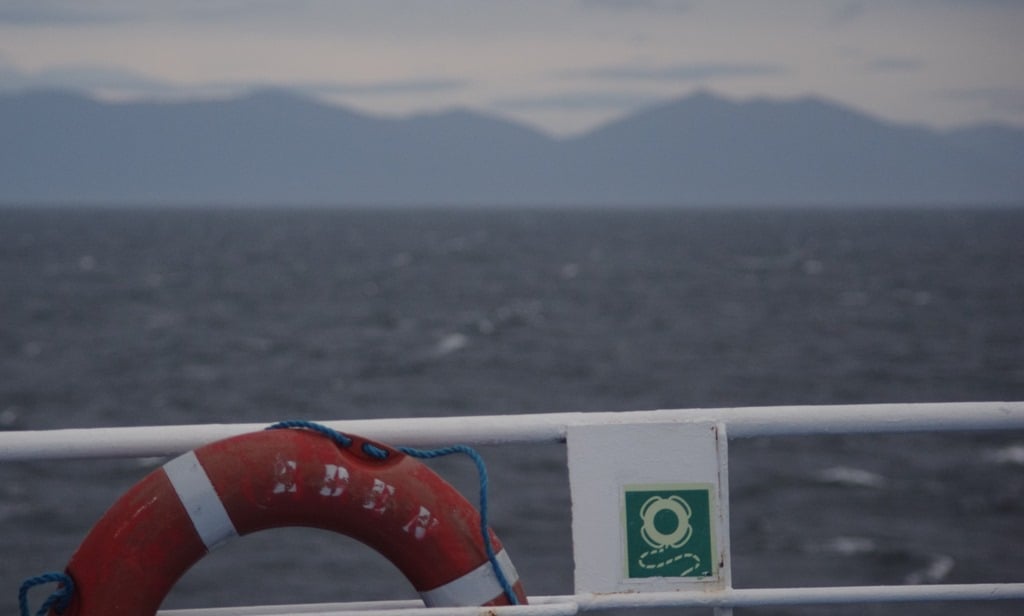
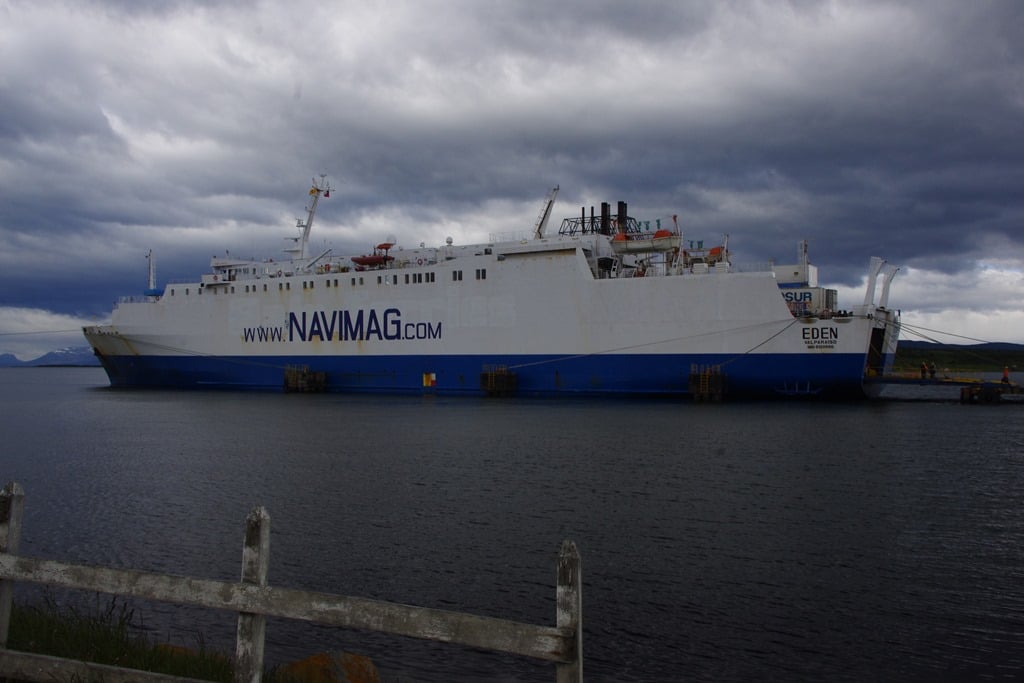
The Edén, we are told, was built in 1984 in France. It originally served as a ferry around Corsica, before it was sold to Navimag in Chile. Indeed, some of the signs around the ship still carry their original SNCM branding.

The boat finally left port at 8:30pm, about half an hour late.

Saturday, 8am: 44.4°S, 73.4°W

It’s amazingly calm out. I haven’t really felt the boat move all night, although we were doing a decent speed.

After twelve hours on board, I still haven’t really figured out how to refer to the Edén. I’ve been calling it a cargo ship and I think that’s still the best description, as cargo takes up most of the space. (Passengers are limited to decks 5 and 6).

The operating company (Navimag)’s website refers, in its English translation,to this route being a cruise. I guess in one sense it is, but this is certainly no cruise liner. For a start, there are only about 60 passengers on board – split roughly between young Europeans on gap years, older couples taking advantage of early retirement, and a variety of French people of all ages (I wonder whether the boat featuring on France 3’s Thalassa programme back in September had anything to do with that?). Also, to call it a ‘cruise’ seems to invite the number of negative comments on online review sites where people have been disappointed, expecting a boat with rather more facilities.

So, it is a ferry, which is what Navimag themselves call it? I don’t tend to think of 60 hour+ ferry routes, for a start, and the boat is probably still basic even for that. There’s just one option for meals, and the ship itself is getting on a bit and there are some things that obviously need attention, such as the fact that one of the air conditioning vents in the dining room fell off just as we were about to start breakfast this morning! My shower seemed to be missing a shower head too, and some of the toilets don’t have locking doors. Oh, and I should mention, the ship is completely dry. No alcohol is permitted at all, which again points to it being a working vessel.

Given all this, I think calling it a passenger-carrying cargo ship is about right!

Anyway, today started with a talk about the route we’re taking, given in both Spanish and English by our guide, Percy, which was excellent. Granted, and onboard guide is not a typical feature of a cargo ship though…

Saturday, 2pm: 45.2°S, 73.6°W

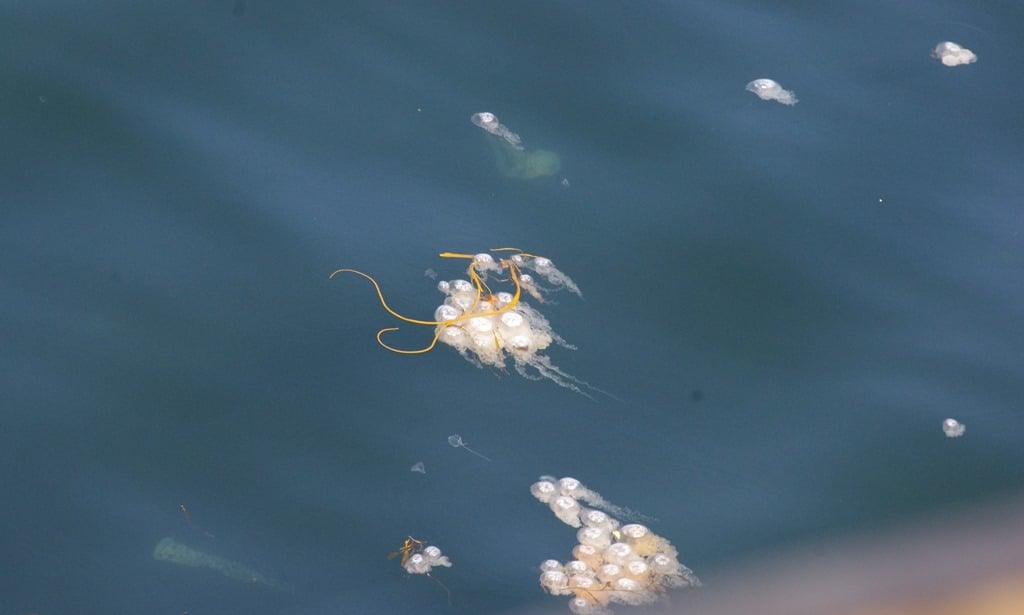
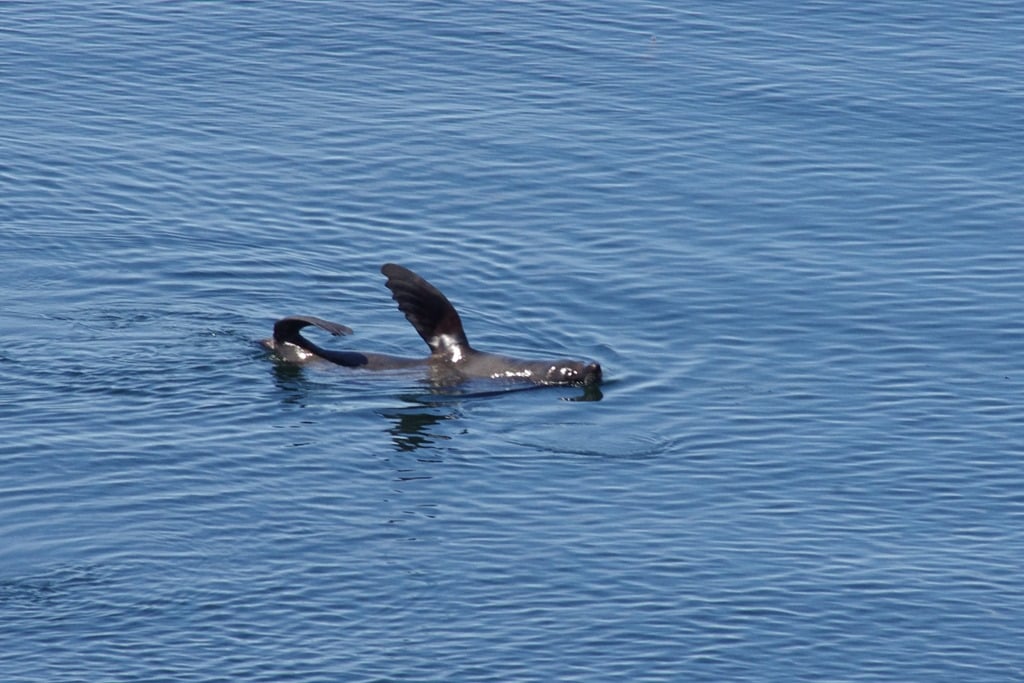
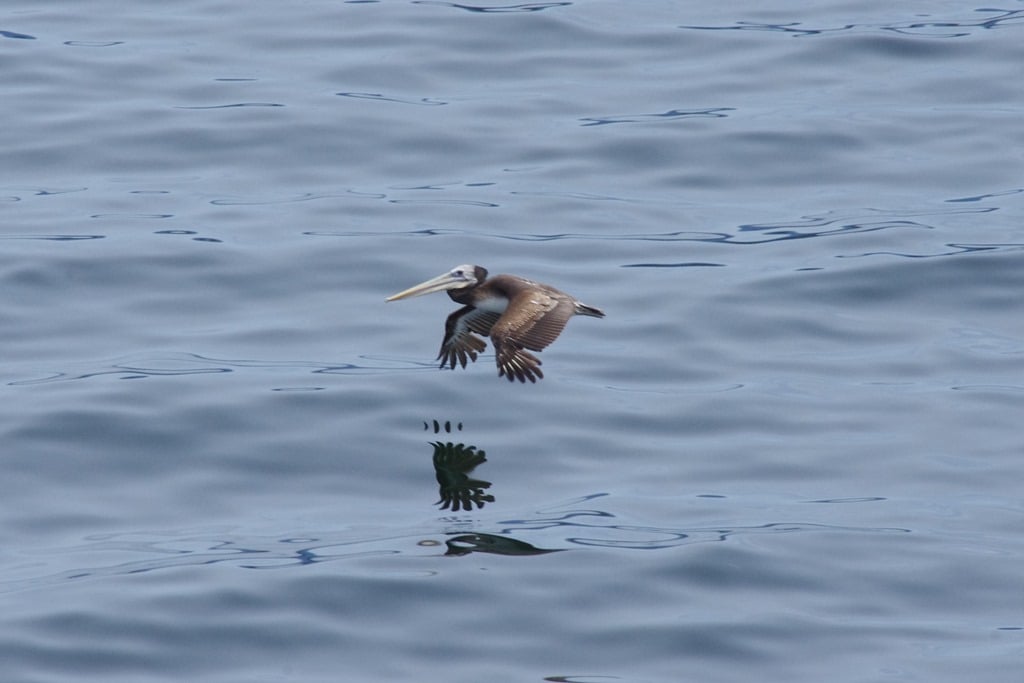
We’re still remarkably lucky with the weather we’re having. It was always going to be a bit of a gamble, as some trips might have nothing but fog and drizzle the whole way down the coast. Not so for us. We currently have bright sunshine and perfectly flat seas. The wildlife is also pretty amazing. I missed the pod of four orcas that were spotted at dawn by the earliest risers, but I’ve seen plenty of sea lions playing the water, and I’ve just seen my first dolphin too, although I wasn’t quite quick enough with the camera to get it as it breached. There have been a large amount of jellyfish in the clear waters too. Our guide, Percy, tells us that this is unusual and is thought to be related to the warmer seas brought this year by El Niño. In terms of birdlife, a pelican was the biggest surprise of the day.

Saturday, 4:30pm: 45.4°S, 74.5°W

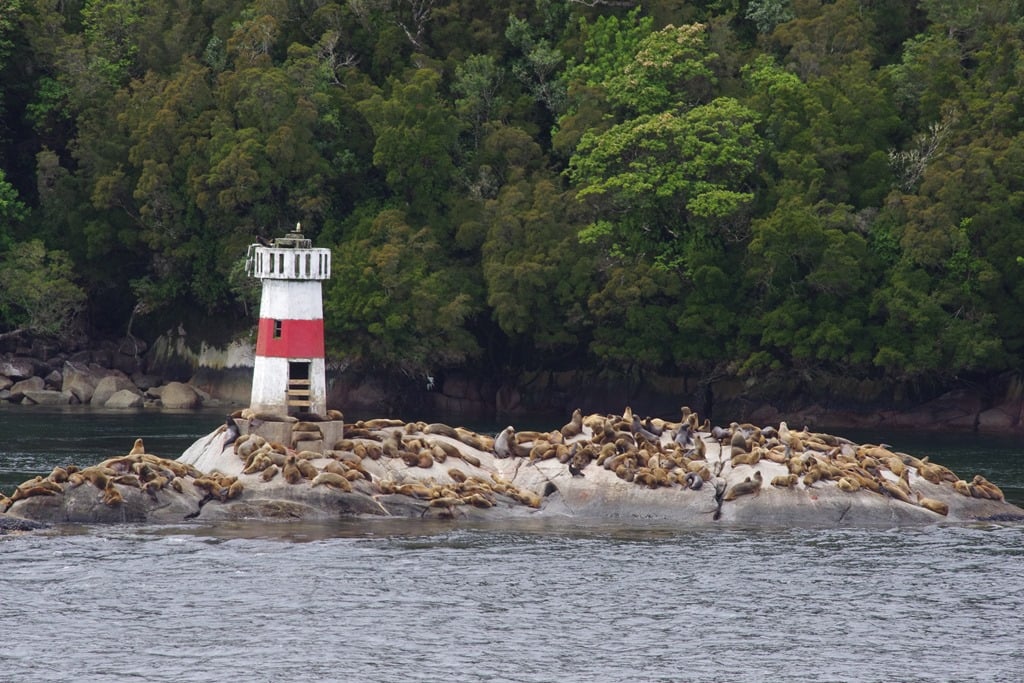
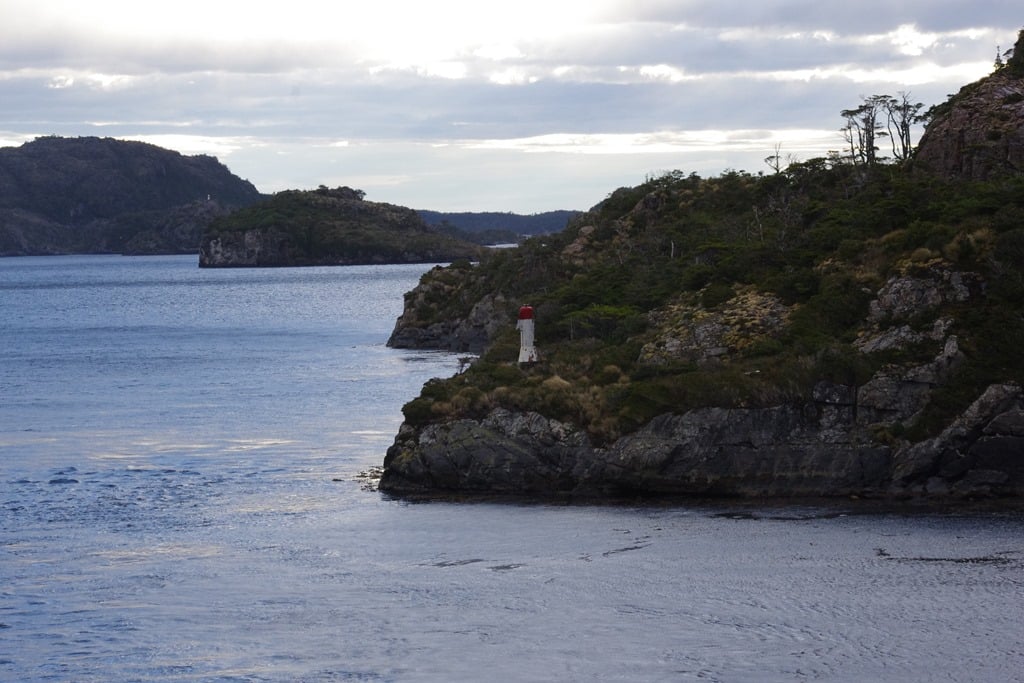
We’ve turned west to head up Darwin Channel to take us into the open Pacific.  Leaving the lee of the islands means that both the wind and sea state have increased a bit, but it’s still OK for now. Apparently there’s a 4m swell waiting for us when we get to the ocean, though. As we turned into the Channel, there was a large colony of sea lions visible by a lighthouse.

Saturday, 8:30pm: 45.9°S, 75.2°W

Apparently, while I was writing the previous entry in this post, I missed a humpbacked whale that appeared briefly off the side of the ship. Oh well…

We’re now in open sea and, the single whale aside, there’s less to see now. The Patagonian coast is just a vague silhouette on the horizon. The wind is a northerly, which means it’s coming from behind us but the sea is now certainly bouncing us along. Nothing too bad, though; I’d guess it’s about a 2m swell.

The next few hours, I suspect, are mainly going to be spent in my cabin with the several hours’ worth of BBC iPlayer downloads I’ve been abusing hotel wifi to get over the last couple of weeks, including – very timely – a documentary about Welsh speakers in Argentine Patagonia.

Sunday, 8am: 48.2°S, 74.5°W

I was aware of a lot of rocking of the boat at around 2am but it didn’t affect my sleep too much. We’ve woken to a misty morning with rain but it’s calm once again. Breakfast was very runny porridge this morning!

Sunday, 10am: 48.7°S, 74.4°W

The weather is getting better. The mist has lifted into a low cloud and the sun is trying to come out. There’s still the odd shower of drizzle around though.

I’ve been up to the bridge to have a look around. From a radio point-of-view, this was particularly interesting. Despite the fact that almost everything is done over Inmarsat these days, they still have both a VHF Marine Radio (on channel 13) and also an HF set (on 4.14MHz). I also spotted a weather fax receiver, and I know there’s a 1kW fax transmitter operated by the Chilean Navy from Punta Arenas, so I asked the Captain about it. He told me that they do turn it on occasionally to test it, but they generally get weather maps from the internet.

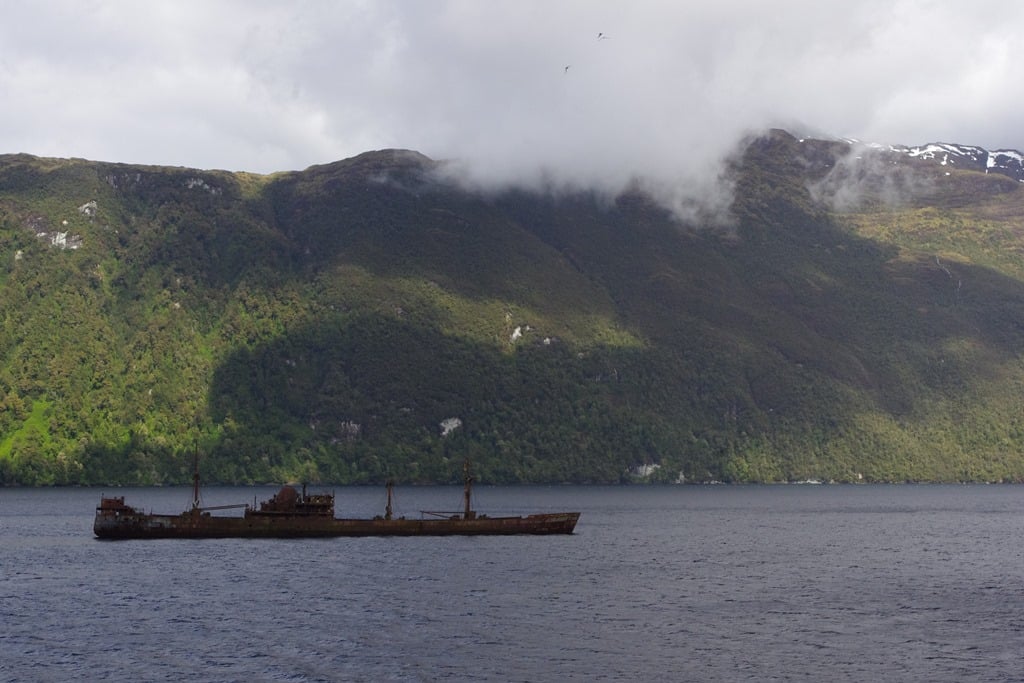
Shortly after I left the bridge, we came to the Cotopaxi. This is a wrecked 1930s steamer that was allegedly deliberately run around in one of the channels here in the 1960s as part of an insurance fraud. Cotopaxi marks the entrance to a narrow stretch of water somewhat confusingly named The English Channel!

Sunday, 12pm: Puerto Edén, 49.1°S, 74.4°W

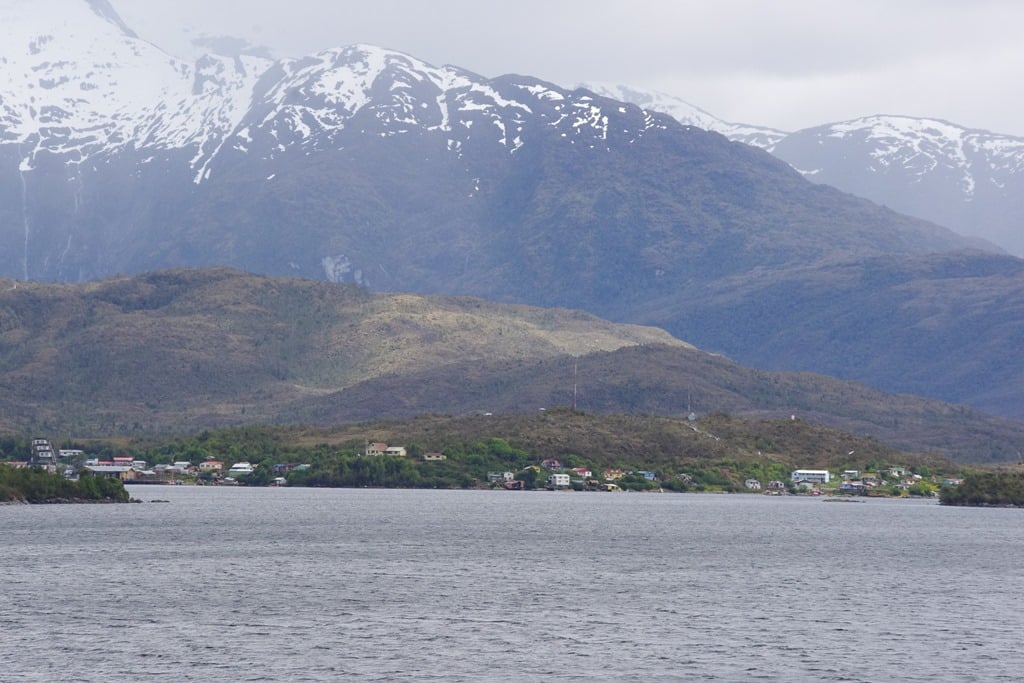
Puerto Edén is a settlement on the Patagonian coast that was originally established in the 1930s as a refuelling point for hydroplanes travelling between Puerto Montt and Punta Arenas. It’s a remarkably remote place, but it’s still inhabited today mainly by people who farm mussels in the fjords around here.

We made a quick 45 minute stop just off the shore. We weren’t allowed to disembark but a set of little boats came to us as we arrived. On board those boats were about a dozen new passengers who were joining the Edén, together with the mussels they’re carrying to market in Puerto Natales.

I don’t want to sound as though I’m moaning about the food – it’s very welcome – but for the sake of anyone reading this who may do this route in the future, I think it’s fair to describe what we’ve had. Lunch today was a salad of shredded red cabbage with a quarter of a tomato, a vegetable soup and bread roll, followed by a main course of a piece of overcooked steak accompanied by an orangey goo, which seemed to be something like tea-flavoured mashed potato with pieces of carrot in it. There was also a piece of fruit. As well as water and tea and coffee, there’s also strawberry and orange flavoured squash available, made up from an unappetising-looking syrup that comes in cans.

Sunday, 4:10pm: 49.7°S, 74.4°W

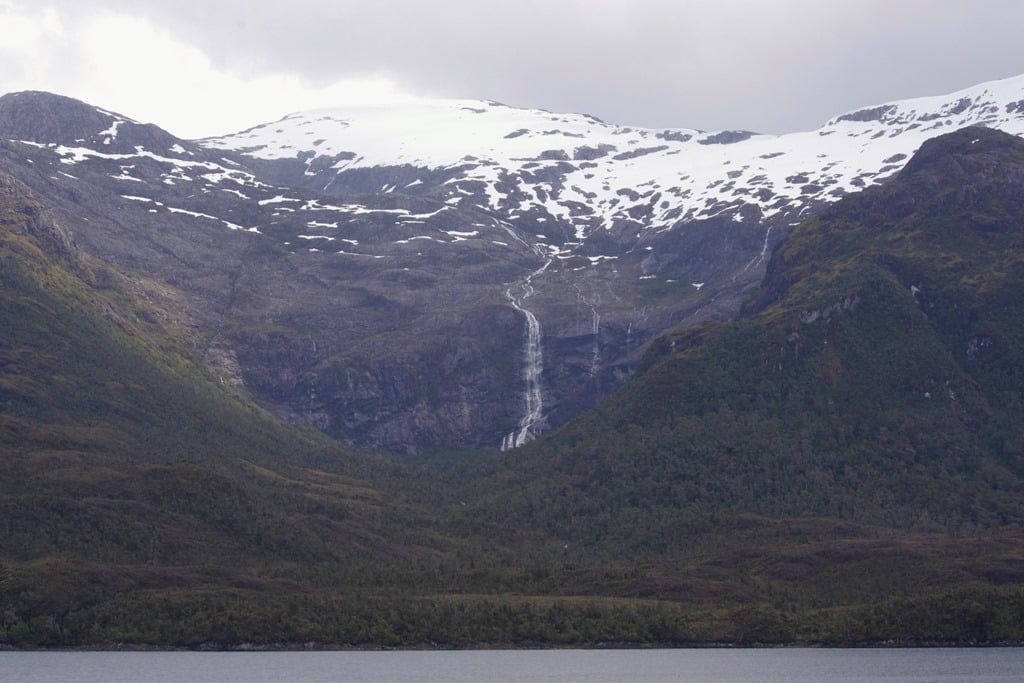
We’ve been sailing for the last couple of hours through a wide channel with steep mountains on either side. Many of the mountains have snow or even glaciers on top, the melt water from which cascades down as spectacular waterfalls.

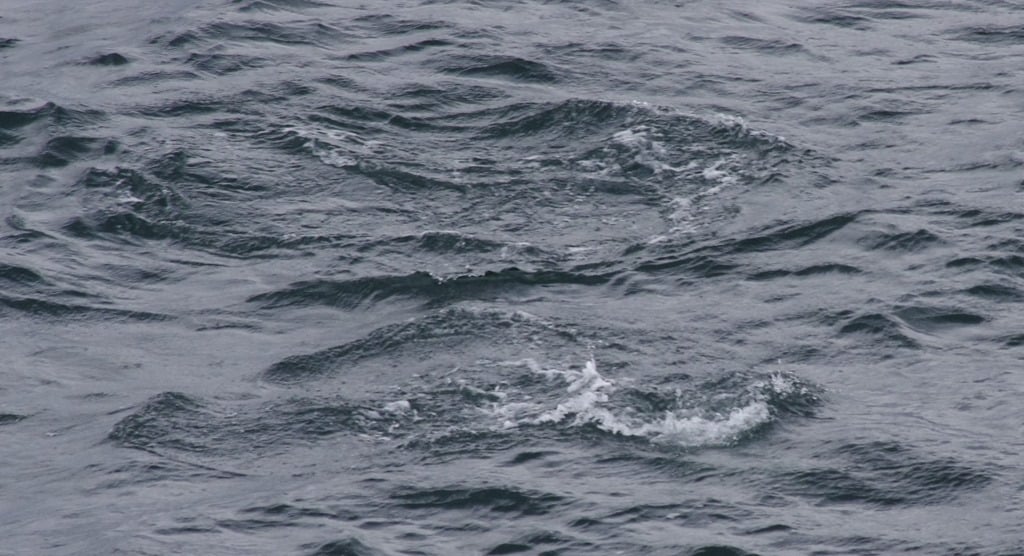
One notable thing about this scenery, though, has generally been the lack of wildlife, other than the odd petrel or gull. Until, there they were: a couple dolphins suddenly jumped up in front of us. Once again, as soon as my camera lens was on them, they disappeared from view, but you might get the sense of their presence just below the water in the photo below.

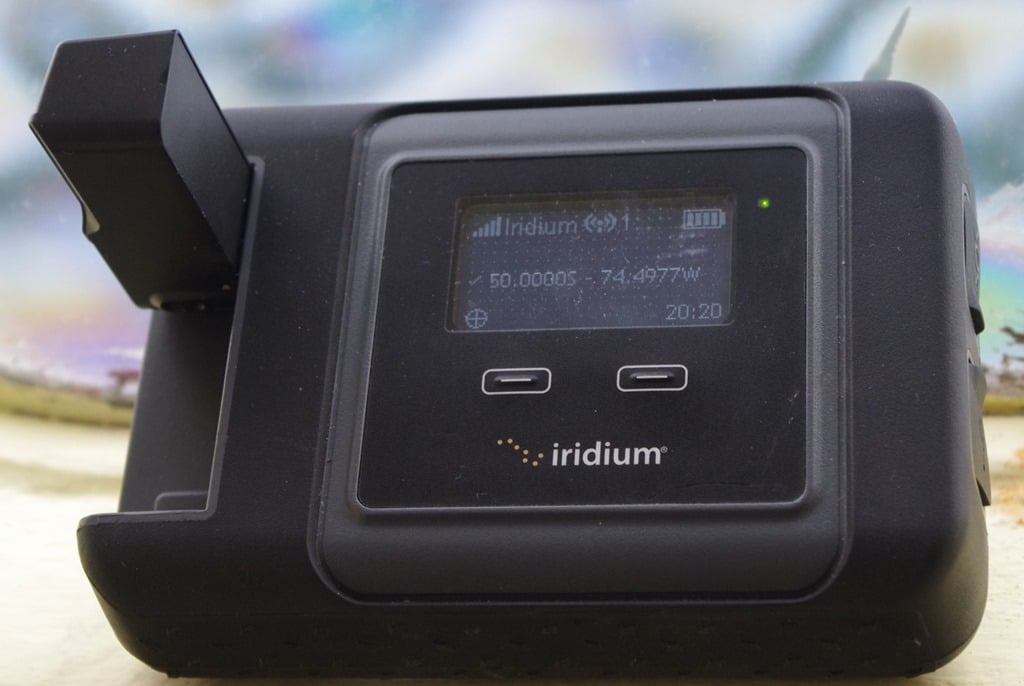
Sunday, 5:20pm: 50.0°S, 74.5°W

A small milestone on my journey. We’ve passed 50 degrees south. The photo shows the display at this key moment on the Iridium Go! satellite terminal (lent to me by Rob M0VFC – thanks) , which I’ve been using to keep the map on my website up-to-date, and send tweets from the ocean, amongst other things.

Another talk from Percy to end the day: this time he told us all about the Torres del Paine National Park, since most of the people on the boat are going there, many to spend several days trekking. Sadly my itinerary only gives me one day in the park but it was good to hear Percy’s advice nonetheless. Percy also imparted the bad news that strong winds are forecast for Puerto Natales tomorrow. If the winds are above 18 knots, we won’t be permitted to dock, so it could delay our entry into the port. However, the Captain is trying to get us there as quickly as possible, in an effort to beat the winds, as a result of which Percy will be waking us up before 6am tomorrow so we get our best opportunity to view whales. Early night tonight, I think

Monday, 5:30am: 52.1°S, 73.2°W

Well, we’ve all got up but there are no signs of any whales. Instead, we’re travelling through what Percy has named ‘The Wind Factory’ – a narrow channel through which wind is funnelled. It’s 65 knots at present, apparently, but the nature of the funnelling means that the sea is still fairly calm. It’s a slightly odd sensation struggling to stand on deck while no significant waves are visible.

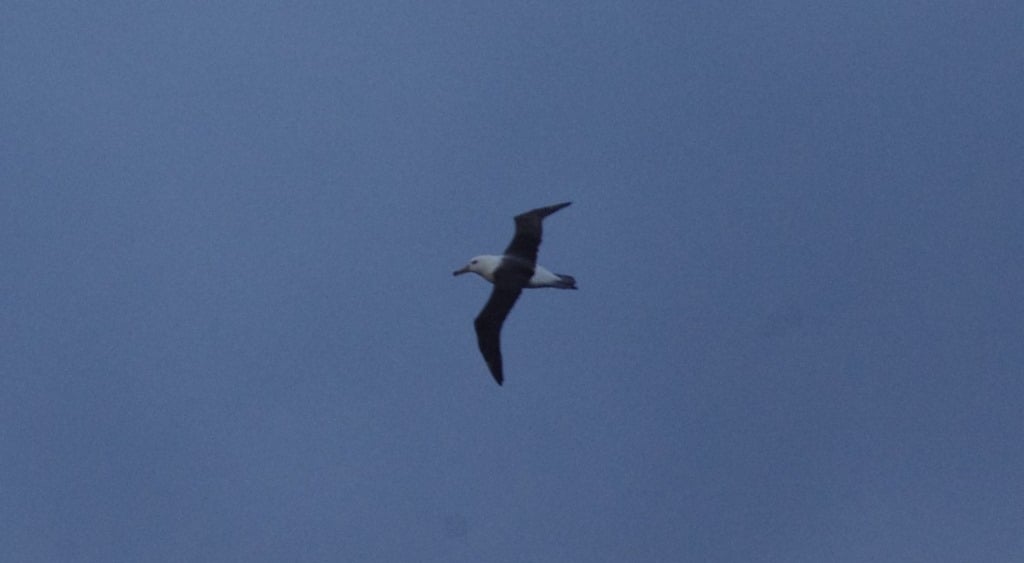
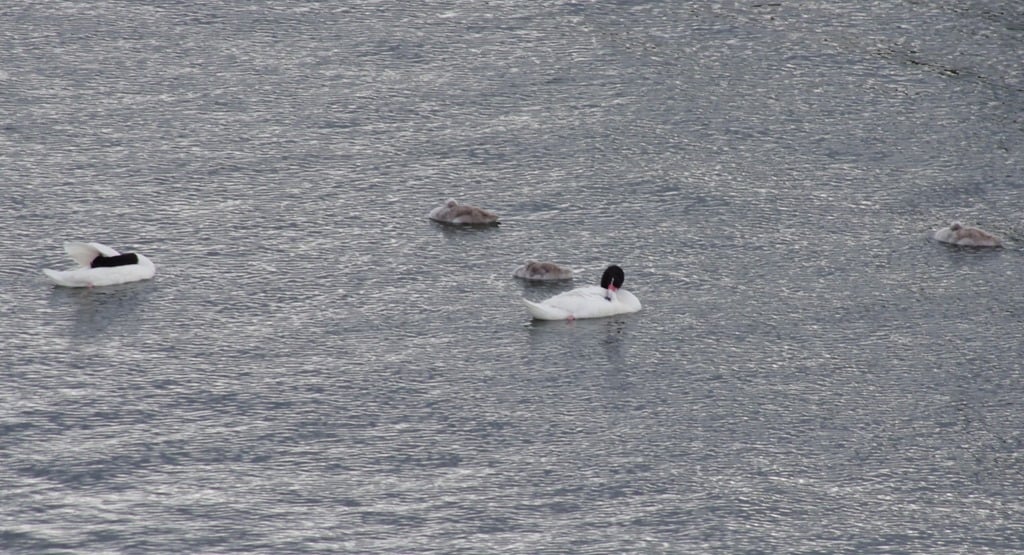
Despite the lack of whales and the bitterly cold wind (it’s only about 2 or 3C here at the foot of a large glacier), it has still been worth getting up at this time. There’s a fantastic amount of birdlife from albatrosses to petrels to the black collared swan, skewers and more. Percy tells us that we’re nicely ahead of schedule too, so once we’re out of The Wind Factory we should be ahead of the bad weather that might have disrupted our arrival in Puerto Natales.

Monday, 10am: 51.7°S, 72.5°W

…and so it has turned out to be. Puerto Natales is quite a way inland and up another channel, away from the glaciers and Wind Factory (you’ll notice we’ve gone a bit north since my last update). It’s wonderfully calm here and notably warmer too.  We’ve arrived ahead of schedule by about two hours thanks to the efforts of the captain. It will take us a little while to disembark, and our luggage is being taken down to the main car deck for us, but we should soon be on dry land.

Given my comments above, would I recommend the expensive cost of the ferry journey / cargo ship / cruise? Yes, absolutely. It’s a bit of a gamble because if the weather is bad it would be horrendous, but hopefully the photos in this post have given a good sense of the area’s outstanding beauty.

2nd/3rd December: Puerto Montt

Puerto Montt is a large city at the northern fringe of Patagonia and at the start of the Carretera Austral. I’d come here primarily not for tourism but to do the mundane parts of long-duration travel (going to the bank, finding a laundrette and giving back my hire car), as well as it being the port from where my ship south will leave on Friday evening.

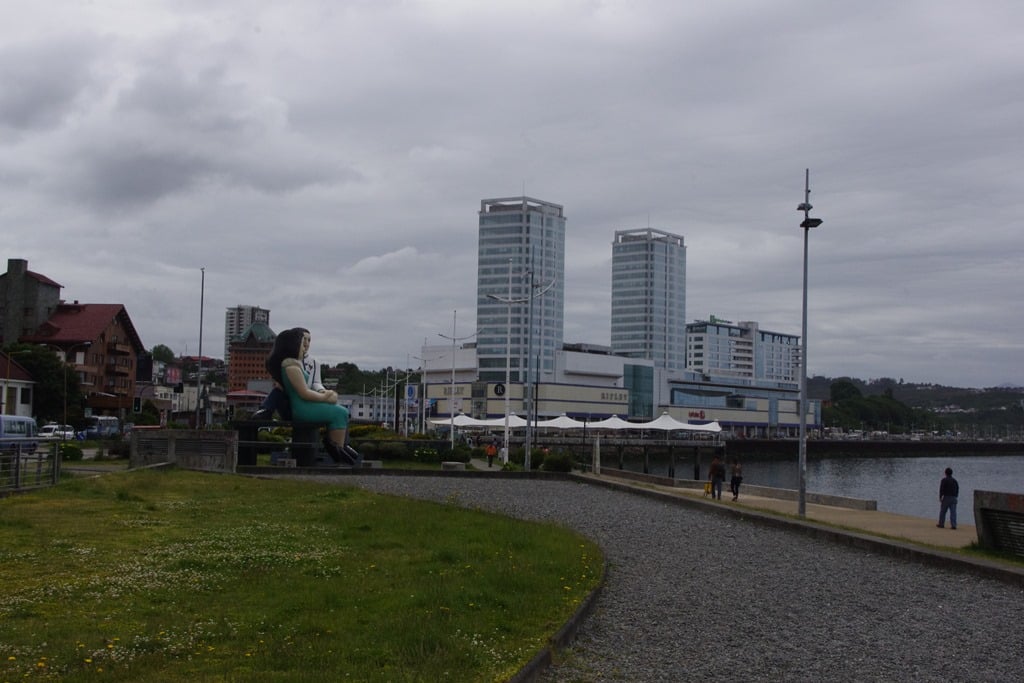
That said, central Puerto Montt turned out to be a remarkably efficient place and by 11am I was back in my hotel room, ready to explore the city a bit more. It’s a modern city with skyscrapers and a wide promenade along the seafront, where there’s also this slightly creepy statue of two giant lovers.

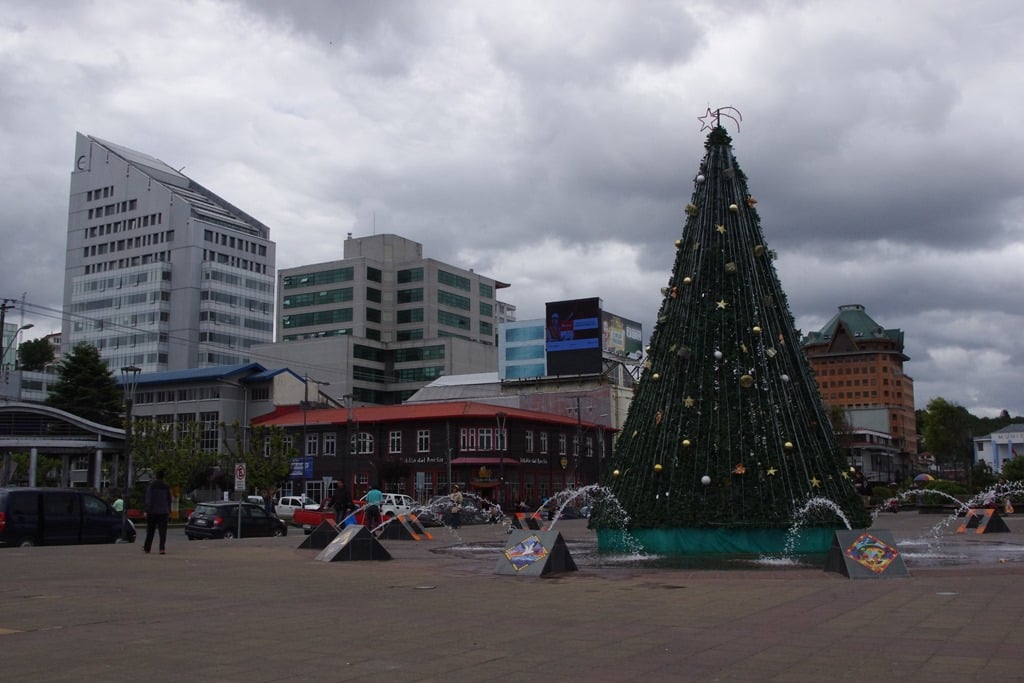
It was also here that I was forced to face the fact that Christmas is coming soon. Generally Chile has been fairly free of things related to Christmas so far (they seemed to be concentrating on celebrating the Telethon at the end of November instead), and decorations were minimal. This was the first city I’ve seen thus far with a Christmas tree and I’m Dreaming of a White Christmas playing in the large shopping mall – rather odd when it’s 20c, muggy and the shops around are promoting the new season summer fashions!

Tomorrow I have a lot of waiting around, by the sounds of it: I have to check in for the boat at about 9am, I get to board at 4pm, and we set sail for Puerto Natales at 8pm. The tracker at www.domsmith.co.uk/chile should continue to work while we’re at sea (obviously the Streetview version won’t) but this will be the last blog post for a few days, by which time I’ll be in Patagonia proper.

30th November / 1st December: Castro and Chiloé

The island of Chiloé is a large island, just off the coast at Puerto Montt. Currently, it is accessible only by car ferry (a one-way crossing with car was about £11) but a bridge is under construction and due to be completed in 2020. Judging by the graffiti and posters I saw, it appears that the locals aren’t generally in favour of the bridge, fearing that it might destroy the island’s identity.

I’d been planning to camp on the island but the campsites I emailed didn’t give timely responses, and after the problems I had had with campsites so far, I opted for a cheap hostel in Castro (the island’s capital) instead. For about £20/night, this was perfectly adequate although I was fortunate to be moved from a tiny double room that smelt rather musty to a much nicer three-bed room. The downside was that the new room was right next to Ruta 5, which was busy all night.

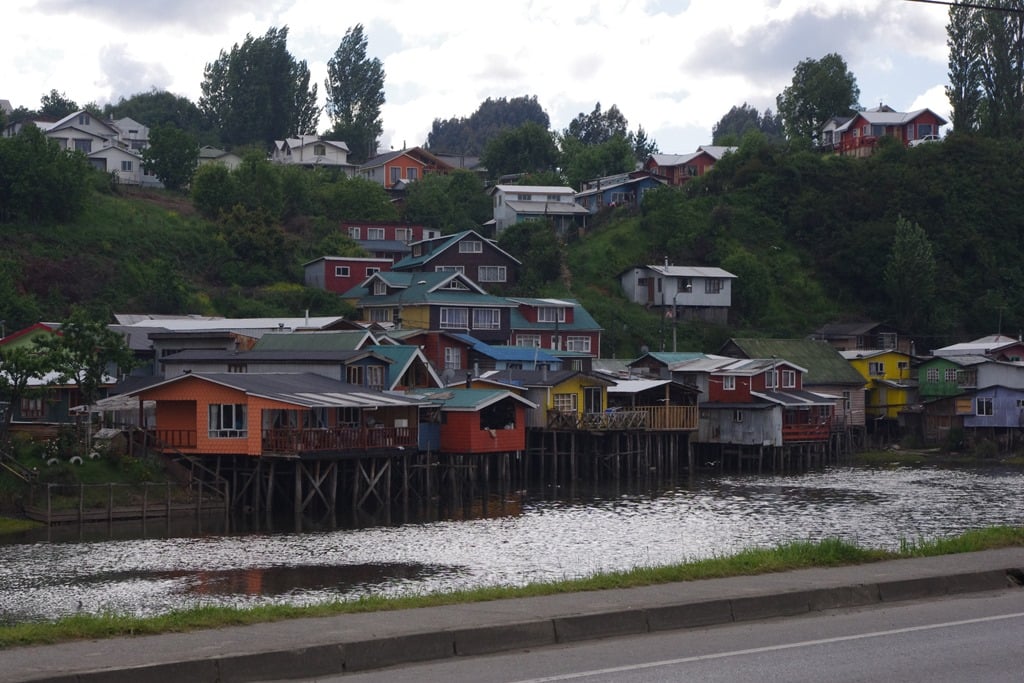
Castro is a busy, commercial centre (and driving was no easier than in Valdivia) but once here the area around the port especially is quite pretty. Castro is also famous for its palafitos – houses built on stilts in the sea. Many of these were destroyed by the tsunami that affected the region in 1960 but some have been rebuilt.

By the way, should you ever find yourself in Castro, and if you like seafood, definitely pay a visit to Nueva Galicia by the harbour, recommended to me by the hostel owner. Their cuaranto was exquisite. If you don’t like seafood though, don’t bother – there were no other options on the menu!

Jesuit churches

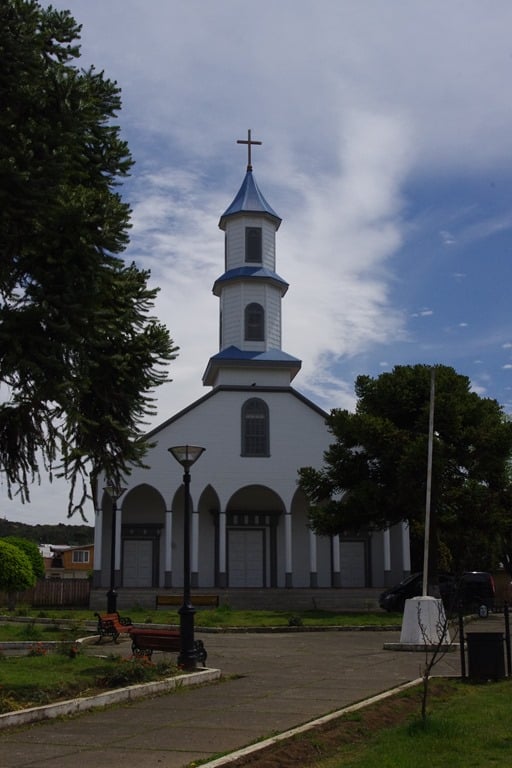
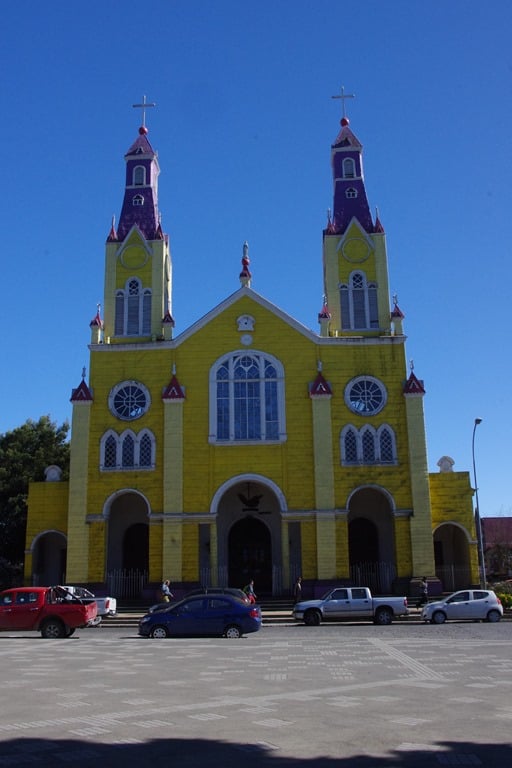
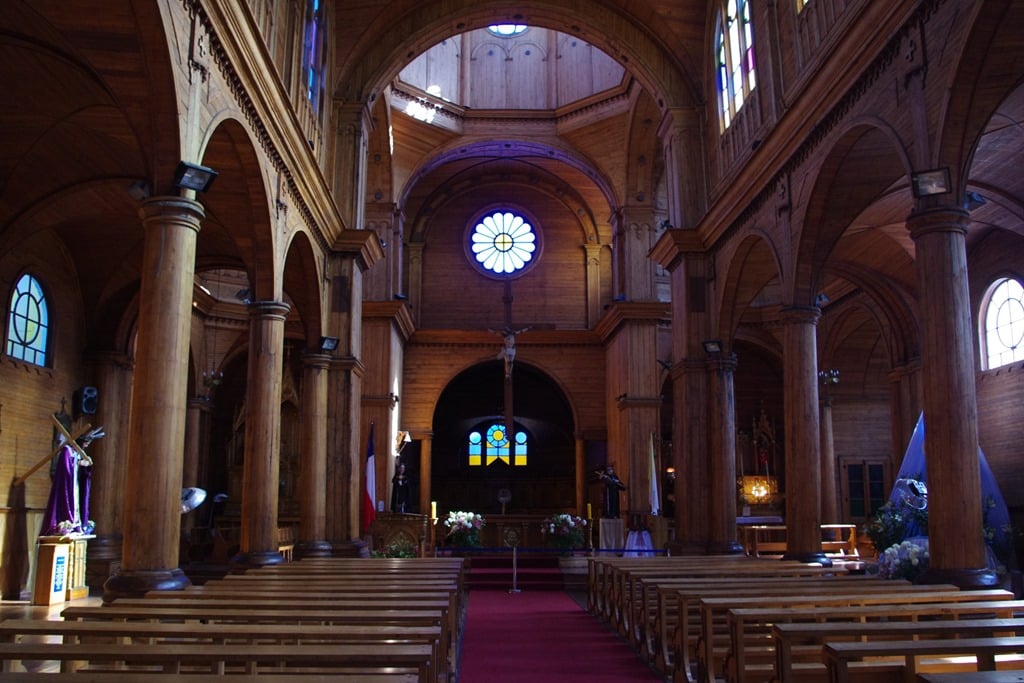
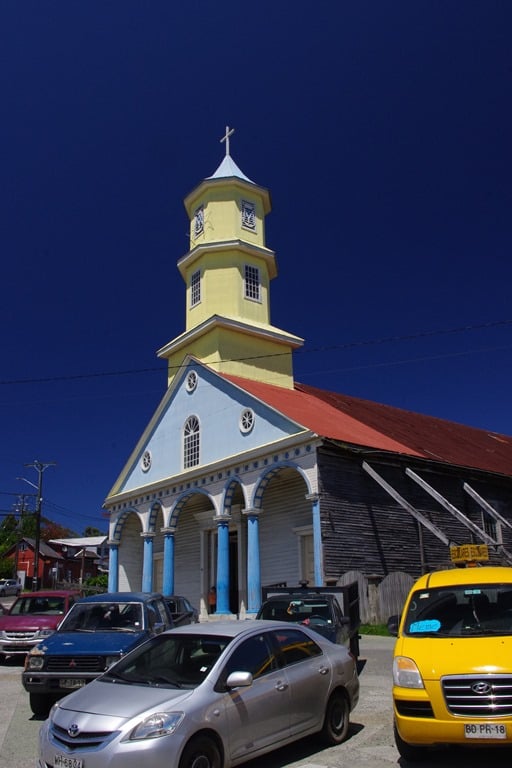
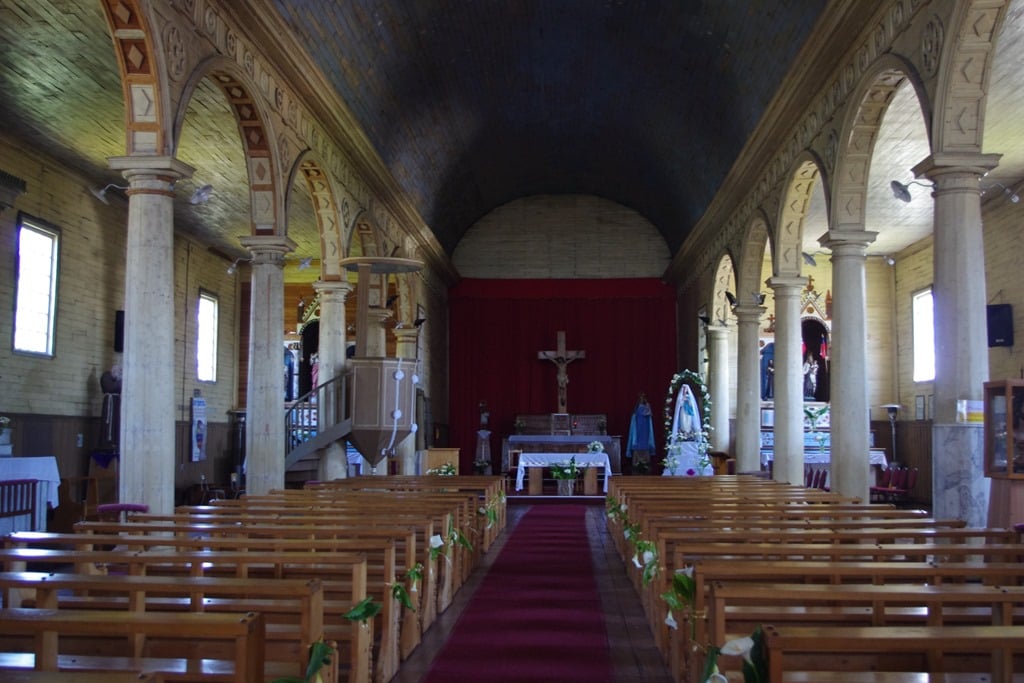
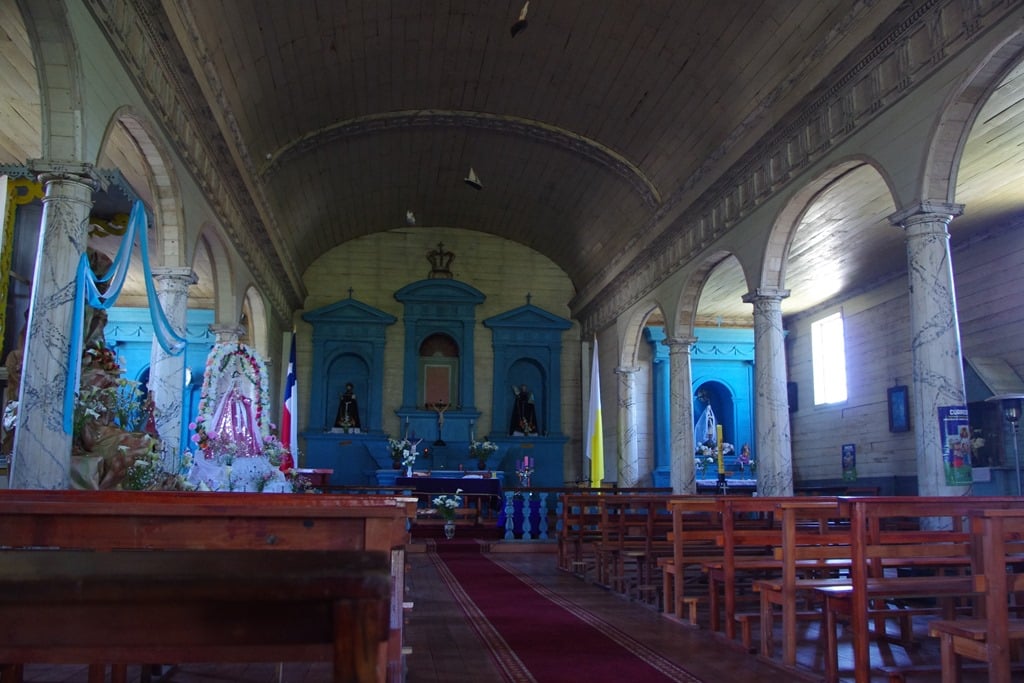
Other than the palafitos, the other reason for coming to Chiloé was to see the Jesuit churches. Dating from the original Christianisation on the island by the Jesuits, sixteen of these wooden churches survive and all are UNESCO World Heritage Sites. Although now used for Catholic rites, the simplicity of these buildings is in stark contrast to most Catholic churches, such as the Cathedral I saw back in Iquique.

Dalcahue

The church in Dalcahue was the first that I visited when I first reached Chiloé, on my way to Castro. This was on Monday afternoon and (despite my guidebook saying that the churches are open every day), it turns out that Monday is the day most of the sixteen do close. So I wasn’t able to see inside.

Castro

The church in Castro’s main square

Chonchi

Chonchi is a picturesque little port town about 16km south of Castro.

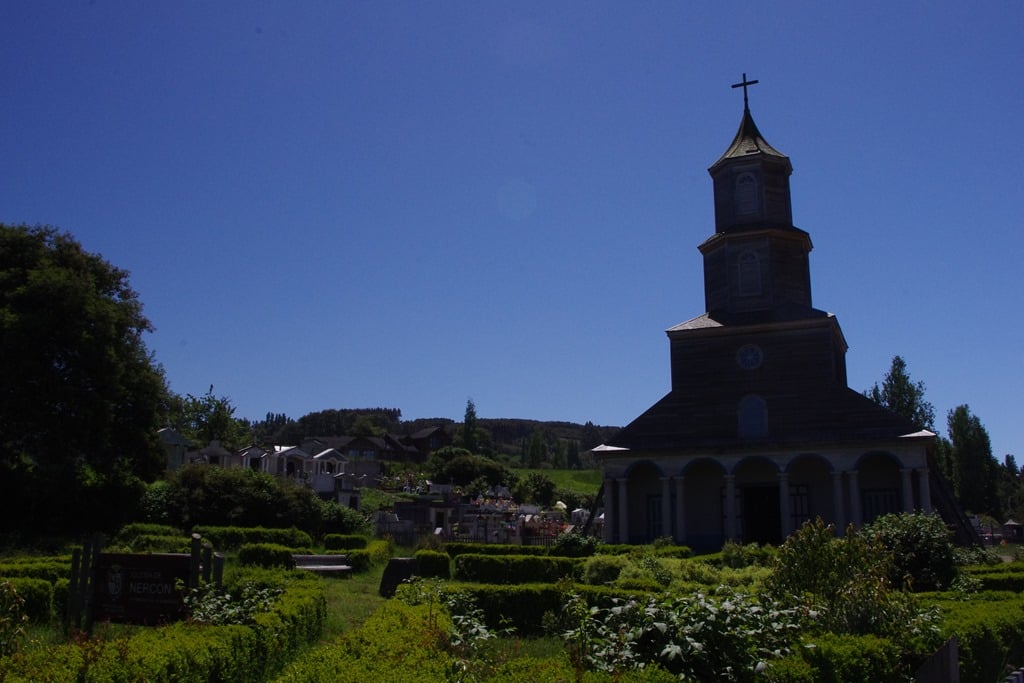
Nercón

At the recommendation of the hostel owner, I also stopped in the tiny hamlet of Nercón, on Ruta 5 just on the outskirts of Castro. It was a good recommendation, as I wouldn’t have realised I was so close to this church otherwise.

Sadly I didn’t get to do quite as much as I’d planned on Chiloé, and in particular I wasn’t able to operate radio from here as I’d hoped. The reason was that I discovered my hire car had developed a flat tyre, which caused me to lose a morning. If it had to happen anywhere, though, it couldn’t have happened in a better place – about 50 metres from a tyre repair centre, who charged me the princely sum of 2000CLP (about £2) to remove the tyre, repair it, pump it back up and re-fit it. I’ve never before given a 50% tip, but I think in this circumstance it was well-merited!

Islotes de Peñihuil

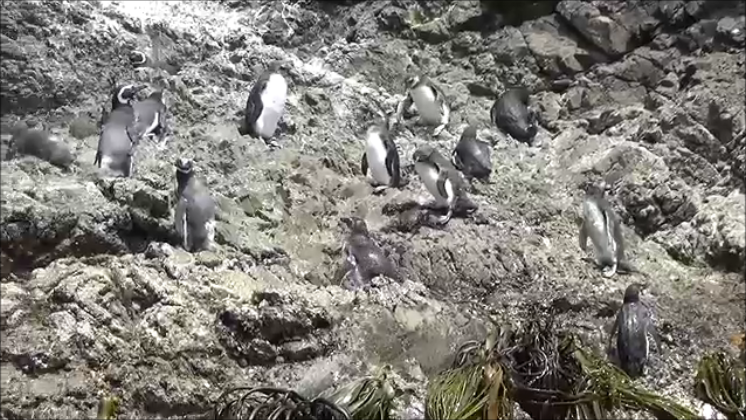
Before that episode, it was also good to catch up again with Andy and his wife, whose path I’d crossed up in San Pedro de Atacama. They strongly recommended a visit to the penguin sanctuary at Peñihuil, which (having confirmed that the road there was surfaced, given the tyres!) I was able to visit on my way back. You aren’t allowed onto the islands themselves, and the number of tourist trips per day is regulated, but for about £6.50 you can get a half-hour boat tour of a few colonies on the islands just off the coast. I arrived just before a boat was due to leave, and so I didn’t have time to get organised (in particular, change the lens on my SLR) but I got plenty of video, from which the image below is a still. We got to see both Humbolt and Magellan penguins, which are fascinating creatures. Well worth the slight diversion.

This is quite literally where my road comes to an end. Just south of Castro, in the town of Quellón, the Pan-American Highway finally meets the sea. Its place is taken by the somewhat more infamous Carretera Austral. Pinochet’s great project, and still partly unfinished, this is the road that travels south through Patagonia. It’s renowned for being both scenic and difficult, mainly unsurfaced, with dangerous bends and hundreds of kilometres between petrol stations. Although I did briefly consider taking on the challenge, my more sensible side prevailed. It probably wouldn’t be wise to tackle the road alone without more experience. (Incidentally, for those who watched the ill-fated BBC Top Gear Christmas Special from Patagonia, the Chilean parts of that were largely filmed on the Carretera Austral, which gives an idea of what it’s like!)

So, in the next leg of my journey, I’ll give up the hire car and switch to a cargo ship for the journey down through the Patagonian fjords by sea. It should be quite an experience! Hopefully the weather will stay settled.