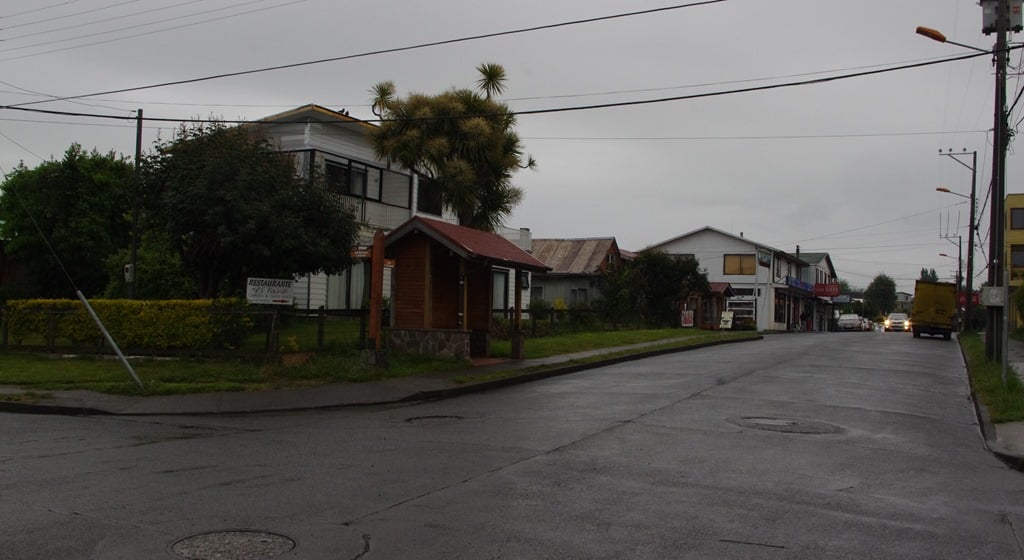
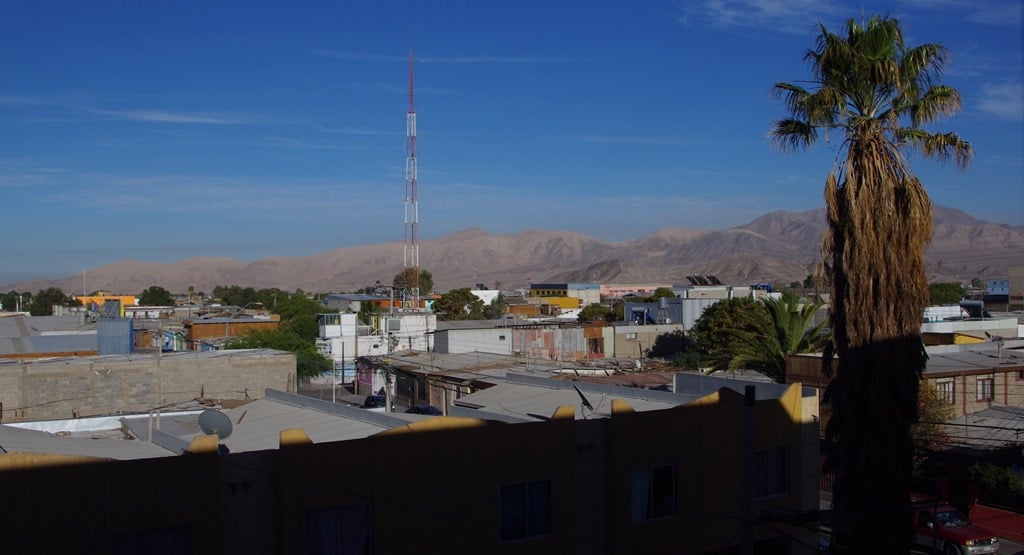
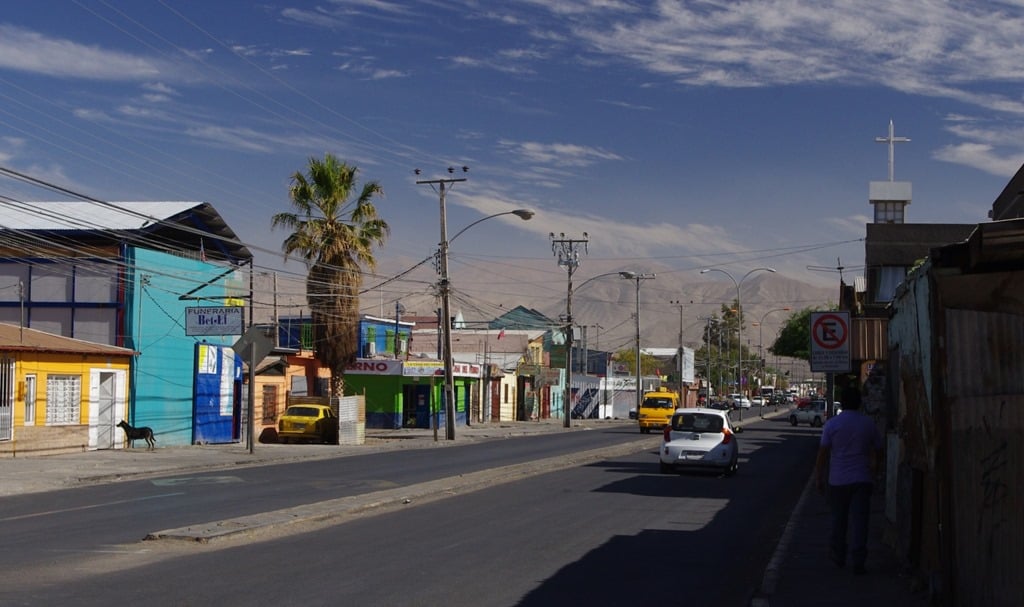
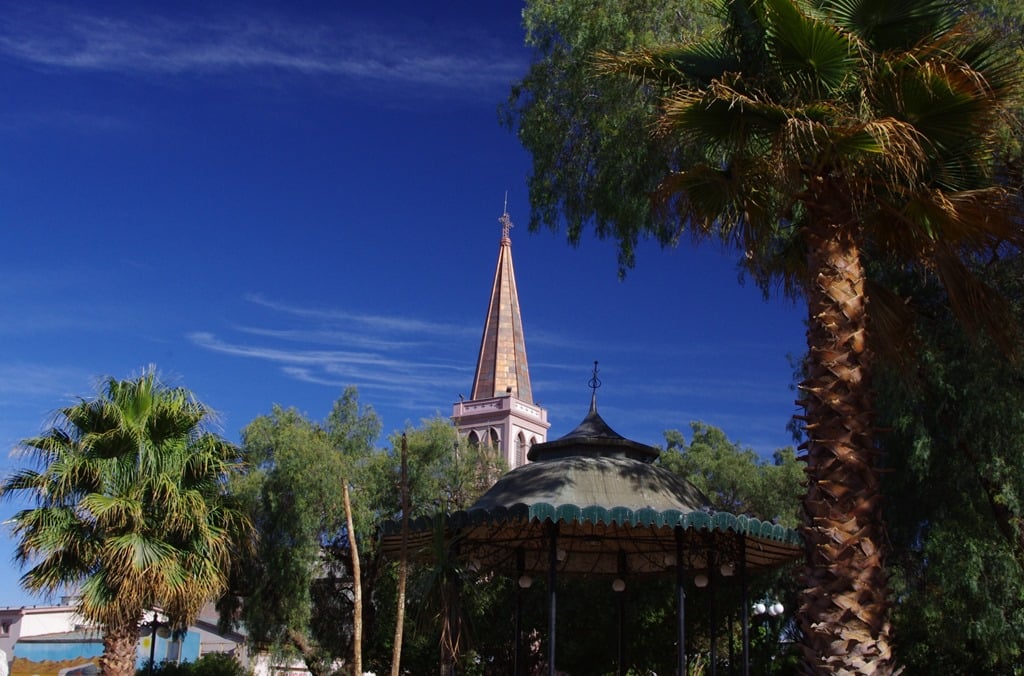
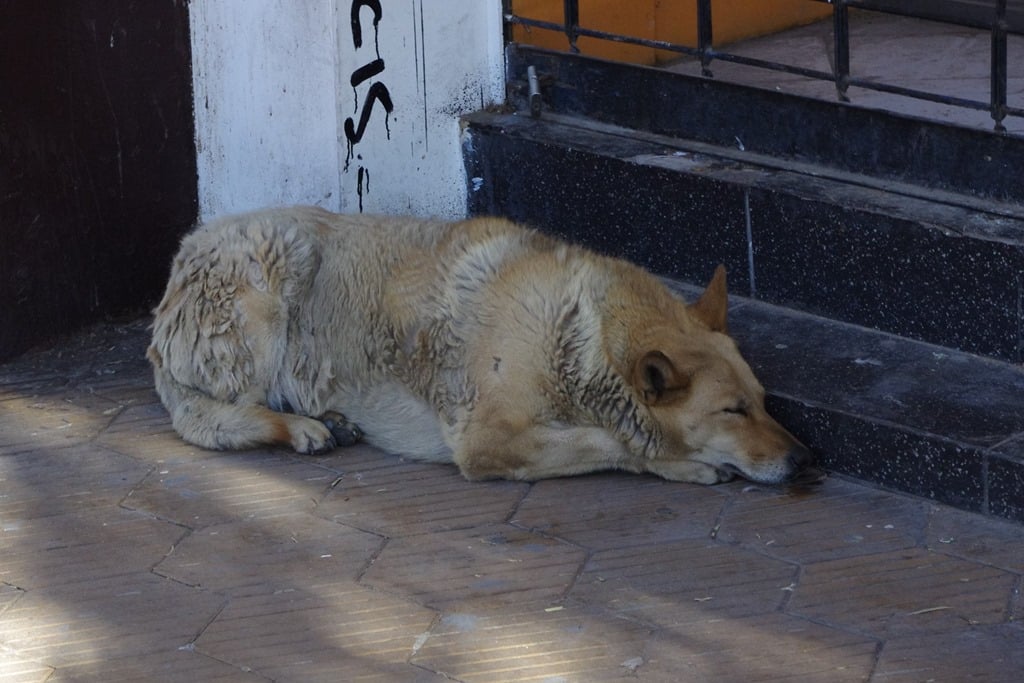
I hadn’t planned to come to Frutillar in my itinerary, but the problems at the campsite in Entre Lagos meant that I came here in the hope of finding a better option. I’m very glad I stopped: not only was the weather better, but the town is beautiful.
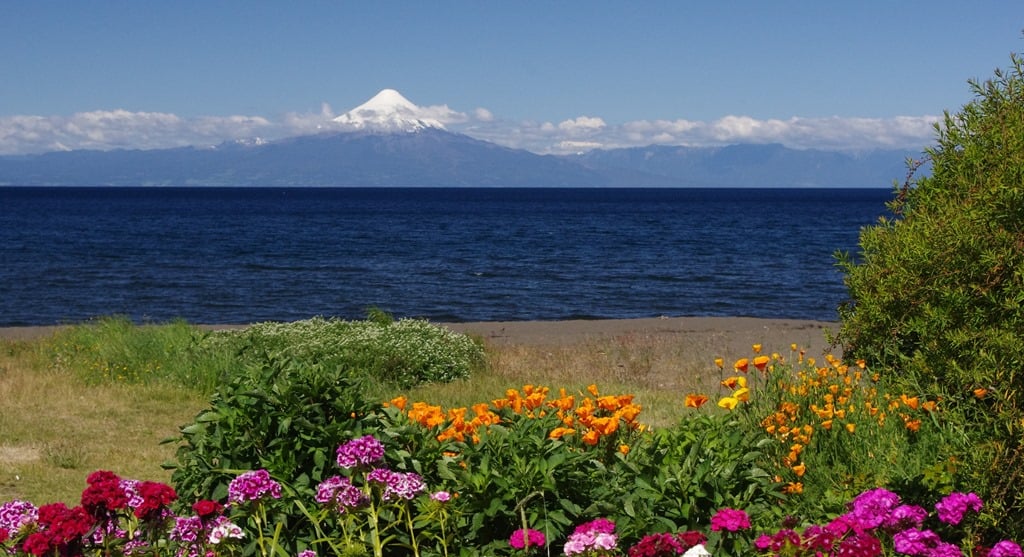
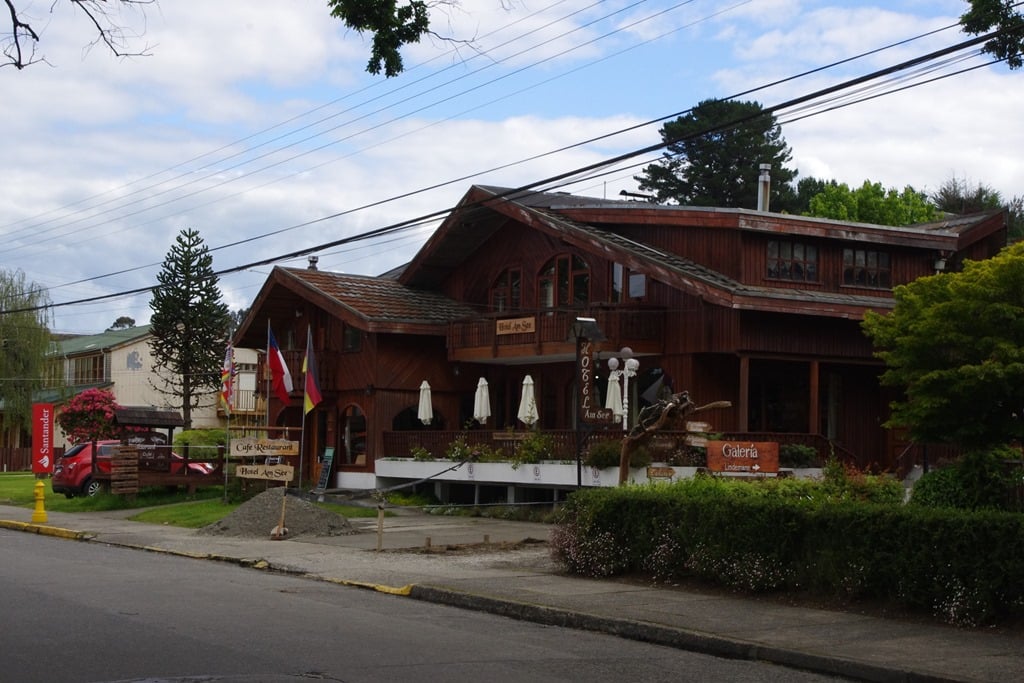
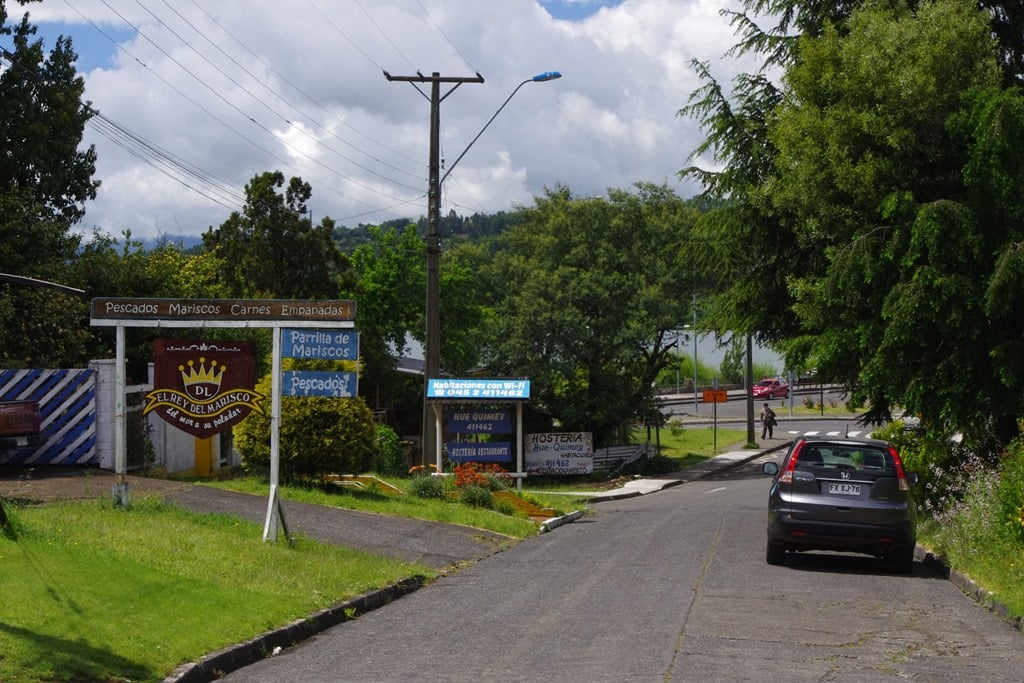
Frutillar, located on the banks of the Lago Llanquihue and in the shadow of the Volcán Osorno, is one of the places in the region that retains a very Germanic feel. Not only does much of the architecture look as though it has been plucked from Alpine villages, but along the lakefront there are plenty of picturesque shops selling ‘Küchen’ (which seems to be basically any form of fruit-based cake) and Strudel. There’s even the first Lutheran Church that I’ve found in Chile.
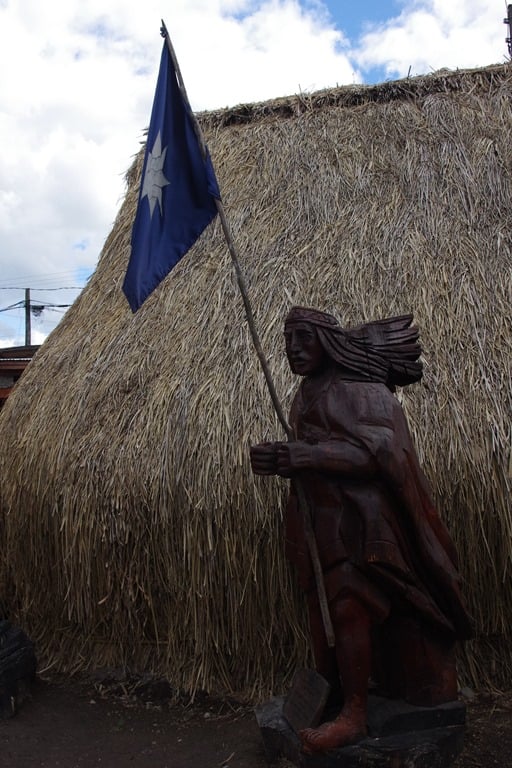
This is no accident: in the mid-nineteeth century the Chilean government encouraged immigration to dilute the power of the Mapuche in this area, and the Germans in particular answered this call.
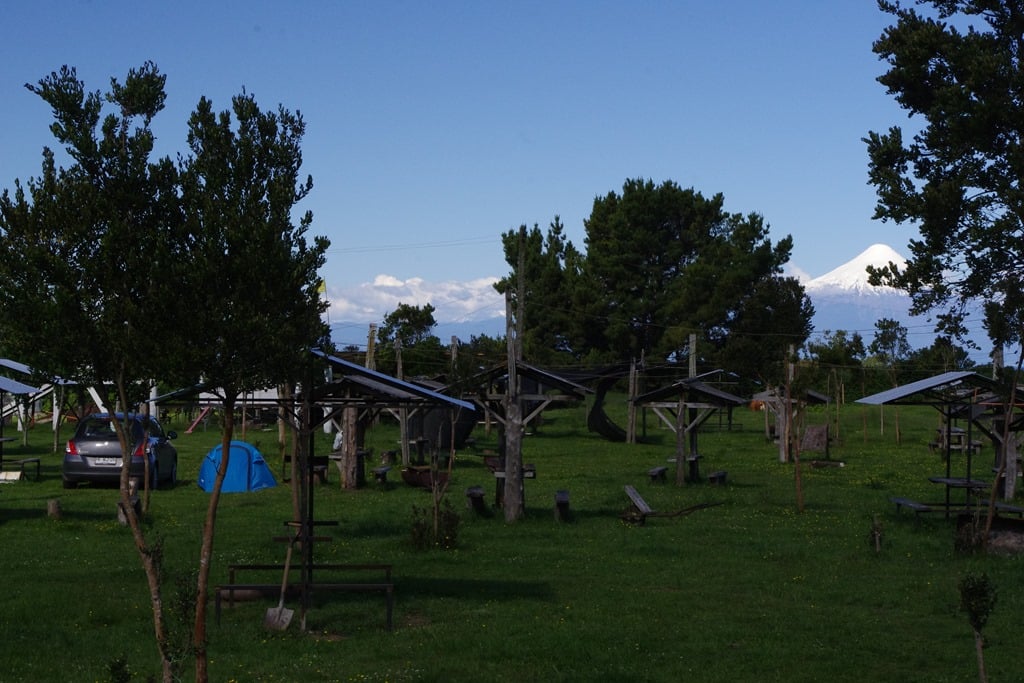
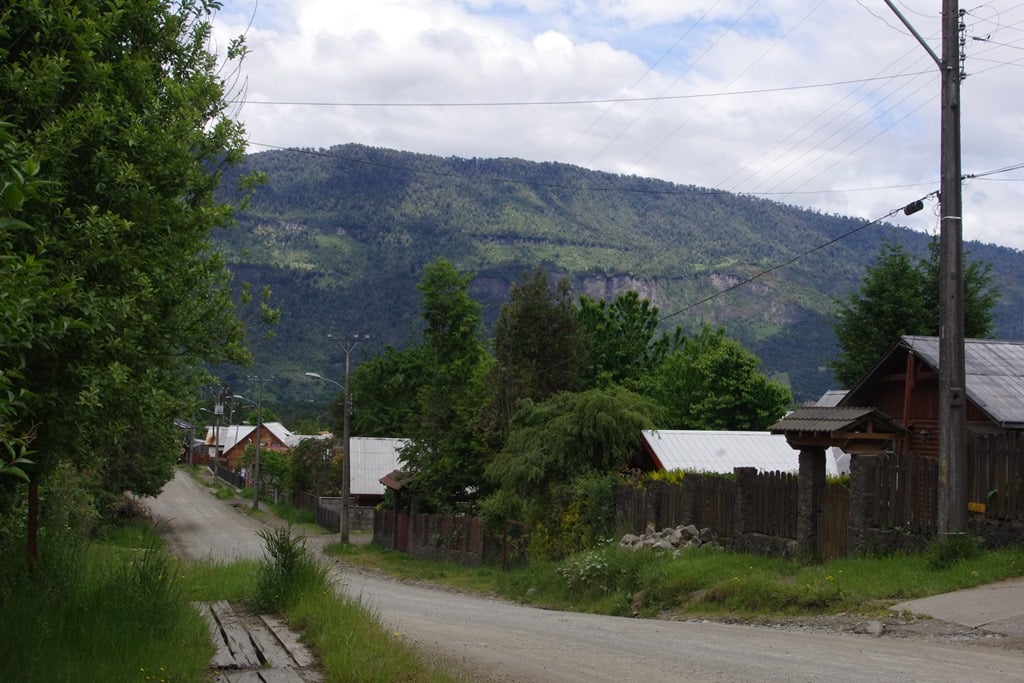
The town itself is split into two – the lower town by the lake is the tourist area and, probably about a mile away uphill, is the upper town, which is the business end of things. The main campsite is between the two, which means it has some spectacular views towards the volcano. It’s also a working farm, and the menagerie of ducklings, cows, dogs, tiny kittens and geese wondering past your tent meant anything could happen. There was lots of interest in what I was doing, particularly when it involved cooking!
It was from here that I also took part in the CQWW DX CW amateur radio competition for 2015. More on that in a different post…
This post is about my entry from Chile in the CQWW CW Amateur Radio contest. If you’re not a radio amateur, and you’re just interested in following my travels in Chile, you probably want to skip this post in the series.
Similarly, if you are a radio amateur and you’ve come here to find out about my contest entry, you may not realise this was part of a 6-week journey through the country. I was travelling light, which explains the lack of decent equipment!
Score
Firstly, the bit you’ll be most interested in:
Contest : CQ World Wide DX Contest
Callsign : CE3/M0BLF/7
Mode : CW
Category : Single Operator (SO)
Overlay : —
Band(s) : Single band (SB) 15 m
Class : Low Power (LP)
Zone/State/… : 12
Locator : FE38LU
BAND QSO CQ DXC DUP POINTS AVG
————————————–
15 34 7 6 1 86 2.53
————————————–
TOTAL 34 7 6 1 86 2.53
======================================
TOTAL SCORE : 1 118
Equipment
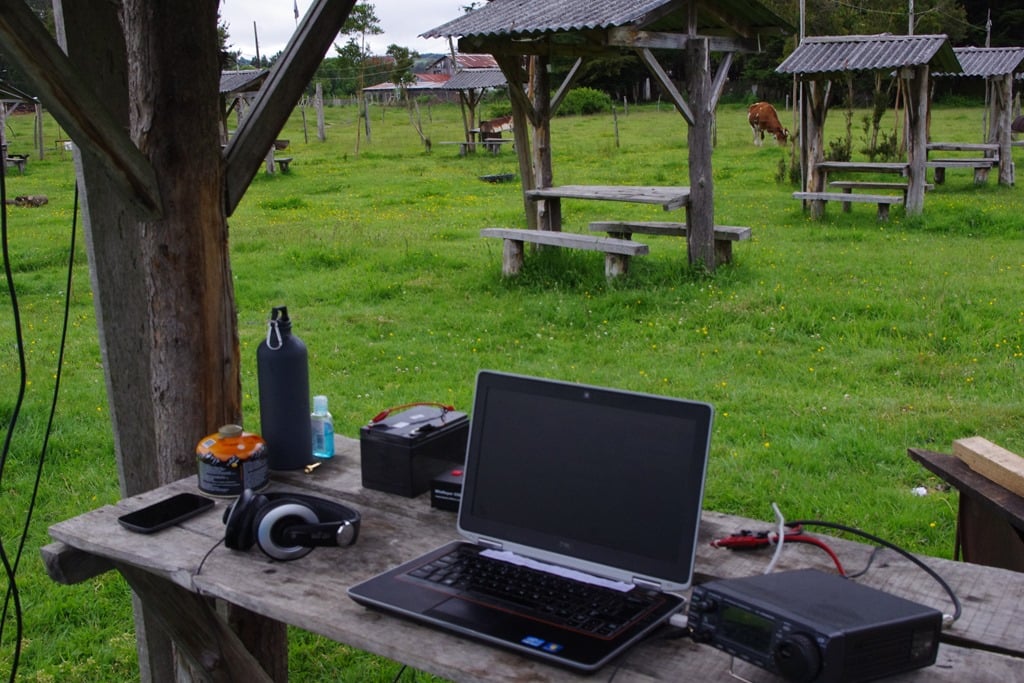
I was very limited for space for this activation, as I only had one 23kg suitcase and one backpack that had to contain everything I needed for 40 days’ travelling, including camping gear. As a result, the equipment used was:
IC-706Mk2G
Gel cell battery (12V/12Ah) – purchased back in Temuco
15m dipole at about 3m AGL – that’s as high as I could get it given a lack of trees around the camping pitch
WinKeyer USB
Laptop with Win-Test
and that was it. I had brought my Bencher paddle (despite the weight!) but it had developed a dodgy connection and I hadn’t brought a soldering iron, so I wasn’t able to send manually. Unexpectedly, however, I did have the ability to recharge the gel cell on my camping pitch, which meant I was able to operate for longer than originally expected.
Given the fact that I was under battery power, I had to keep the power down. I typically limited it to about 40W. For anyone who hasn’t tried to operate in a major contest with this restriction, it’s an interesting experience. I found myself pondering the optimum gap to leave between CQ calls, as every unanswered call was potentially wasted power. I also had to choose operating times carefully, of course, to allow time for recharging in the quieter periods. I’d listened to 15m the previous weekend (during Sweepstakes), while I was in Villarica, to aid this choice.
My entry was SOSB on 15m, unassisted (there was no internet on the campsite).
My limited station on the campsite, which is also a working farm, hence the cow in the background. The dipole was strung between a couple of the shelters.
Conditions
Conditions were broadly worse than expected, even given my limited equipment. I could tell I was a long way south, and far from most major centres of population. The European opening predicted by VOACAP around midday UTC was certainly there, and there were some fairly big signals from Europe but when called they either couldn’t hear me or, in some cases, got a partial call then gave up before getting the rest.
Outside of the contest, it was good to work two friends in Cambridge (Martin G3ZAY and Rob M0VFC, both operating from the G6UW Cambridge University Wireless Society shack) on the Sunday EU opening, which proves the path was there with a bit of effort.
There was a better opening to the USA in the late afternoon / early evening local time (around 21 UTC), which is where I got most of my QSOs on the Saturday, but not so many on the Sunday. Even when I could tell I had been spotted, it didn’t sound like I had many callers, though. I wonder whether that was me not hearing a pile-up, or whether it wasn’t there.
Callsign
So, what was with the strange callsign I was using? I’d been issued the callsign CE3/M0BLF via the Radio Club de Chile. Since I wasn’t staying in a single place during my trip, they kindly let me use the Radio Club HQ address for my licence address, which is why it was issued in zone 3 (Santiago).
I wasn’t in Santiago for the contest, however. I was in the Región de los Ríos, most of which is zone 7. Hence CE3/M0BLF/7.
If you had understood I was expecting to be CE3/M0BLF/6 in the contest, that’s correct. The different zone was a result of moving campsite unexpectedly. If you want to know why I moved, there’s more information on the Entre Lagos blog post.
Electricity supply
Although I was using batteries for the contest, I know that many radio amateurs like to know about mains systems for their own travels, so this bit is for you!
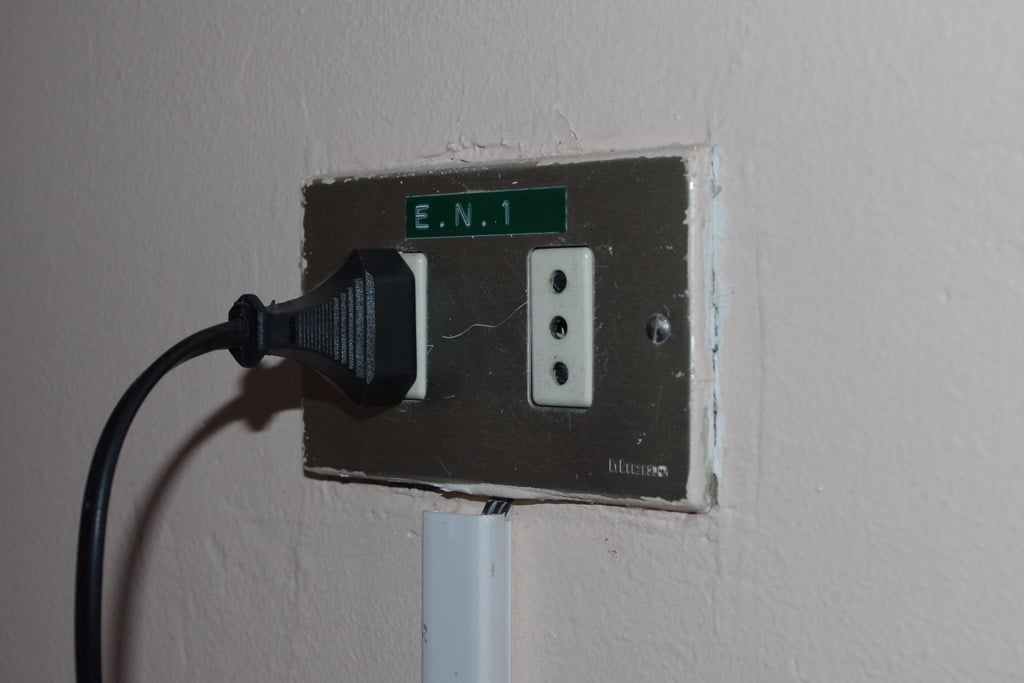
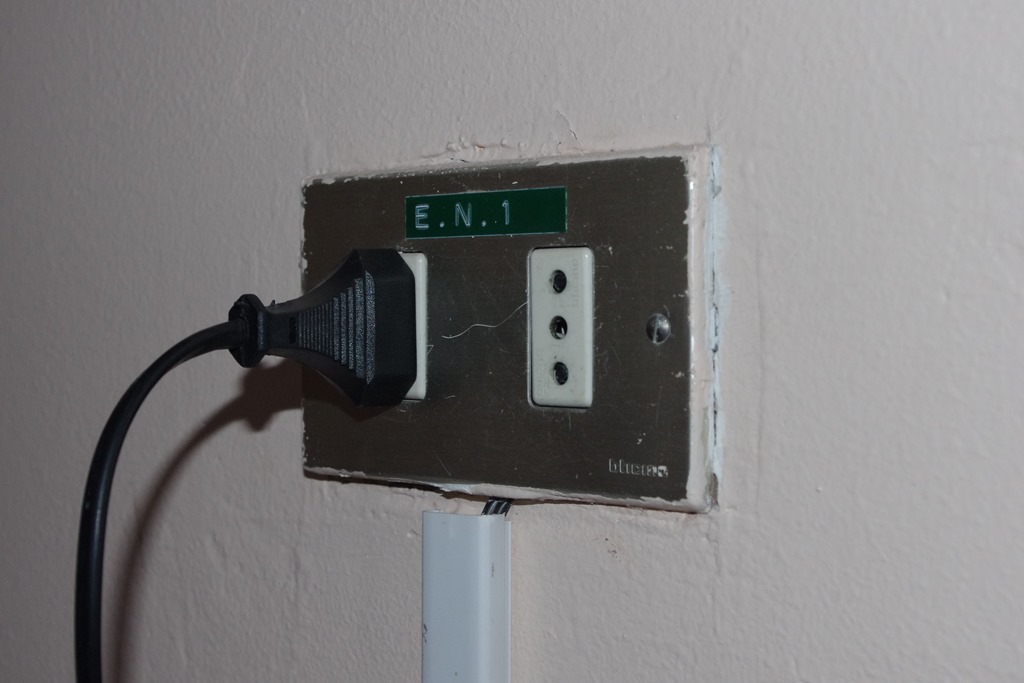
Chile has a 220V, 50Hz mains supply, similar to most of Europe (but unlike North America). The plugs used are ‘Type C’, which I hadn’t come across previously.
By design, Type C plugs have a very useful feature: the middle pin is the Earth and the two outer pins are Live and Neutral. These are identical in dimensions and separation to the continental European ‘Schuko’ standard, which means a European plug will work fine in a Type C socket, as long as you don’t need an Earth connection (and let’s face it, a lot of equipment is double-insulated these days).
There is a catch, however: Chile is increasingly moving towards what I gather are called ‘Type F’ sockets. These look superficially identical to Type C, except that the Live and Neutral pins are physically blocked off unless the Earth pin is also present (this is also a feature of British Standard sockets, of course). This means that standard Schuko plugs won’t go into a Type F socket, even though it looks the same as a Type C.
For guidance, I found that every hotel room – even more modern ones – I went to had at least one Type C socket in the room, but Type F were understandably more common in bathrooms and on campsites, for example. A casual look around some shops suggests that it may no longer be possible to buy Type C sockets for new installations, but I don’t know whether that’s just due to them only having Type F in stock, or by legislation. Anyway, when I did need one, I was easily able to pick up a cheap Schuko – Type F adaptor in a larger branch of the Jumbo supermarket, complete with Earth pass-through. I also bought a 10m Type F extension lead, which was useful for hooking-up at campsites during my travels.
After the chaos of Osorno, I was looking forward to a nice quiet campsite for the next few days. I certainly found quiet – so quiet, in fact, that despite being ‘open’, the campsite didn’t even have any water in the toilet cisterns and the showers were still in a state of having woodwork done in them. To make things even worse, it rained quite hard all day. I did get a chance for a quick walk around the village in the afternoon and quickly determined that there wasn’t enough to be worth staying, so by the evening I’d opted to sleep there for one night and to move on the following day.
I’m sure that Camping Vista Hermosa is lovely enough during high season (it certainly has what would have been a spectacular view had I been able to see it through the rain), but at this time of year it really shouldn’t have been advertising itself as being ‘open’.
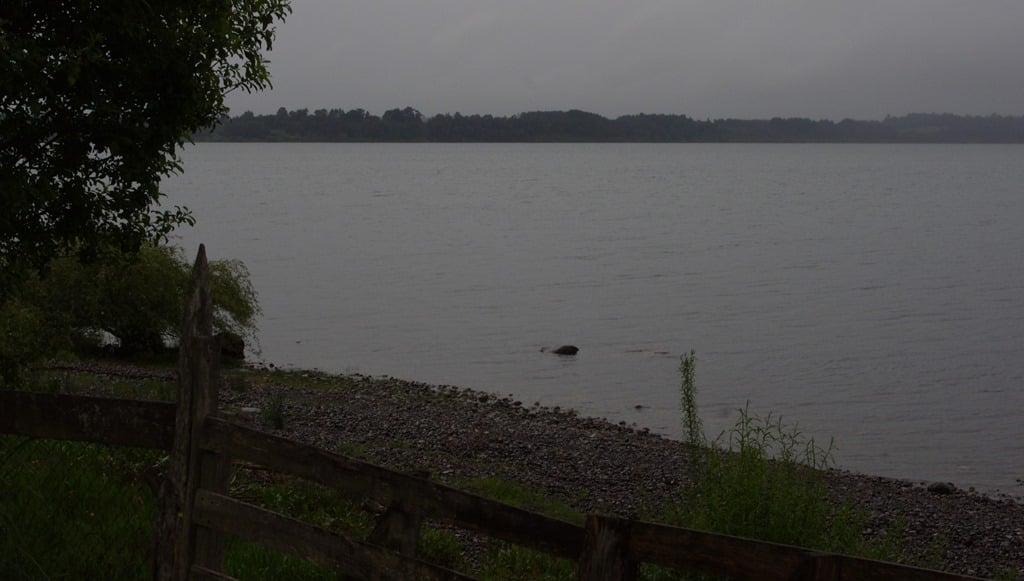
The view from the private beach at Camping Vista Hermosa
The drive from Valdivia was easy. Again, traffic on Ruta 5 was surprisingly light. There were two tolls, one just south of Valdivia (2200CLP, about £2.20) and another at the exit to Osorno (600CLP). There were none of the problems with roadworks that affected me yesterday.
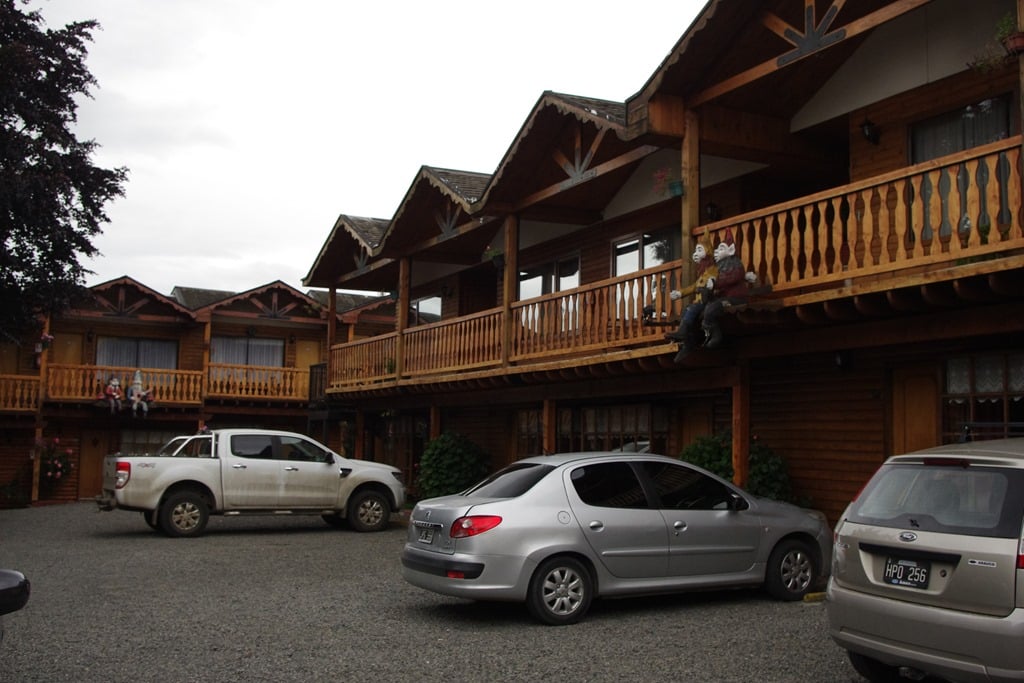
The only issue was finding the hotel. It’s just on the outskirts on the main road into Osorno, so much so that it took me by surprise. The apartments at Apart Hotel Blumenau are very nice, and mine even more so – a mixup with my booking (to which I was oblivious) meant that I ended up with a huge room for four people. Incidentally, you might gather that this area was largely settled by Bavarians, hence both the architecture in Osorno and the fact that Valdivia’s greatest export is probably Kunstmann beer, a very Germanic-style beer, complete with the slogan ‘Das gute Bier’.
Osorno
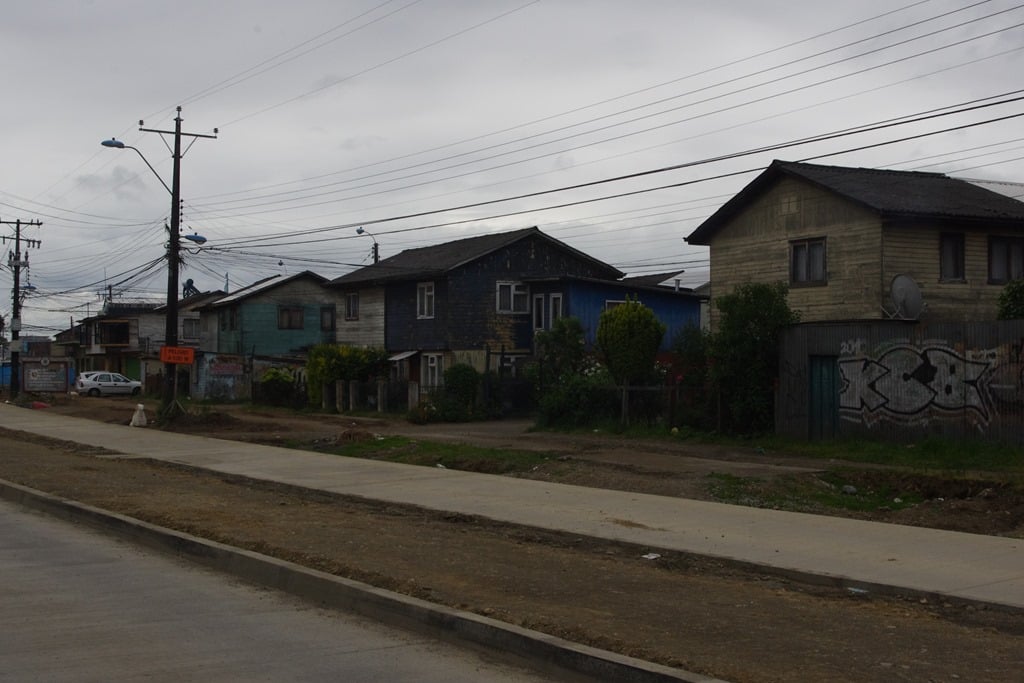
What to say of Osorno itself? One phrase comes to mind: building site. I’m very glad my hotel is a couple miles from the town centre because going any further into the city by car would be a nightmare. A large number of the roads seem to be being dug up and there are diversions everywhere. This rather detracts from the wooden houses, which my guidebook euphemistically describes as ‘weather-beaten’, for which the city is famous.
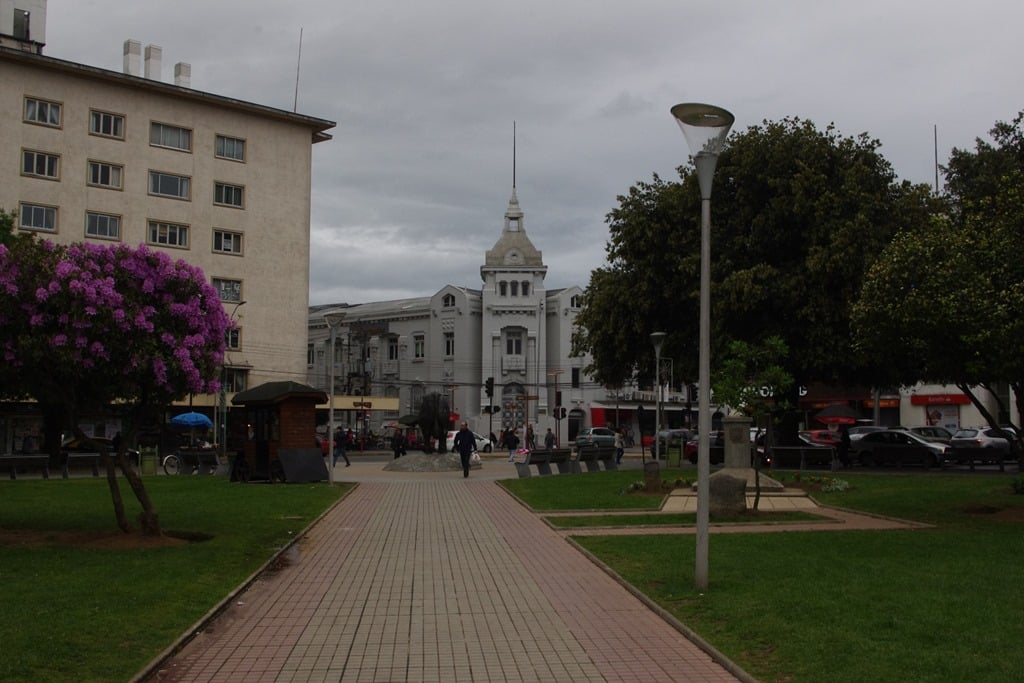
Osorno, according to everyone I’ve spoken to, is the centre of Chile’s agricultural industry and is home to a major cattle market twice a week. Other than a few milk cooperatives, however, I saw very little sign of this. There seem to be a surprising number of car garages and forecourts on the roads into the city, which is much larger than would be suggested by an ‘agricultural centre’. Once you find the city centre, however, it’s quite pleasant but still very busy (despite how the photo below appears!).
There’s really not that much more to say about Osorno city itself, so I’m looking forward to heading back inland towards the lakes tomorrow. It sounds as though the weather, which has been showery for the last couple days, should improve over the weekend too, which will be good as I’ll be under canvas once again.
I’d been warned by Carlos back in Temuco that Valdivia isn’t an easy place to drive. So it turned out. This is a city of complex one-way systems, multiple lanes and taxis that aren’t afraid to undertake you if you don’t know where you’re going. But that wasn’t the biggest problem. The main road from the Panamerican Highway into Valdivia, the S206, had roadworks for several kilometres. These particular roadworks, for which there was no signed diversion, involved several sets of contraflows controlled by stop/go boards, and most of the road had had its surface removed, even where there was no obvious work taking place.
Valdivia
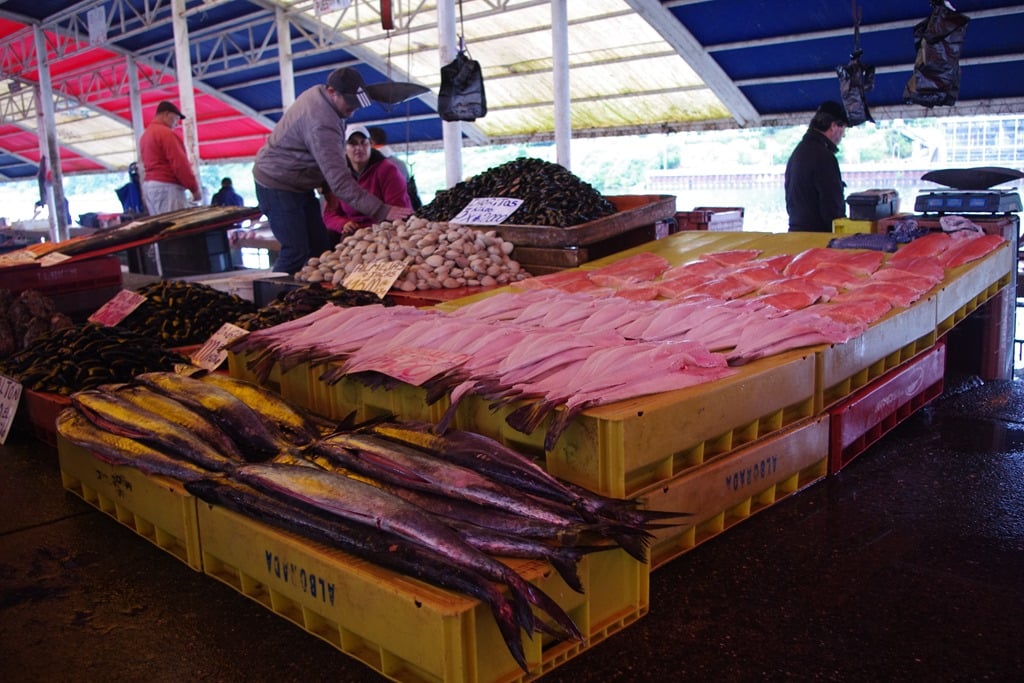
Once I was here, however, Valdivia is a pretty city. It’s larger than I was expecting and largely commercial. The river is the focus of the city, with the famous Feria fluvial (literally ‘River fair’, the daily fish market) being the centrepiece.
This is a quite amazing place, with a huge variety of fish and other seafoods available, all looking completely fresh (though none of it seems to be refrigerated at all, not even with ice cubes, so I’m not sure how long it would stay that way). I didn’t buy any fish due to the fact I’ll be camping in the coming days and cooking it would have been difficult, but I did leave with 500g of beautiful looking, new season, strawberries.
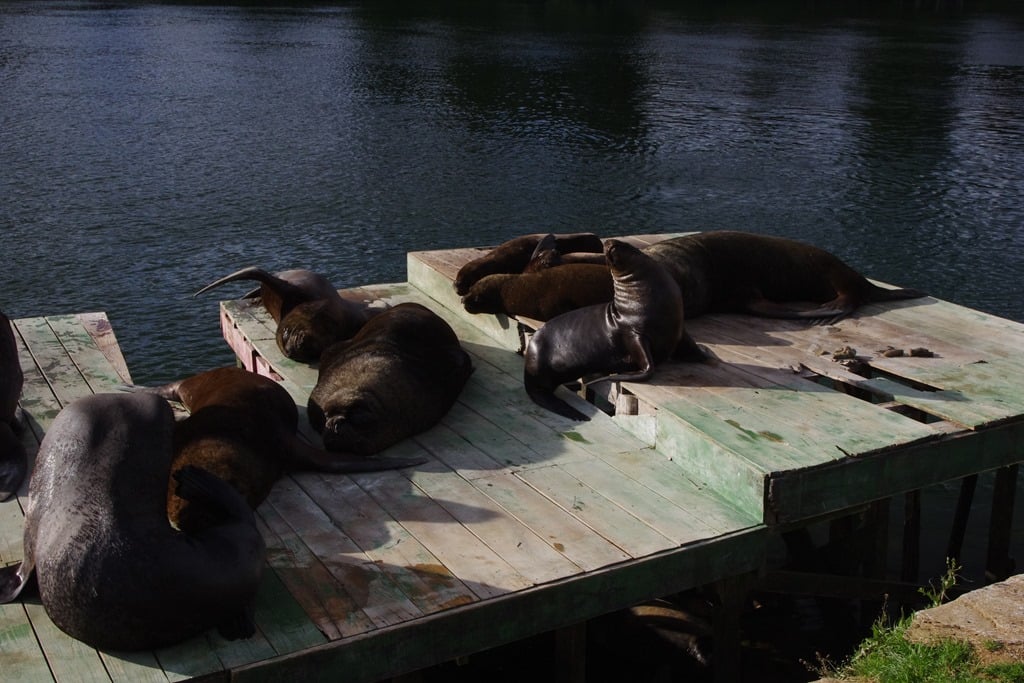
One attraction my guidebook hadn’t warned me about was a colony of sea lions that seem to have taken up residence by the river. These bellicose creatures garnered the attention of a number of tourists with their constant (and often loud) fights right in the heart of the city centre!
Fuerte de Niebla
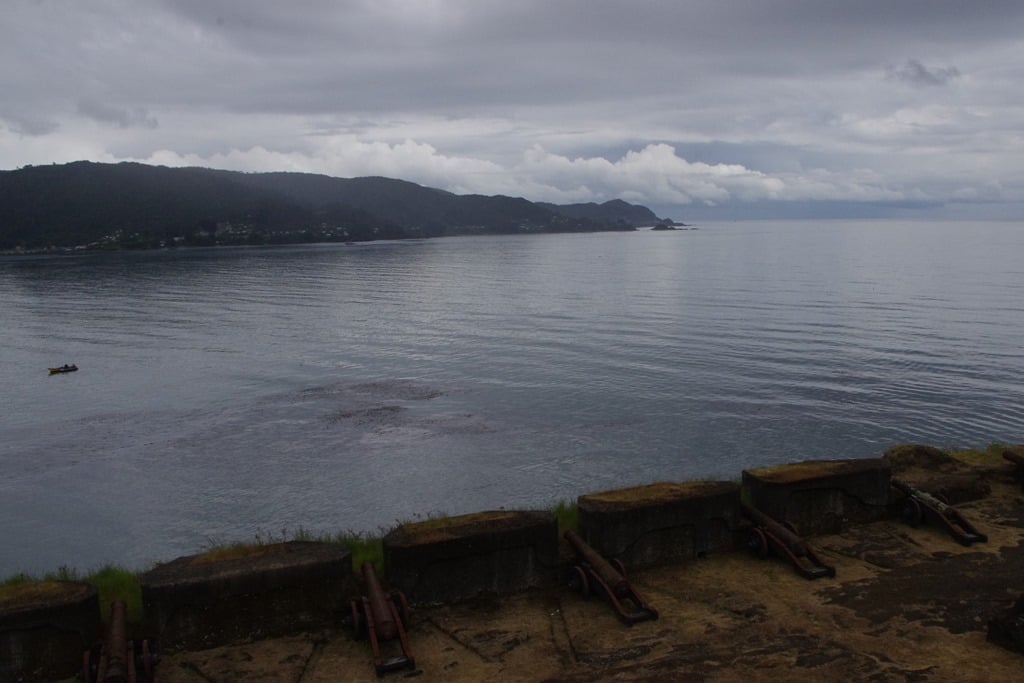
Valdivia was once a stronghold of the Spanish colony in Chile, and the city was defended by a series of forts guarding the entrance to the river leading to Valdivia. Most of these forts are no longer in place, but one, in the village of Niebla (about 20km west of Valdivia), is still standing. Since my hotel room wouldn’t be ready until 3pm, I made the detour to see the fort on my way to the city.
The fort stands on a cliff right at the mouth of the estuary, looking out into the Pacific Ocean – a very picturesque spot, and it’s clear why this location was so impenetrable for the forces demanding Chilean Independence.
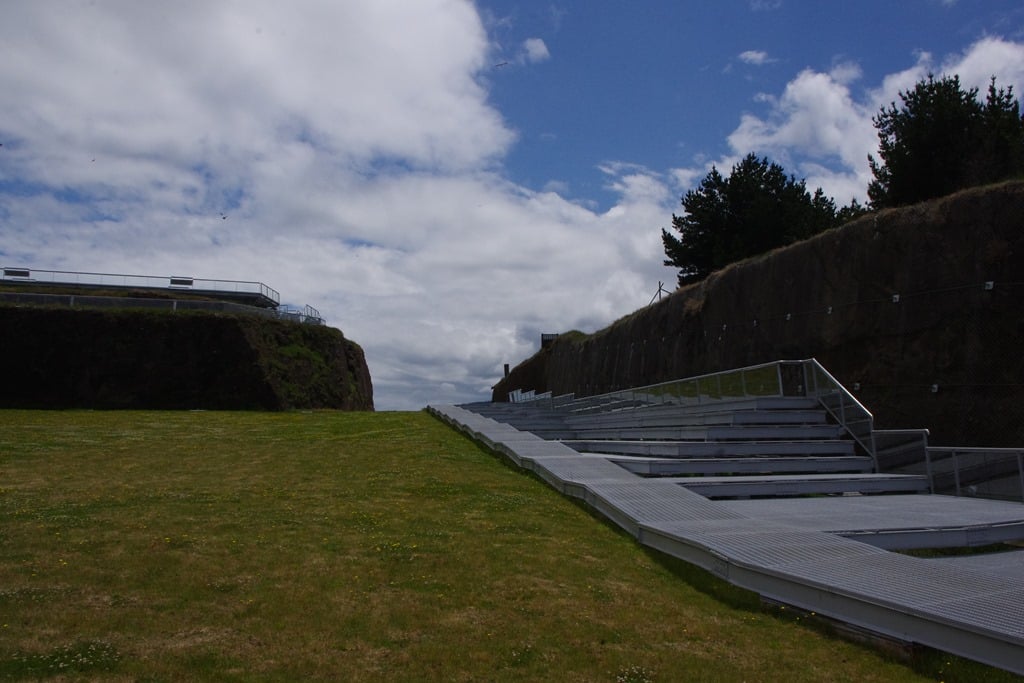
The only disappointment here is that, in a laudable attempt to improve wheelchair access to the site, the place has been covered in stainless steel ramps, which rather spoil the spot and make it hard to distinguish some of the original stonework which make up the fort.
The journey from Temuco to Villarica is very straightforward and traffic was light. Ruta 5, as the Panamerican Highway is known in Chile, is a toll road but the only toll I had to pay was 2200CLP (about £2.20) just South of Temuco.
Campsites
Having thought that my drive (given my unfamiliarity with the hire car) was likely to be the most stressful part of the day, it turned out not to be so. I’d planned a long list of campsites to stay at but not actually reserved at any of them both to allow myself a little extra flexibility and because I know it wasn’t yet high season.
Despite the fact that all the campsites on my list advertised themselves as ‘Open all year’, they were all either closed or, in one case, ‘open’ but remote and with no hot water on the site. After several drives between Villarica and Pucón (which are about 20km apart), I finally realised I wasn’t going to be able to find anywhere that was open on a cool, drizzly day and so I went looking for a hotel instead. I did eventually find a hotel (which was rather more expensive than I’d have liked, but I do have a contingency budget for such things), where I could stay the night in Villarica while I looked for somewhere else. I did eventually find a campsite, and so I was able to spend three of my four planned nights under canvas.
Camping Du Lac, just on the outskirts of Villarica, is quite nice and good value at only about £5 per night. On two of the nights, there was one other couple staying there, but the middle night I had the place to myself. The toilet blocks left something to be desired, both in cleanliness and functionality (more than one toilet required you to delve inside the cistern to operate some part of the mechanism!) and, despite the fact you could hear the boiler firing up when you opened the tap, I’d disagree with the owner’s assurance that there was hot water – it was tepid at best – but it was somewhere to stay.
Villarica
Villarica itself is quite nice. It’s one of the places Chileans come to holiday and that was evident even though it wasn’t yet high season. The town fronts onto the eponymous lake as well as being overlooked by the Volcán Villarica, one of Chile’s most active volcanoes (it last erupted in March 2015, just eight months ago). Even when dormant, it must be quite a sight on a clear day but sadly all the time I was here, the volcano was hidden by cloud.
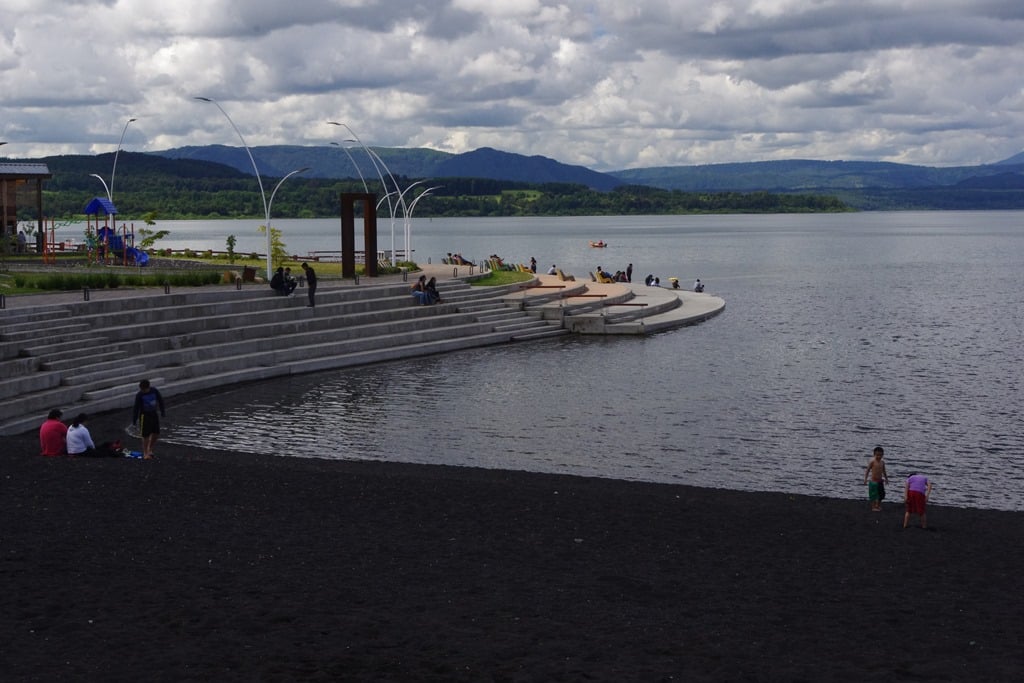
Despite being out of sight, the volcano makes its present felt nonetheless: midday is marked each day by an air-raid siren, sounded to test the town’s evacuation alarm. The holiday-makers don’t seem to mind this ever-present threat as they play in the sand, which is presumably black from a high content of volcanic ash.
As mentioned, Chileans come here on holiday and the roads all around are full of Cabañas (sort of holiday rental apartments), restaurants, and other hallmarks of the tourism industry. Indeed part of my problem to find a campsite was due to the fact that when Chileans advertise a ‘Camping’, they might just mean a plot full of cabañas. There might not be any spaces for tents!
In Villarica I also came across a German couple who had shipped their camper van from Germany to Canada and then gradually adventured through the Americas this far south. It was a great surprise to see a German-registered vehicle on this side of the Atlantic and their odyssey makes my journey seem comparatively modest!
The area around Villarica was once – and still is – home to the Mapuche Indians. The town makes a rather tacit nod to that heritage in the Cultural Centre, which has an exhibition house you can visit, but it felt very empty, like something set up just for tourists.
Lago Cabagua
I was in the Lake District to see the lakes, of course, and having lost a day due to the campsite problem, I spent the next two days on excursions to see some of the other destinations in the area. One resource I read before coming made the bold claim that the Chilean Lake District is more spectacular than the British one. It may partly have been the overcast weather and the fact that everything looked as though it was in low season, but I have to say I felt underwhelmed. Perhaps my expectations had been raised too much.
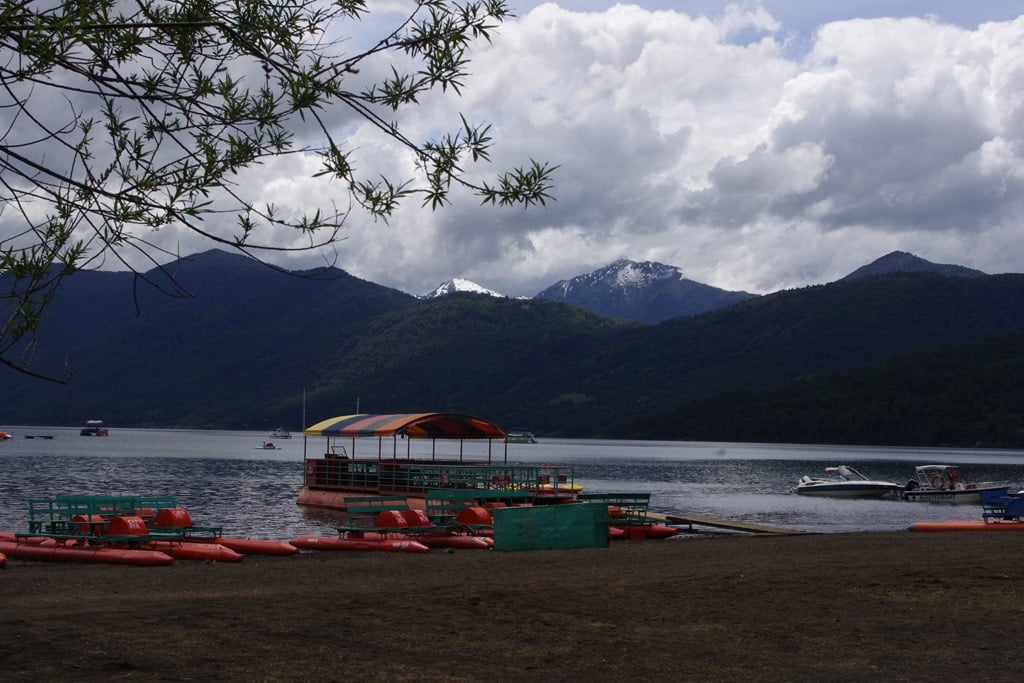
Don’t get me wrong: Lake Cabagua was pretty enough, but the boats lined up along the shore, waiting for customers who weren’t there, made the place feel lacking.
Coñaripe
Perhaps by virtue of being a large village as well as a lakeside resort, Coñaripe was a much more interesting place to visit. Located to the south of Villarica, it’s the picturesque meeting place of another lake, the Villarica National Park and the other side of Volcán Villarica.
From Iquique, I flew to Santiago and then, after a one night stay, I flew further south to Temuco. Don’t worry: I’ll be returning to Santiago at the end of the trip. My logic is that, if I get delayed by bad weather in Tierra del Fuego, which is not unlikely, it’s better to have fewer days in the capital than to miss my return flight to London.
As usual, the flights were fairly unremarkable except that the flight to Temuco, which was only about an hour long, didn’t really give the cabin crew enough time to serve the snacks before descent. Being right at the back of the Airbus A320, we were served during decent which led to a fair amount of flying drinks when we hit some turbulence going through the cloud layers!
My original plan was to reach Temuco by train from Santiago. Chile doesn’t really do trains except for freight and the occasional Santiago-Temuco service is one of the few remaining passenger lines. However, the services are infrequent and, discovering I could get a free flight in return for a few Avios points I had accumulated, flying seemed the more sensible option.
A note to any of my colleagues reading who are planning their sabbaticals: do get a credit card that gives Avios, Airmiles or similar. It’s well worth it if you’re planning to travel.
Temuco
Before coming to Chile, I’d emailed Carlos CE6MDL from Temuco Radio Club to ask where to buy a specialist battery for the radio gear I wanted to use from the Lake District, which I couldn’t carry on flights. Carlos turned out to be an absolute star: not only did he take a day of work partly to take me to get the battery, he then bought me lunch with his wife, took me to get my hire car to save me the taxi ride, ensured I drove it back to my hotel safely (the Suzuki Swift is both left-hand drive and automatic, both of which are unusual for me!), took me to his house to wash some clothes and then invited me to the weekly Temuco Radio Club barbeque at his place! Thanks so much, Carlos!
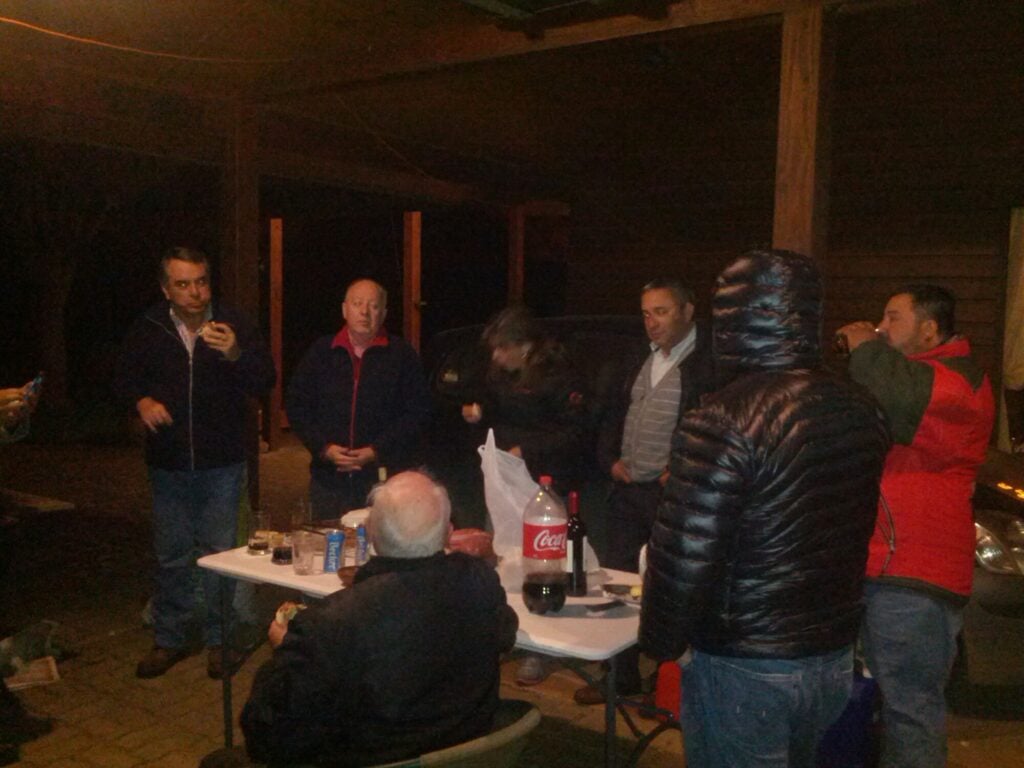
Unfortunately, the dinner was a rather later affair than I had hoped. Despite starting at 8pm, the meat didn’t come off the barbeque until after 11pm, and it was well after 1 am before I got home.
The region is currently going through an unseasonally cold snap. By this point in late spring, it should be getting to 20c by day. It’s actually only been about 15c, and this morning temperatures were as low as 6c. Luckily it’s not forecast to be quite so child in the next few days but my planning camping over the next couple of weeks could be decidedly nippy.
The day spent with Carlos Aldo meant I didn’t have much time to explore Temuco but from what I did see, it’s a pretty simple, commercial town with not a huge amount of interest for tourists in the built up area at least.
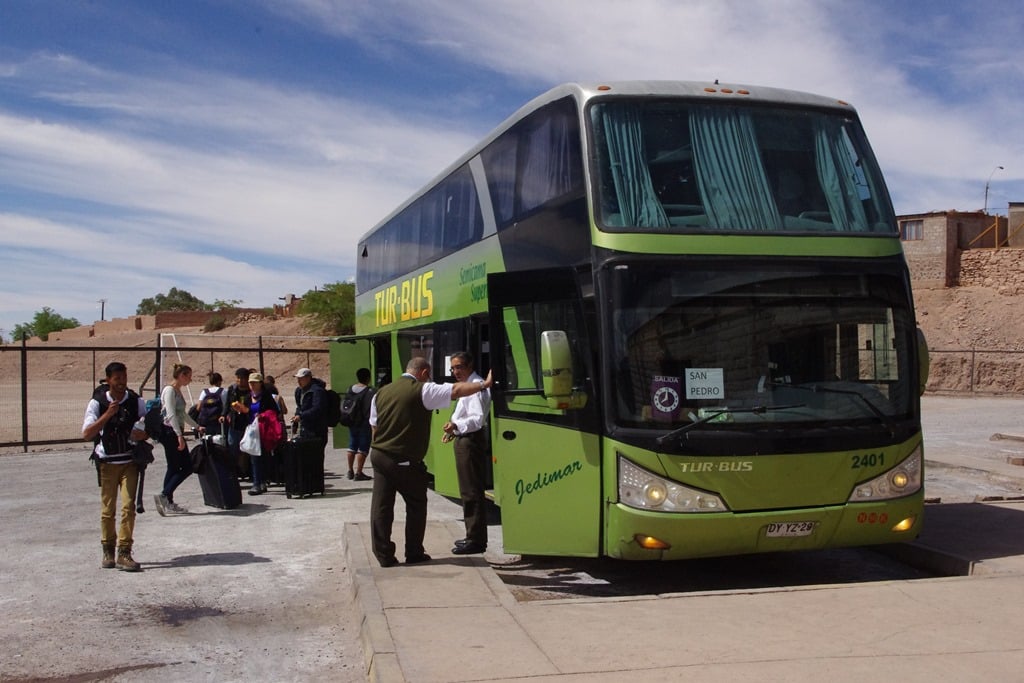
The journey to San Pedro de Atacama from Calama is a relatively short one: about 1h45m according to the timetable. Unfortunately, whilst the bus arrived in Calama only a couple minutes late, we had to refill at the Tur-Bus maintenance depot in Calama which added a further delay, and then someone who had been on the bus overnight (it’s a sleeper service, I’m not sure where from) needed to go to the loo, which caused a further substantial delay. In the end, we didn’t get out of Calama until about an hour after we had been due to be on the road.
This was fine by me, however, as I’d made a mistake while booking – my hotel accommodation wouldn’t be available until 14:00 and, with a scheduled arrival at 9:45, I was going to have a long wait with my suitcase. As it was, that became only a three-hour wait in the shade of the main square in San Pedro.
Hopefully I won’t have a similar experience on the return journey as, by conscious decision given the reputation for crime at Calama bus station, I have a fairly tight change there.
San Pedro de Atacama
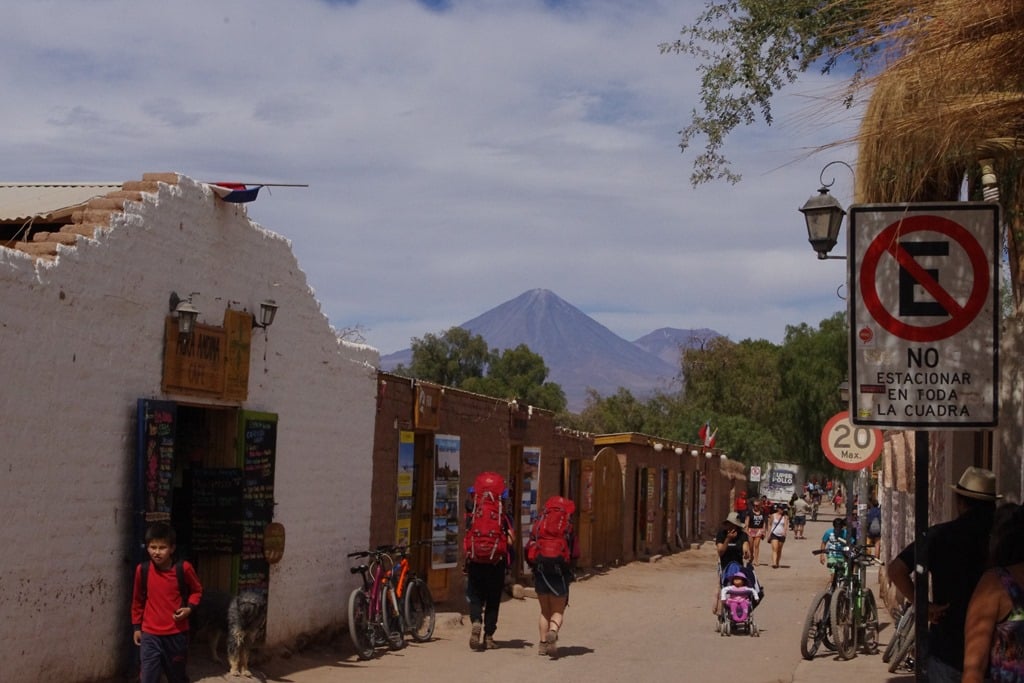
What to say of San Pedro? Arriving in San Pedro by road is impressive. After miles of just flat desert (and it’s generally a rocky desert that reminded me of parts of central Iceland, rather than the stereotypical sand of the Sahara) with mountains in the background, you come down a hill into this green oasis, full of trees and shrubs. It’s quite spectacular.
As for the town, I knew it would be touristy, as it’s the centre for organised excursions into the Atacama. But I seem to have landed in the Disney version of an Atacama village. Everything is highly commercialised – even the street signs are sponsored by the Movistar phone network – and I’m pretty certain that the majority of buildings here are more recent than they appear. Just about every European language can be heard here, as I was disappointed to find in my first few hours with an Irish couple having a very loud lover’s tiff in the main square.
The streets are fully of souvenir shops, cafes, bicycle hire shops and tour agencies. The number of times I’ve been accosted being asked whether I want to go on an excursion exceeds the number of punt tour touts in central Cambridge, and that’s not a good thing. Similarly, just out of the town centre near the bus stop, there’s a small district reserved for ‘Artisan workshops’ selling the expected ponchos and other crafts.
Prices here have been notably ramped up for the tourist trade compared to what I was paying in Iquique and Calama. Again, this isn’t something I was ignorant of – my fairly basic bedroom with shared bathroom and a free bottle of water per day(!) is costing about £45 per night, the same as the rather nicer Holiday Inn Express in Iquique – but it is a pity.
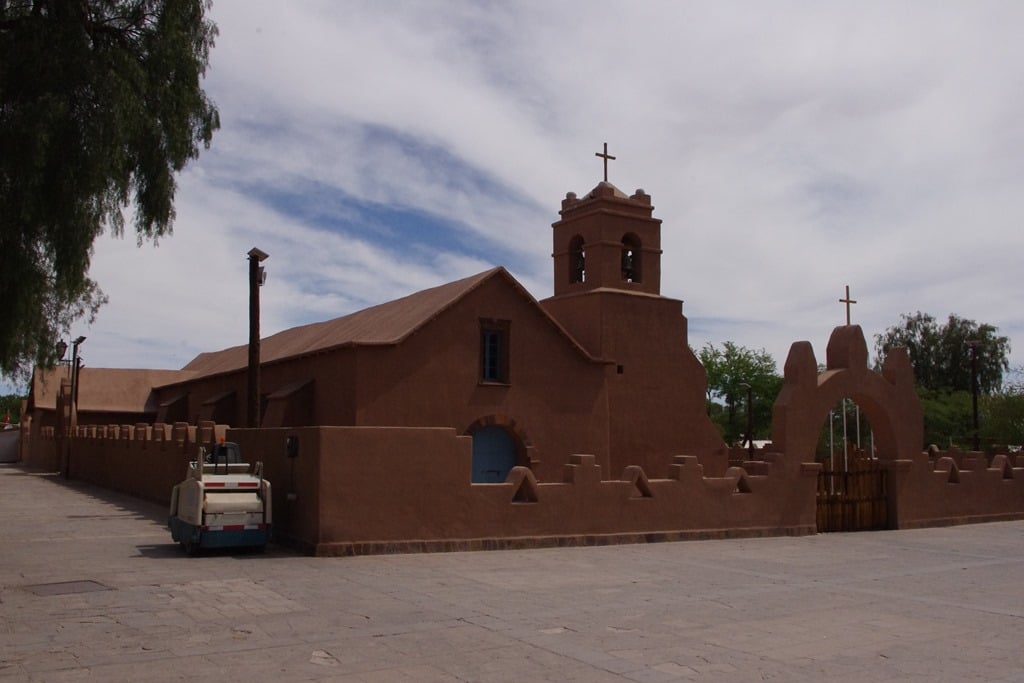
That said, there is a small genuine historical aspect to San Pedro: the church in the centre of the town dates from the earliest colonial days in the late sixteenth century. Unfortunately it was locked whenever I tried to go in. Also locked was the main archaeological museum, which is closed for renovation (as of November 2015). The Meteorite Museum is certainly worth a visit however, and it explained the phenomenon in quite some scientific detail.
One nice coincidence while I was here: Andy G4HUE, a fellow member of the Camb-Hams, turned out to be in San Pedro at the same time as me, so we had a nice couple of beers on my first evening here. It looks as though our entirely independently created itineraries will coincide again on Chiloe island in a couple of weeks time, too!
As mentioned, the reason San Pedro de Atacama is so well frequented by tourists is because it has become the base for excursions further into the desert, and that was my principal reason for being here too.
Valle de la Luna
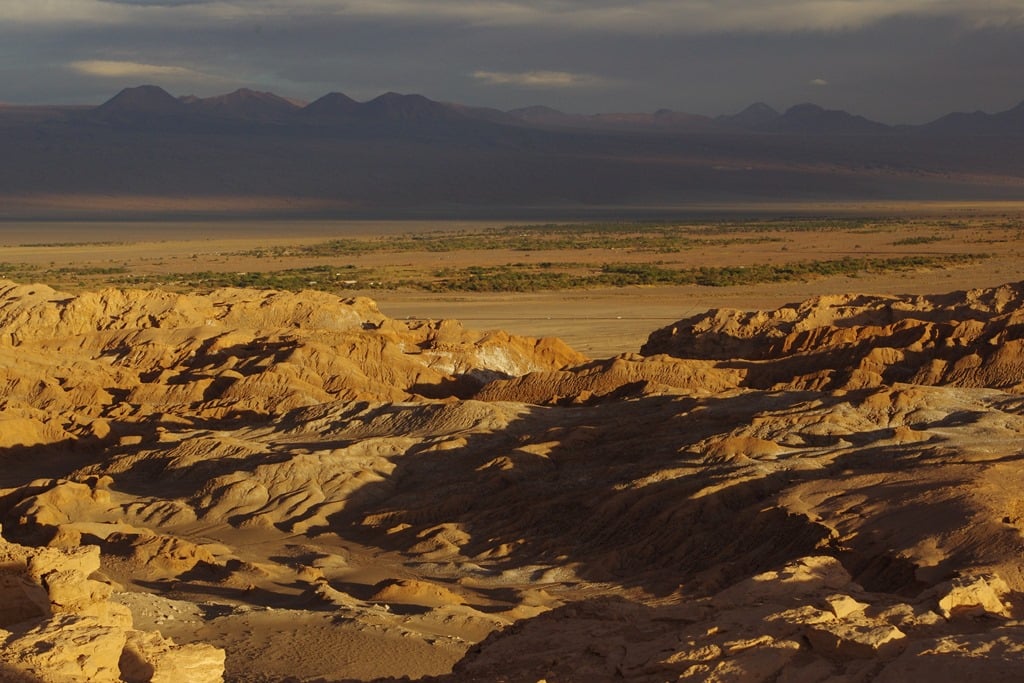
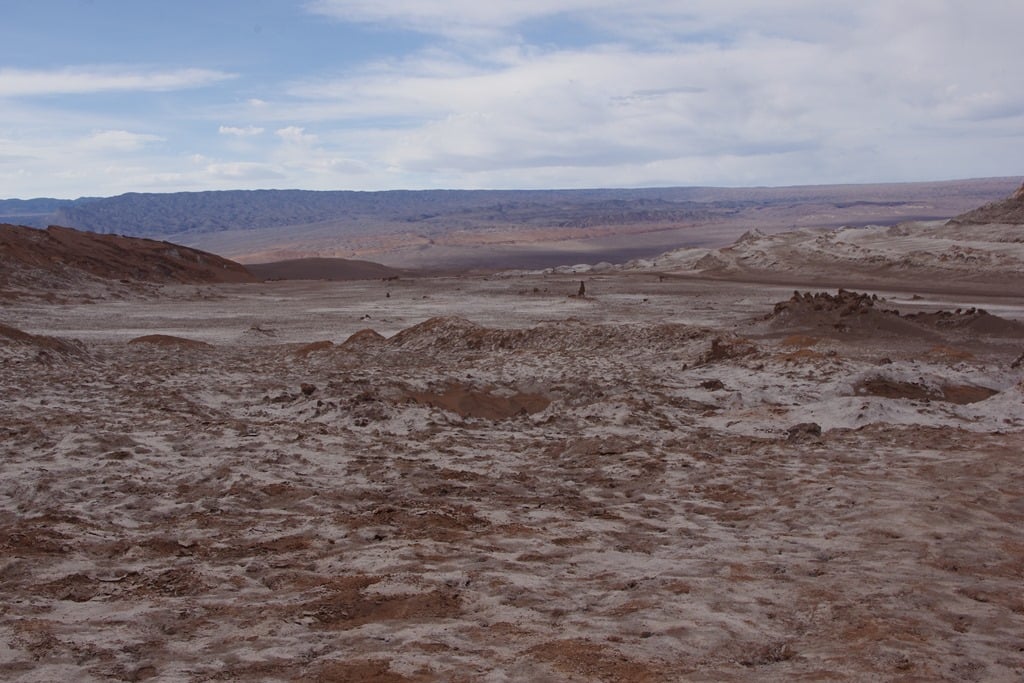
The Valle de la Luna, or Moon Valley, is located just outside San Pedro and is so named because of how the ground resembles the lunar surface. We were there are a particularly unusual time: in April there had been abnormally heavy rainfall over a three-day period. The rainwater quickly evaporated leaving a white deposit of the impurities in the rainwater on the Valley’s surface. It doesn’t unusually look like this!
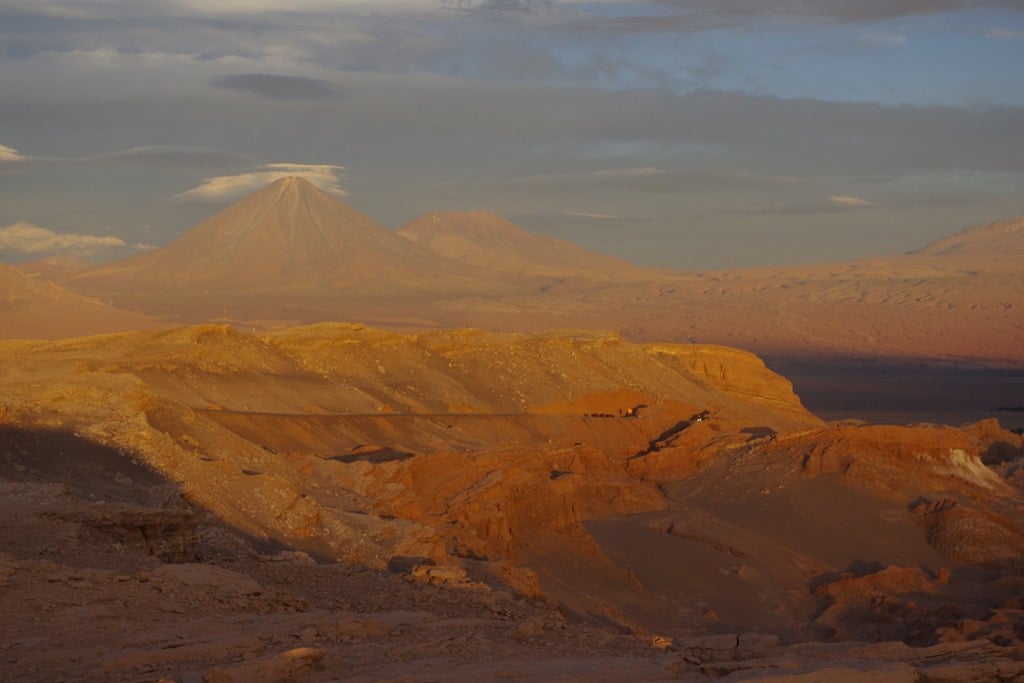
At the end of the afternoon-long tour, which was by tour bus from San Pedro, we went to a high point overlooking the town for some spectacular views of the Valley and the wider Atacama desert at sunset. This alone made the effort of coming to San Pedro worthwhile.
Laguna Miñiques, Socaire and the Salt Flats
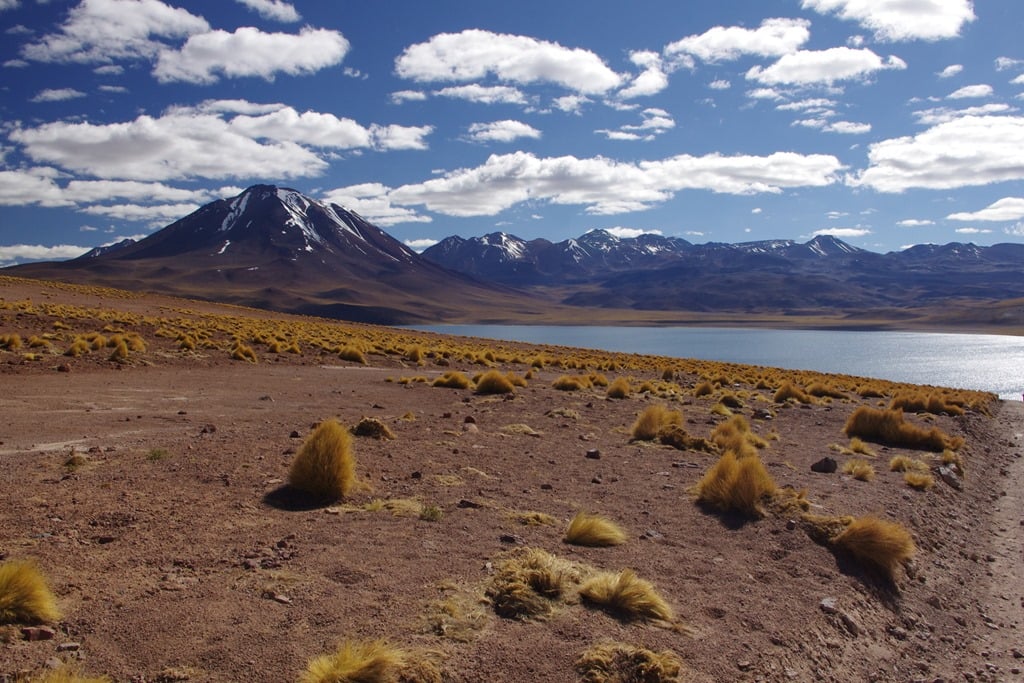
If the sunset views hadn’t been sufficient to repay the commercialism of San Pedro, my other excursion to the Laguna Miñiques certainly did. Located about 120km South-East of San Pedro, and at about 12000ft ASL, the journey there took a couple hours but it was well worth it. The views of the lake and the mountains along the Bolivian border in the background were spectacular. Don’t let the azure sky in the photo below deceive you, though, there was a bitterly cold wind blowing at this altitude!
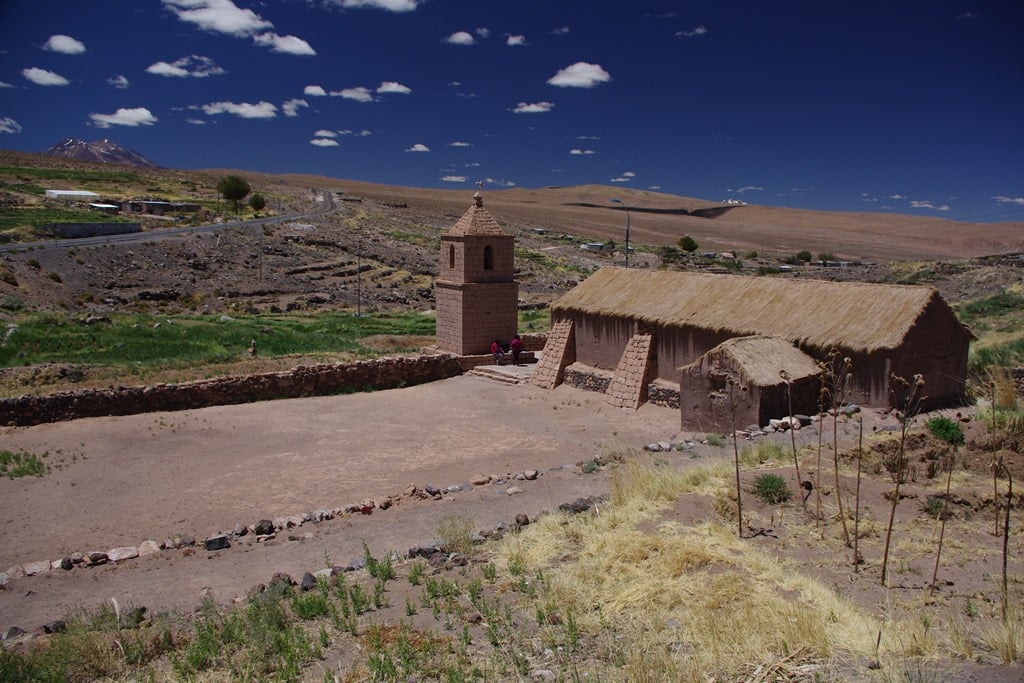
On our return from the lake, we stopped first at Socaire Church, parts of which are the original building from the 1620s. In the background, you can still see the terraces used in pre-Inca times for cultivation (at which time this area was more fertile than it is today).
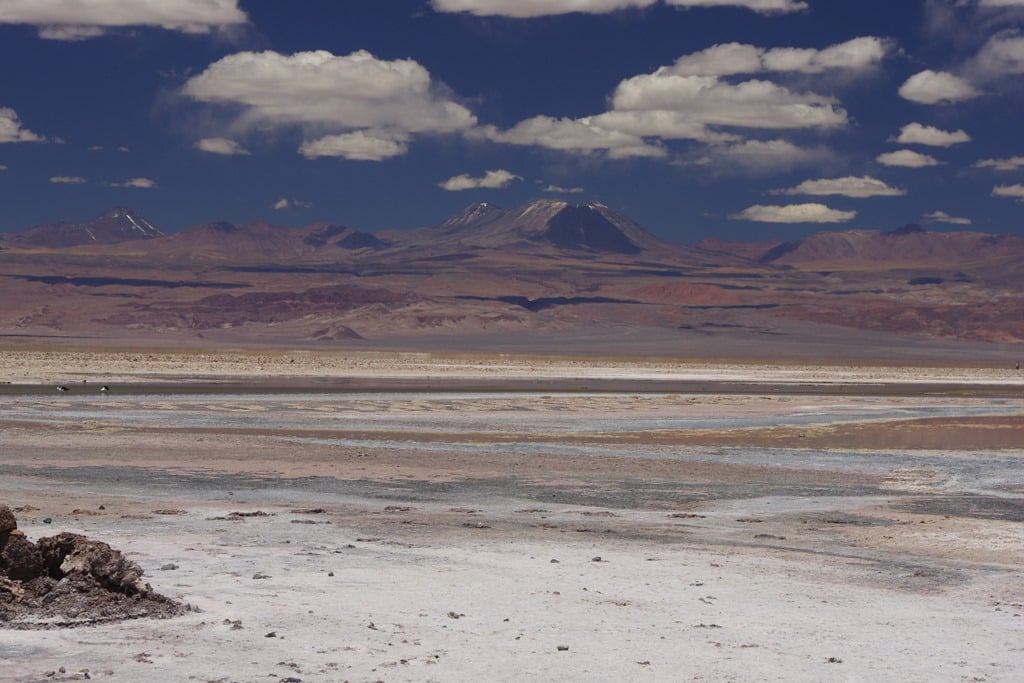
Finally, we spent nearly an hour at the salt flats between Socaire and San Pedro. Unlike the lakes, the salt flats are at a much lower altitude, and the temperature was well into the 30s Celsius when we were there. Not only that but the brilliance of the light with so much white surface to reflect off was quite overwhelming.
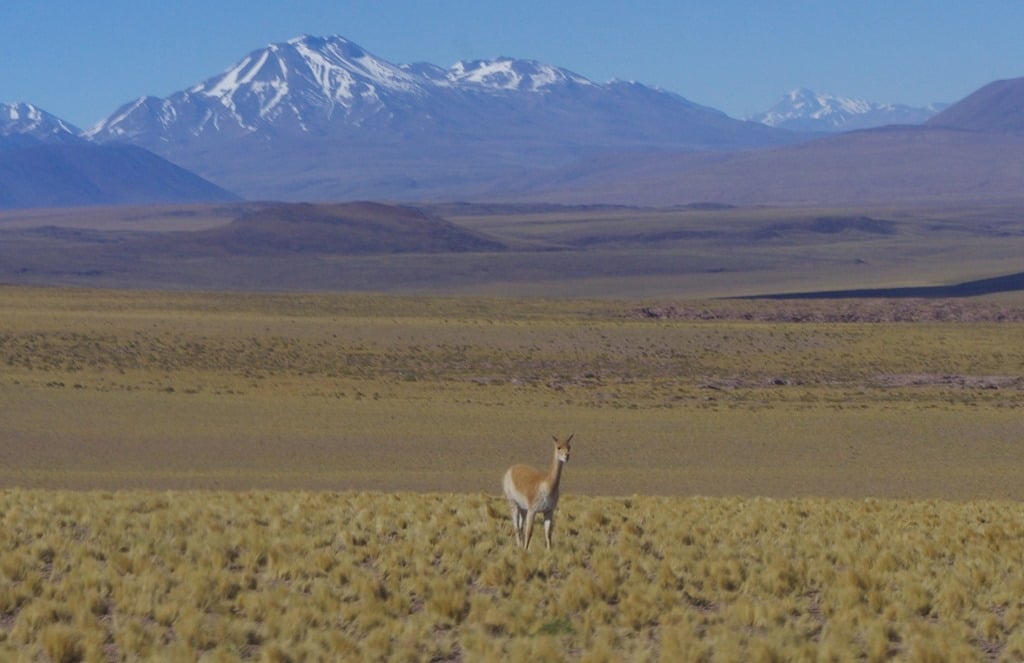
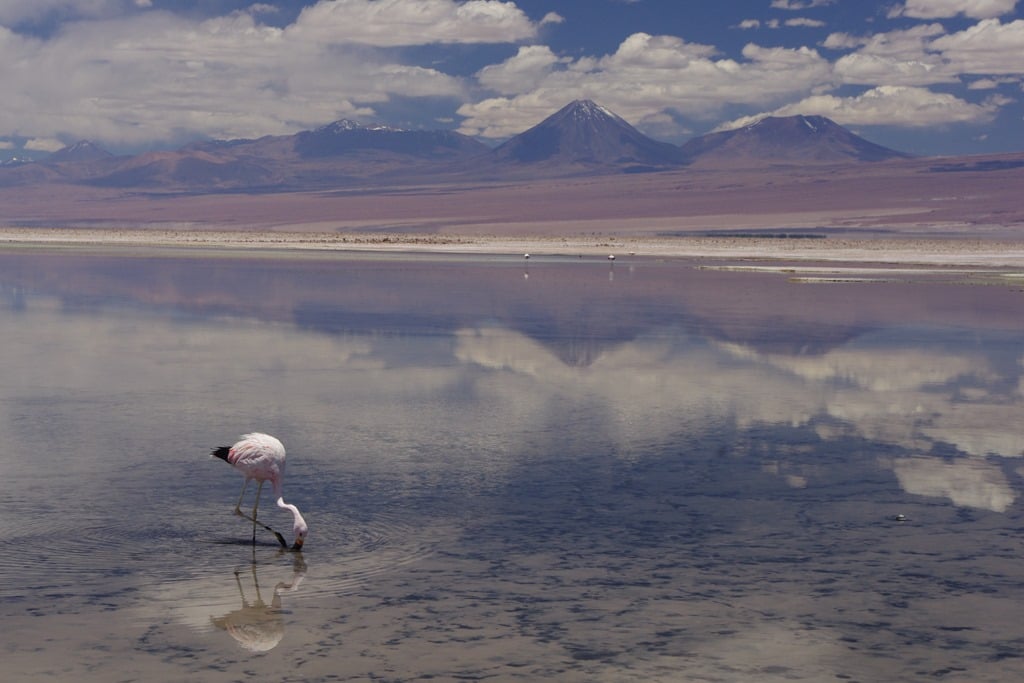
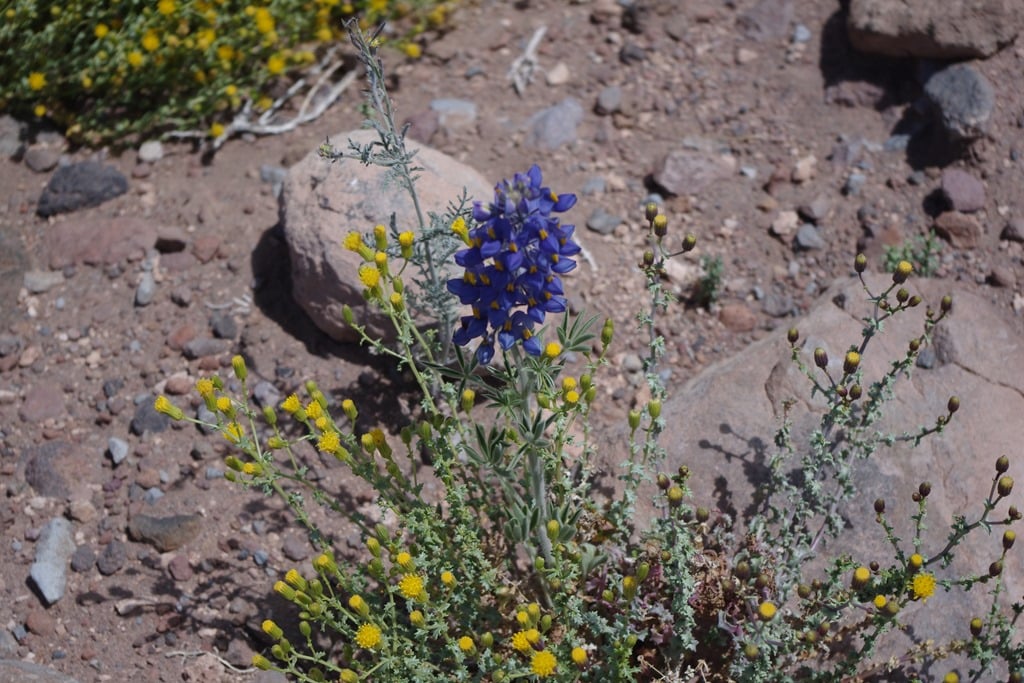
The salt flats are best known for the Andean Flamingos (with that species’ trademark black tail) that feed in them. The variety of flora and fauna we saw today overall, however, is what really made the trip special.
The Laguna was the Southern-most point I’ll reach on this leg of the trip. Tomorrow, I’ll be heading back to Iquique and, over the following two days, I’ll be flying South to Temuco, where I’ll be picking up the trail again. It’s been a great time in the Atacama. In the meantime, more of my photos are on Flickr.
Calama is not particularly known for anything. My only reason for stopping here was as for acclimatisation at a moderate altitude (7000ft) before climbing higher to San Pedro de Atacama (9000ft, with nearby sites at up to 13,500ft).
Journey there
I came to Calama by bus from Iquique. Tur-Bus has a relatively regular service, and their buses are comfortable, modern and well-maintained. The roughly 6 hour journey via Tocopilla and Maria Elena cost little more than £8, so it’s certainly a good way to travel.
A note for anyone else planning the trip in the future: there are two bus terminals in Iquique, Rodoviario and Esmera. They aren’t that far apart but Rodoviario is shared by many companies, and Esmera (on C/Esmeralda) is unique to Tur-Bus. My ticket specified departing from Rodoviario but it turns out it’s fine to leave from Esmera about 10 minutes later, which is where my taxi driver insisted on depositing me.
Luggage went in the buses hold and had a numbered tag attached to it. I was then given a receipt for my luggage which was used to claim back the bag at my stop. A very efficient and effective system for ensuring bags don’t go missing, I thought.
The journey was pretty simple: we hugged the coast road (Route 1) from Iquique to Tocopilla, that leg interrupted only for a customs checkpoint at the border between Region I (Tarapaca) and Region II (Antofagasta). The checkpoint consisted of everyone getting out, claiming their bags from the hold and opening them up on some benches in the sun for a single customs official to do a cursory check. That check consisted of nothing more than quickly putting her hand into the bag and having a feel around. It took less than 5 minutes to go through all the passengers on the double-decker bus, so I’m not too sure what the point was.
After Tocopilla, we started heading straight uphill and inland to the East. The road had quite a few roadworks and there were places where the tarmac had almost gone. We still arrived into Calama about when expected, however.
One amusement for me was that someone came on board selling food in Tocopilla. Her main wares turned out to be Cornish Pasties, which I guess is explained by the Cornish coming to the area for mining in the 19th century. It’s good to know the export is still enjoyed, but I didn’t have one myself.
Calama bus station, if you research it on the internet, is a known pickpocketing and bag theft hotspot. Fortunately, I had no such trouble but made a point of leaving the station as quickly as possible to get a taxi to my hotel, the Ayelen Apart Hotel.
Calama
As I’ve said, there’s not very much in Calama. It’s a surprisingly big city, an oasis in the desert, mainly built to service the needs of the nearby mining industry. That said, it is starting to get a bit of a tourist industry as a base for exploring deeper into the Atacama, which is the reason I’m here too. As it turns out, I haven’t had a problem with altitude sickness yet, but I’m sure I would have been glad of the stop had it become a problem (as in some of the travelogues I read while researching this trip).
Having spent a couple hours on Thursday morning wandering around the nearby streets, I quickly got the impression that I’d seen all there was to offer here. It’s pretty enough, but there’s not much to see or do in the city itself. My sole entertainment came, in the main square, when I was watching some teenagers practising on their skateboards. An older, somewhat heavier, gentleman came up to them to demonstrate a move, and promptly slid off the board onto his back. He wasn’t injured, and I think most of the people in the square (which was quite busy with people shading themselves from the sun) struggled to avoid laughing too loudly!
One bit of advice for anyone else visiting Calama – it’s sunny and hot here. It’s been around the mid-20s Celcius while I’ve been here, but it’s a dry heat so not too uncomfortable. The sun is incredibly strong, though. Factor 50 suncream is a must for us fair-skinned Europeans. I also left my hotel room by 8am (shortly after dawn) to go exploring, so I could be inside writing this blog post by the afternoon, when the sun is at its peak. I’m glad I did.
The main square, Calama
My only other observation about Calama is the number of dogs. They all look healthy, but I’m not sure they can all have owners. In some places, there’s a dog on the pavement (generally sleeping in the shade) every few steps. This also, naturally, tends to make the pavements rather dirty but the local council workers were doing a good job of hosing down the streets first thing in the morning.
I’m starting my journey in Iquique, a city about 100 miles south of the Peruvian border, in the North of Chile.
My guidebook tells me that Iquique once had the highest consumption of Champagne per capita anywhere in the world, such was the boom the city went through in the late 19th century, after nitrates had been discovered here, and Europeans had come to exploit the mines. It also used to be a Peruvian town, but the whole area was won from Peru in the 1880s following the War of the Pacific.
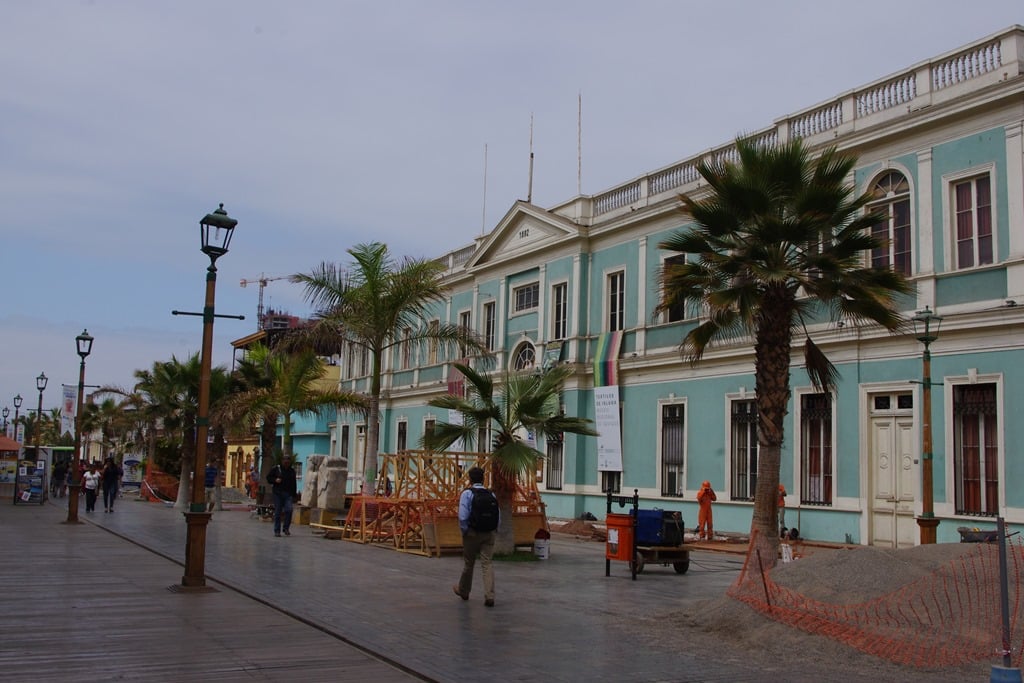
There’s still quite some evidence of those heady days, with a number of older, ornate buildings dating from around the time of the annexation.
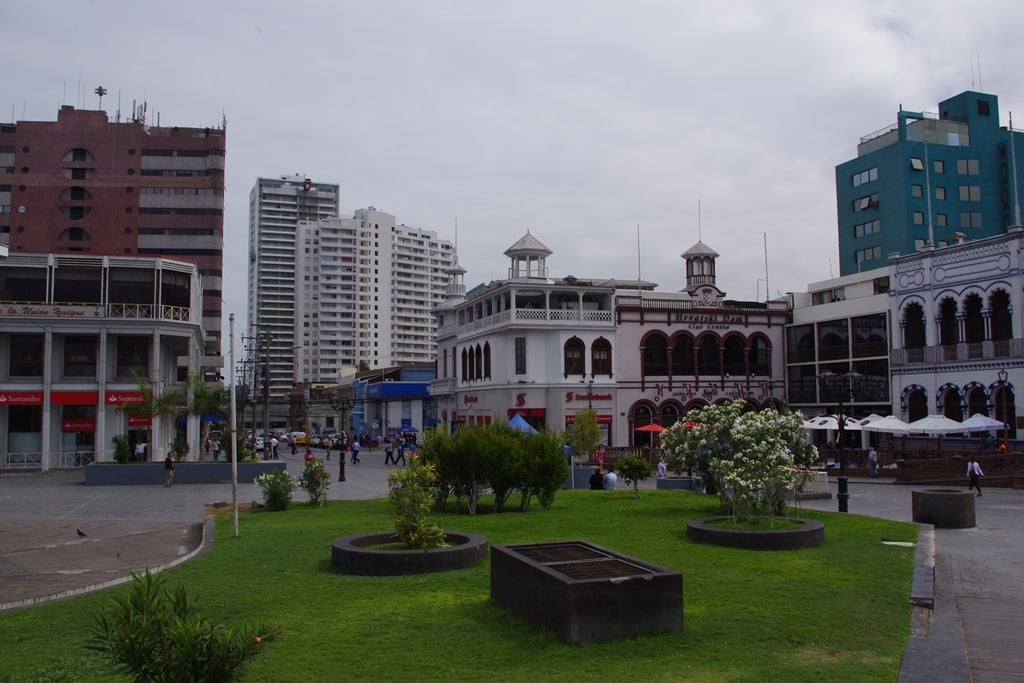
One thing I wasn’t previously aware of was that Croatians seem to have formed a significant part of the immigrant community here, although I haven’t been able to ascertain whether this was related to the mining. Not only is there a monument listing all the Croatian surnames in the town on the seafront, but the Hrvatski Dom (Croatian Club) is very prominent in the Plaza Prat – the main square.
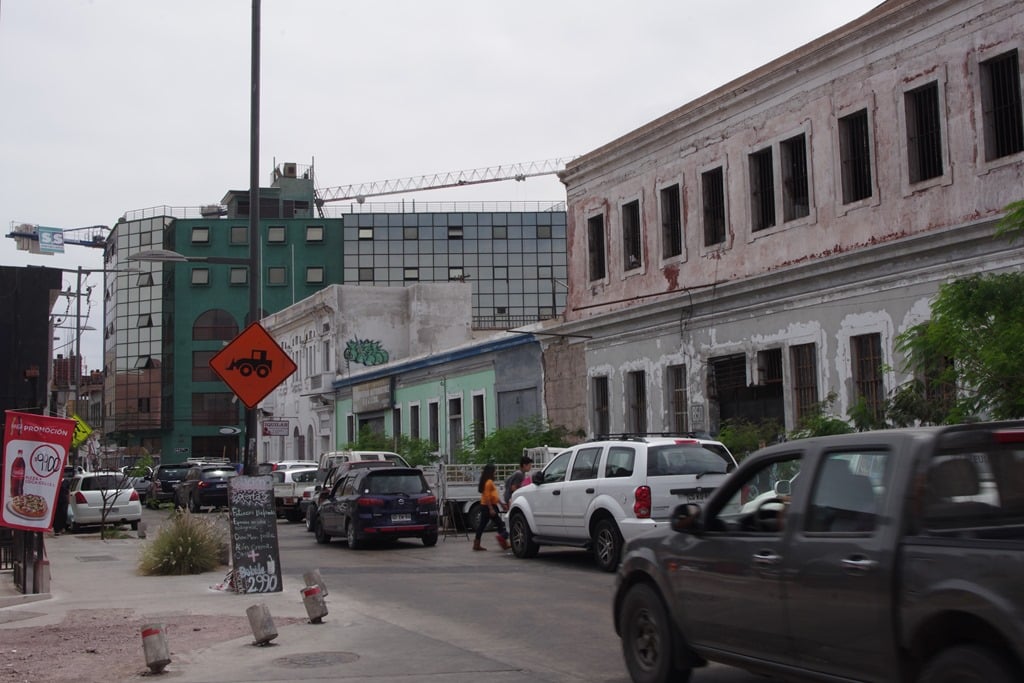
Iquique today is a port town, but it’s clear the nitrate days are long gone, and the town is focusing more on tourism. You don’t have to go far from the most touristy areas to find dilapidated old buildings left to rot alongside roadworks and shiny glassfronted modern hotels. (Indeed, I’m staying in one of them, having opted for the luxury of a Holiday Inn for my first couple nights after so many flights.
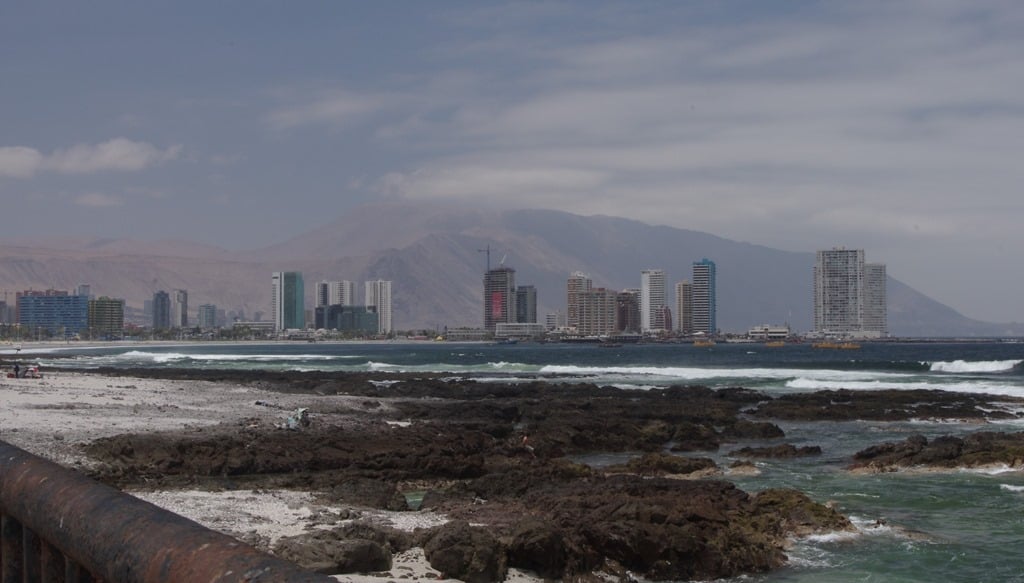
After spending a few hours wondering around and exploring the town, I headed to the beach to spend a half-hour before the strong sun sent me back to my hotel room. The beach is a wonderful gem, however – almost deserted in November with fine, white sand. Once the sun had burnt off the morning haze, temperatures quickly increased.
After a rest, it was time to go out to dinner. I chose a simple looking restaurants with Chileans eating in it, fairly near to the hotel. There’s no way you’d get away with calling a restaurant El negro Jose in Britain in 2015, but the name didn’t put me off. The meal was indeed simple – my Salmon Frita turned out to be a huge slab of battered salmon, served with an equally large side salad of skinless tomatoes and sliced raw red onion. It was nourishing, though, and the size was perhaps not too surprising for somewhere that also sells pizza by the metre!
The strangest thing about the meal was that it was interrupted by a crowd of about a dozen worshippers processing down the street with a megaphone shouting for the Virgin Mary to pray for our souls. One gentleman at the back was processing carrying what looked like the frame of a table, with no table top. The waiter said they do this as a circuit every Tuesday from about 12pm to 8pm.
An early night tonight as I have to get to the bus station by 7:30am tomorrow for my bus to Calama.