Rosmalen Radio Rally 2018

This weekend saw a large group (17 of us) from the Camb-Hams and various friends going to the Dutch national radio flea market at Rosmalen in central Holland.

I haven’t been for four years, but this is always a great event. Visitor numbers were notably down this year, and a few of the usual traders weren’t there either. There was also a lot more vintage and military radios than we remembered in the past (if you were a set designer kitting out a 1950s house for a period TV drama, you’d have had a field day!) and a little less test gear, but there were still purchases to be made!
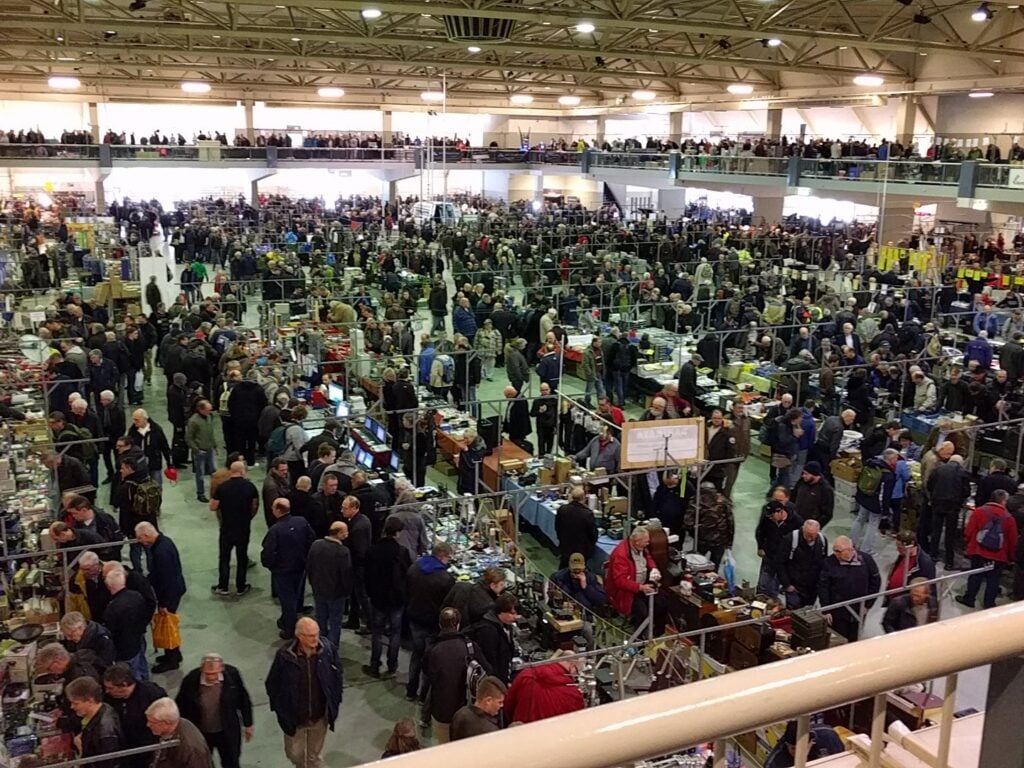
View over the balcony at part of the National Radio Flea Market in Rosmalen Autotron

Personally, my main purchase was a 3-element HB9CV antenna for 2m, which I’m planning to compare against the SOTA Beam for hilltop use. It’s nice and lightweight, and packs down small, if a little fragile.

For people in the east of England, this is a really easy event to get to. We take the overnight ferry from Harwich after work on the Friday evening (having breakfast on board on Saturday morning). You can then drive from Hook of Holland to the Autotron within just a little over an hour, arriving only shortly after the event has opened. The return journey is also an overnight crossing, arriving at breakfast time on the Sunday, so no hotels are required.

As we had a little time to kill before our return crossing, a few of us headed to Goeree Overflakkee, an island just around the coast from Hook of Holland. The island counts for EU-146 for IOTA but it is an island you can easily drive onto. Some of the group – not including myself – operated in the RDXC contest from the beach just outside the village of Ouddorp, just down the road from a certain military radio establishment.
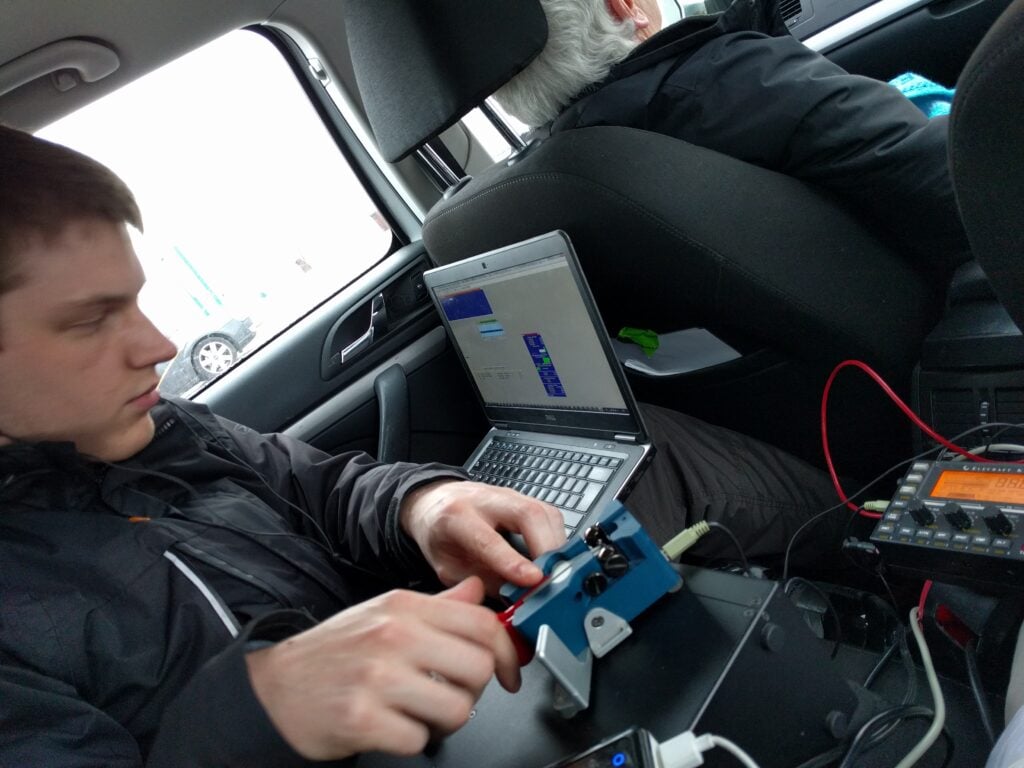
Dan PA/M0WUT operating CW in the Russian DX Contest, parked at the beach while waiting for the ferry.

The only other thing to mention is the weather. We didn’t have any problems caused by it but it was bitterly cold with short snow flurries and ground temperatures of -3c (colder with wind chill). There was even ice on the shoreline at Ouddorp. The snow was being brought in by some very keen easterly winds but amazingly this didn’t cause a significant swell for our return crossing.
Arkwright Scholar’s day at Bletchley Park

The Arkwright Scholarships are awarded to 16 year olds who show promise to be future engineers, and are designed to help them through their sixth-form studies.

As part of this, the current scholars had an opportunity to visit the Radio Society of Great Britain (RSGB)’s National Radio Centre at the historic Bletchley Park today, where a group of volunteers from the Radio Society of Great Britain / Radio Communications Foundation administered the practical and written amateur radio Foundation licence examination.

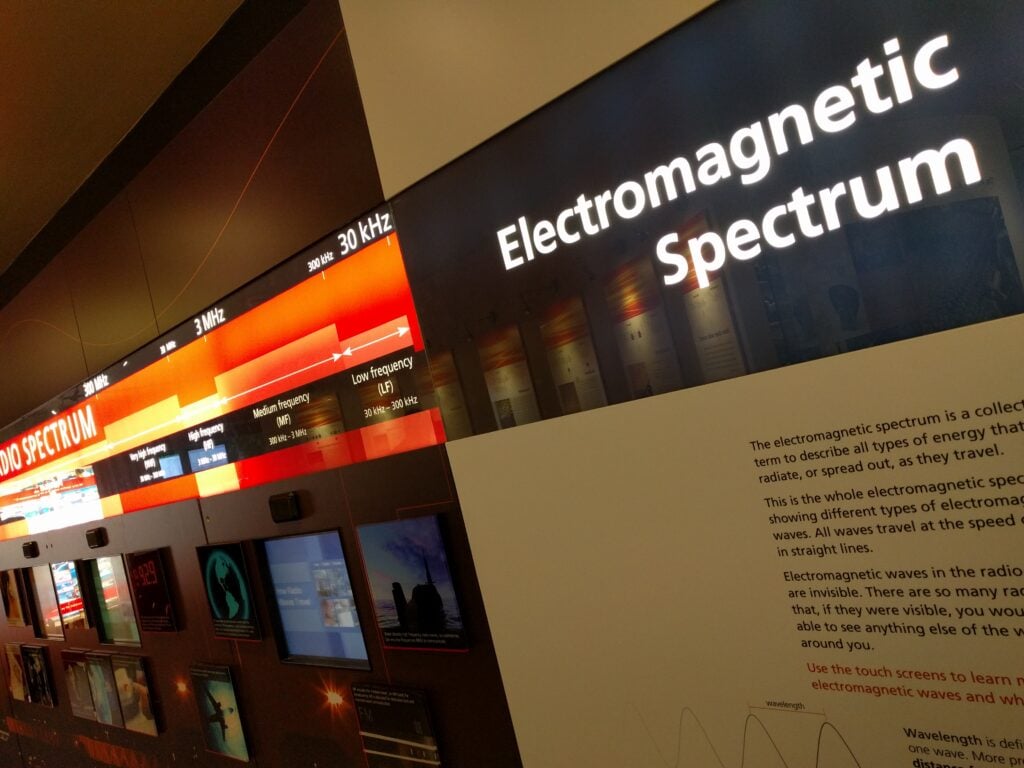
The National Radio Centre at Bletchley Park

I had the privilege of being asked to help run the VHF/UHF QSOs elements of the course, together with James 2E0JPMfrom the RSGB Youth Committee.

All of the scholars were highly motivated and really interested in the advantages amateur radio can bring to careers in engineering, so it was a pleasure to be able to assist them.

ARRL DX SSB at GB2GP

Last summer, I spent a week at the UK Scout HQ, Gilwell Park near London, for the YOTA event.

This weekend, I had the opportunity to return to the shack to help operate GB2GP – the permanent special event station for the Scouts – in the ARRL DX Contest.

It was a really fun weekend, even if conditions were bad. It was so bad that at one point, once 40m closed on the morning, there was almost 2 hours with no QSO before 20m opened, during which I had just one QSO. There were very few times when more than one band once open to the US/Canada at once, but I did get a decent run on 15m on the Sunday lunchtime, which helped.

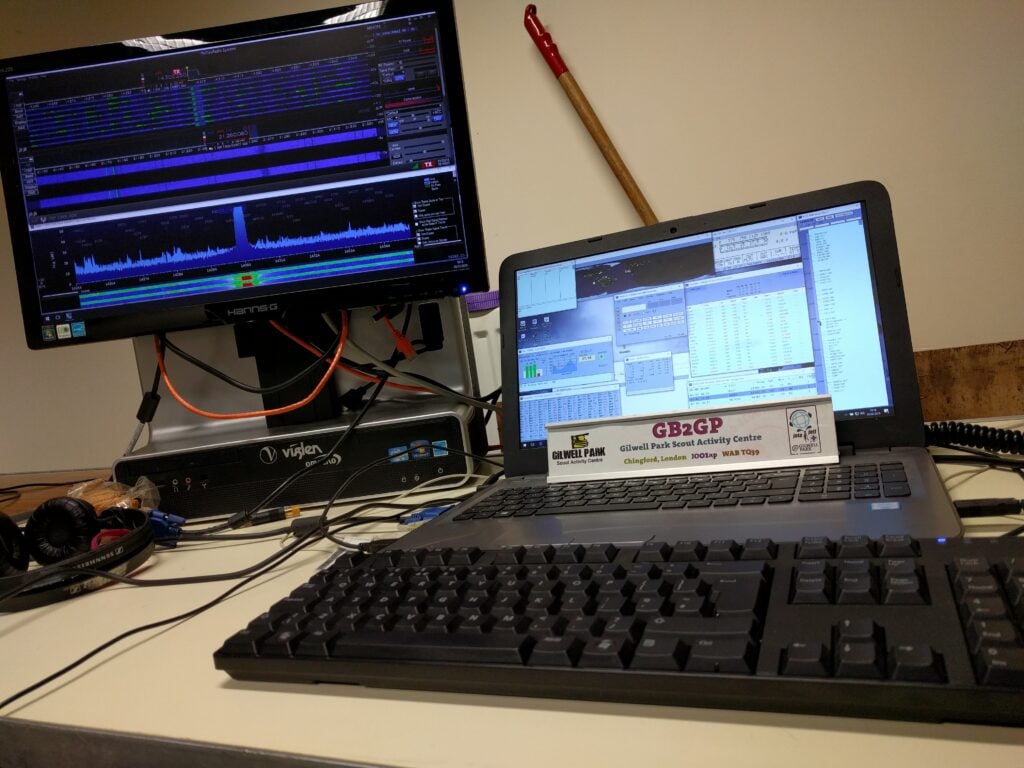
The operating position at GB2GP

We were entering in the multi-two category, as a tactical measure, but we actually operated with only one radio. This was my first time using a Flex SDR in earnest and I seemed to get used to it quite well. Also new for me was N1MM+, which also seemed to perform once I had got used to it (though I’ll probably stick with Win-Test / DXLog.net for most of my own contesting).

The other novelty for me was this was my first contest using a Beverage antenna for the lower bands, and particularly 80m. This seemed to work really well, particularly given the amount of noise the transmitting antenna was subjected to, emanating from the nearby Brookmans Park broadcast transmitters.

Final QSO total was just over 1000 QSOs. While that might not sound fantastic, being a training station, a large part of the focus was on having a mix of skills there, from a couple of us who were relatively experienced contesters, through to one person who hadn’t been on HF in years.

Most importantly, I had a good time and it was great to work with a different group of enthusiastic people. Thanks to the GB2GP team for having me!