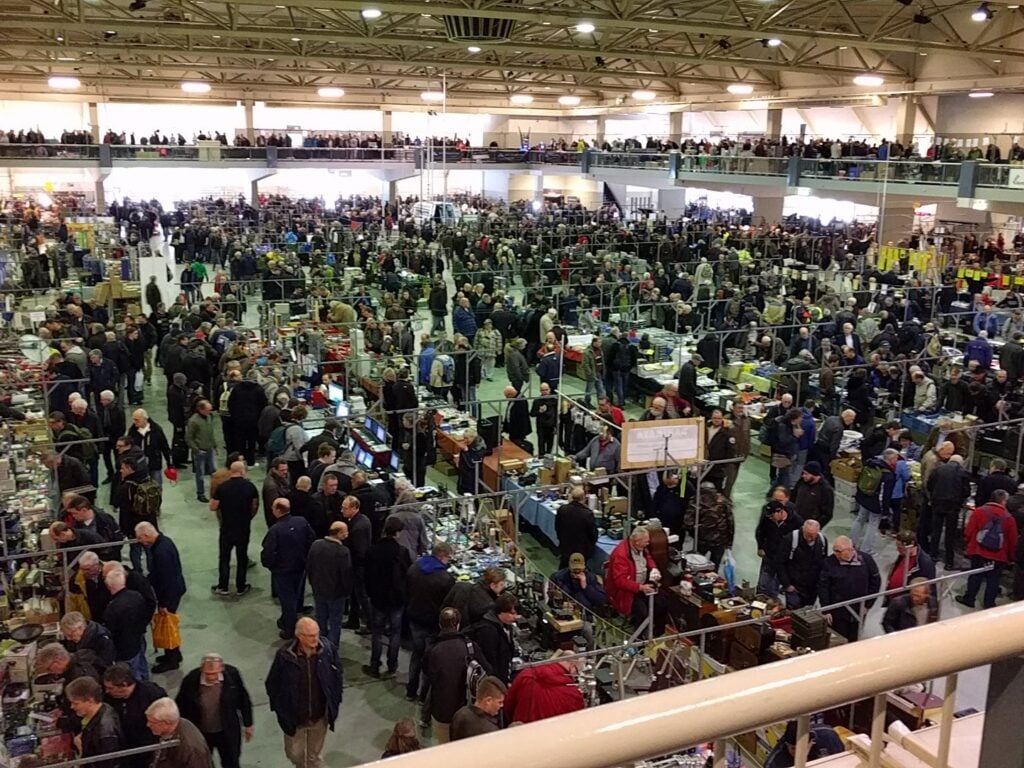
This weekend saw a large group (17 of us) from the Camb-Hams and various friends going to the Dutch national radio flea market at Rosmalen in central Holland.
I haven’t been for four years, but this is always a great event. Visitor numbers were notably down this year, and a few of the usual traders weren’t there either. There was also a lot more vintage and military radios than we remembered in the past (if you were a set designer kitting out a 1950s house for a period TV drama, you’d have had a field day!) and a little less test gear, but there were still purchases to be made!
View over the balcony at part of the National Radio Flea Market in Rosmalen Autotron
Personally, my main purchase was a 3-element HB9CV antenna for 2m, which I’m planning to compare against the SOTA Beam for hilltop use. It’s nice and lightweight, and packs down small, if a little fragile.
For people in the east of England, this is a really easy event to get to. We take the overnight ferry from Harwich after work on the Friday evening (having breakfast on board on Saturday morning). You can then drive from Hook of Holland to the Autotron within just a little over an hour, arriving only shortly after the event has opened. The return journey is also an overnight crossing, arriving at breakfast time on the Sunday, so no hotels are required.
As we had a little time to kill before our return crossing, a few of us headed to Goeree Overflakkee, an island just around the coast from Hook of Holland. The island counts for EU-146 for IOTA but it is an island you can easily drive onto. Some of the group – not including myself – operated in the RDXC contest from the beach just outside the village of Ouddorp, just down the road from a certain military radio establishment.
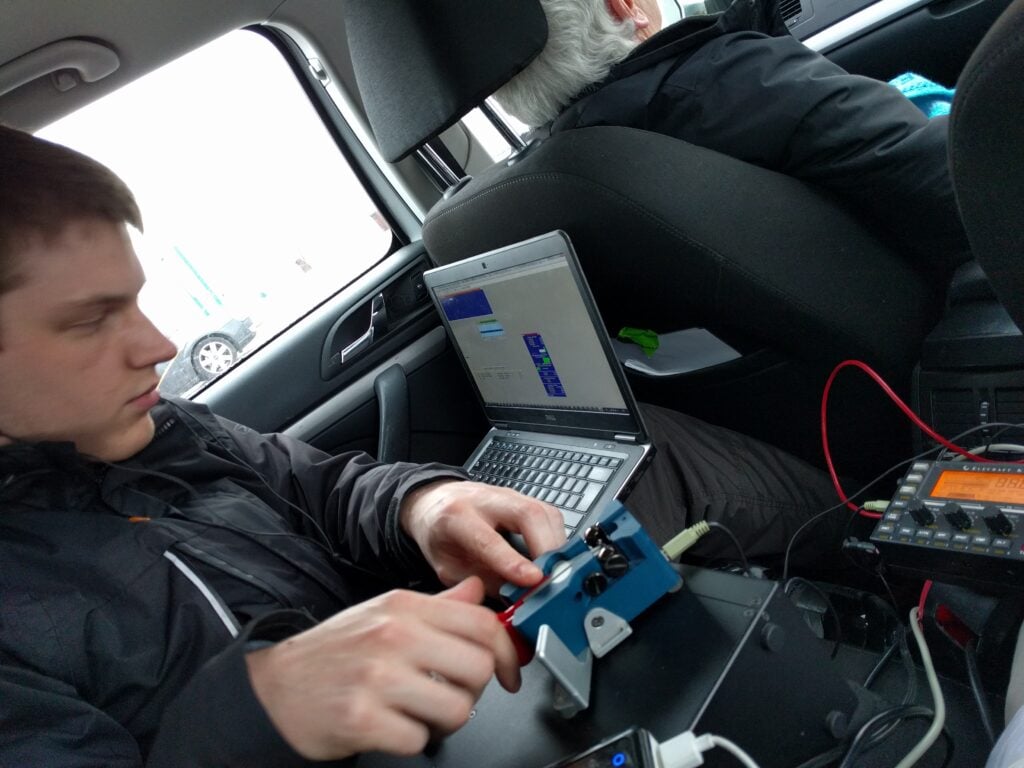
Dan PA/M0WUT operating CW in the Russian DX Contest, parked at the beach while waiting for the ferry.
The only other thing to mention is the weather. We didn’t have any problems caused by it but it was bitterly cold with short snow flurries and ground temperatures of -3c (colder with wind chill). There was even ice on the shoreline at Ouddorp. The snow was being brought in by some very keen easterly winds but amazingly this didn’t cause a significant swell for our return crossing.
The Arkwright Scholarships are awarded to 16 year olds who show promise to be future engineers, and are designed to help them through their sixth-form studies.
As part of this, the current scholars had an opportunity to visit the Radio Society of Great Britain (RSGB)’s National Radio Centre at the historic Bletchley Park today, where a group of volunteers from the Radio Society of Great Britain / Radio Communications Foundation administered the practical and written amateur radio Foundation licence examination.
The National Radio Centre at Bletchley Park
I had the privilege of being asked to help run the VHF/UHF QSOs elements of the course, together with James 2E0JPMfrom the RSGB Youth Committee.
All of the scholars were highly motivated and really interested in the advantages amateur radio can bring to careers in engineering, so it was a pleasure to be able to assist them.
Last summer, I spent a week at the UK Scout HQ, Gilwell Park near London, for the YOTA event.
This weekend, I had the opportunity to return to the shack to help operate GB2GP – the permanent special event station for the Scouts – in the ARRL DX Contest.
It was a really fun weekend, even if conditions were bad. It was so bad that at one point, once 40m closed on the morning, there was almost 2 hours with no QSO before 20m opened, during which I had just one QSO. There were very few times when more than one band once open to the US/Canada at once, but I did get a decent run on 15m on the Sunday lunchtime, which helped.
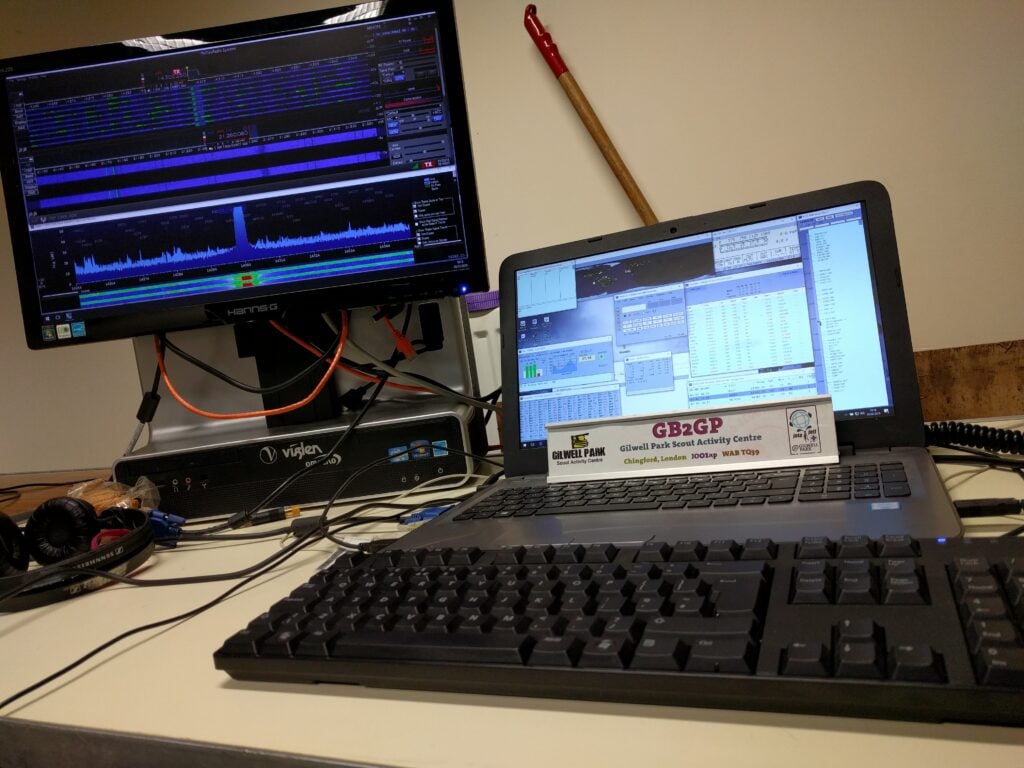
The operating position at GB2GP
We were entering in the multi-two category, as a tactical measure, but we actually operated with only one radio. This was my first time using a Flex SDR in earnest and I seemed to get used to it quite well. Also new for me was N1MM+, which also seemed to perform once I had got used to it (though I’ll probably stick with Win-Test / DXLog.net for most of my own contesting).
The other novelty for me was this was my first contest using a Beverage antenna for the lower bands, and particularly 80m. This seemed to work really well, particularly given the amount of noise the transmitting antenna was subjected to, emanating from the nearby Brookmans Park broadcast transmitters.
Final QSO total was just over 1000 QSOs. While that might not sound fantastic, being a training station, a large part of the focus was on having a mix of skills there, from a couple of us who were relatively experienced contesters, through to one person who hadn’t been on HF in years.
Most importantly, I had a good time and it was great to work with a different group of enthusiastic people. Thanks to the GB2GP team for having me!
After leaving my B&B in Laragh, it was a 50 minute drive in frosty conditions via the picturesque lakes outside Blessington up to Sorrel Hill, a small dimple on the landscape which is nevertheless worth 6 points plus winter bonus. The road to the car park at Sorrel Hill is single track, but the grass verges mean there’s plenty of places to pass. The car park itself was quite busy for a cold, crisp morning, but most of the people were heading on the path south towards Black Hill (not a SOTA), rather than heading north up Sorrel Hill.
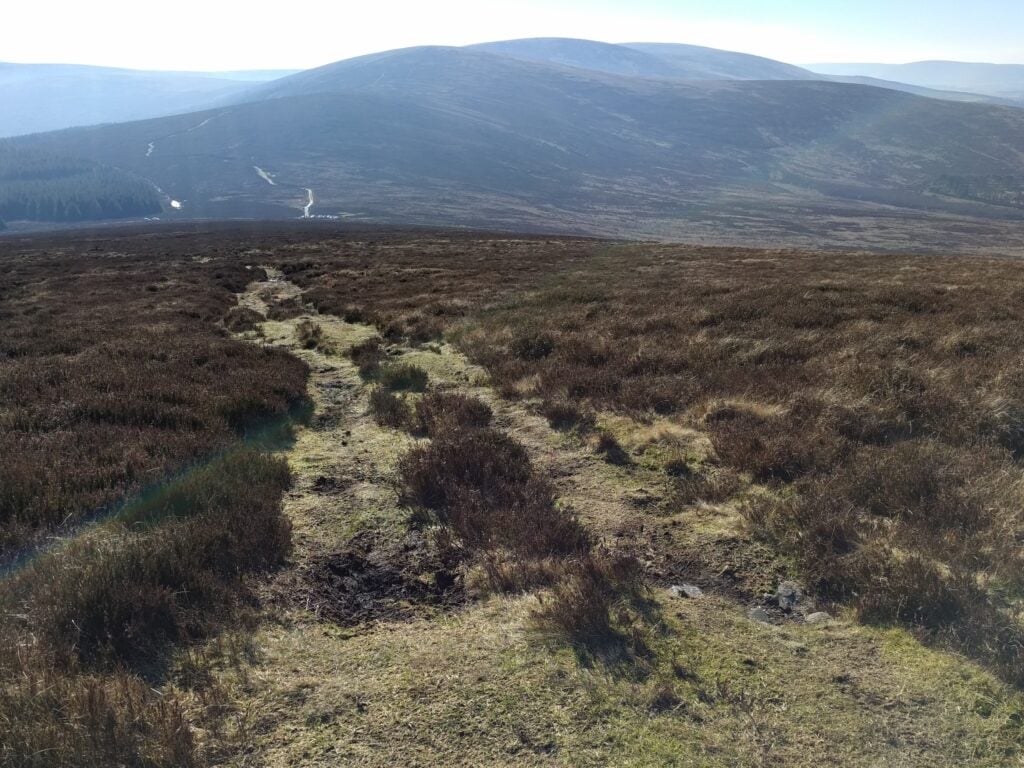
The path itself is an obvious grass track straight up the side of the hill, and in no way steep. The only thing that made the walking difficult today was the frozen mud and puddles, which made the surface uneven. The ascent took about 40 minutes, and the descent (by which time the frozen mud was starting to thaw) took just over 20 minutes.
The grassy path up Sorrel Hill, with the car park just visible at the foot
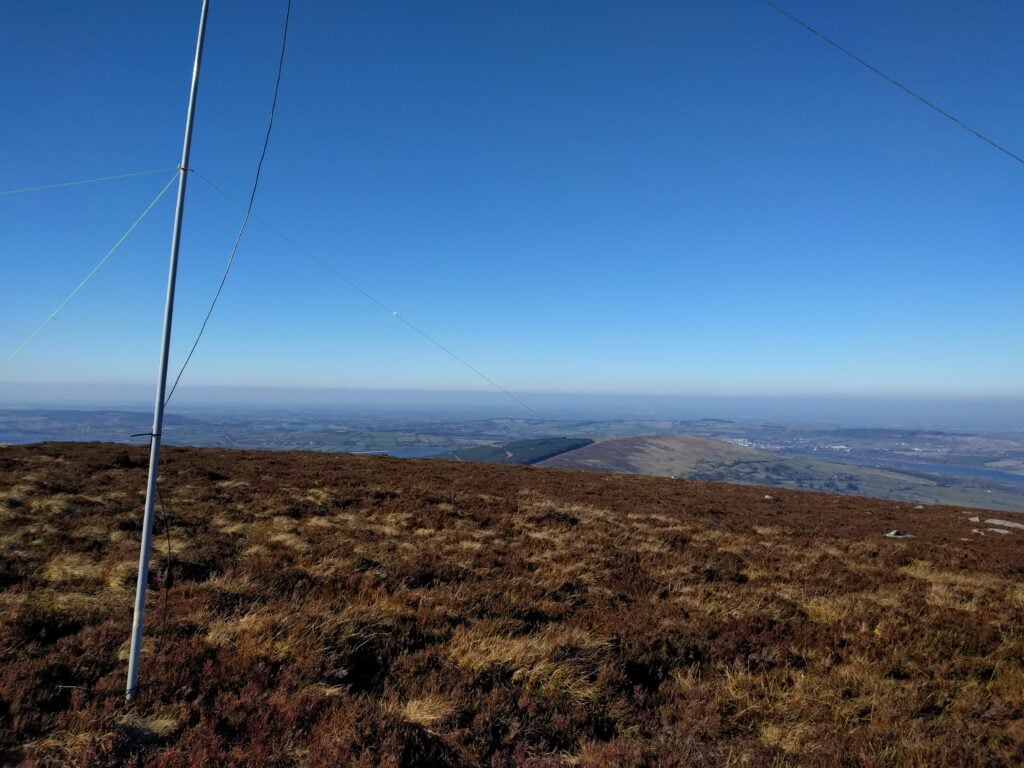
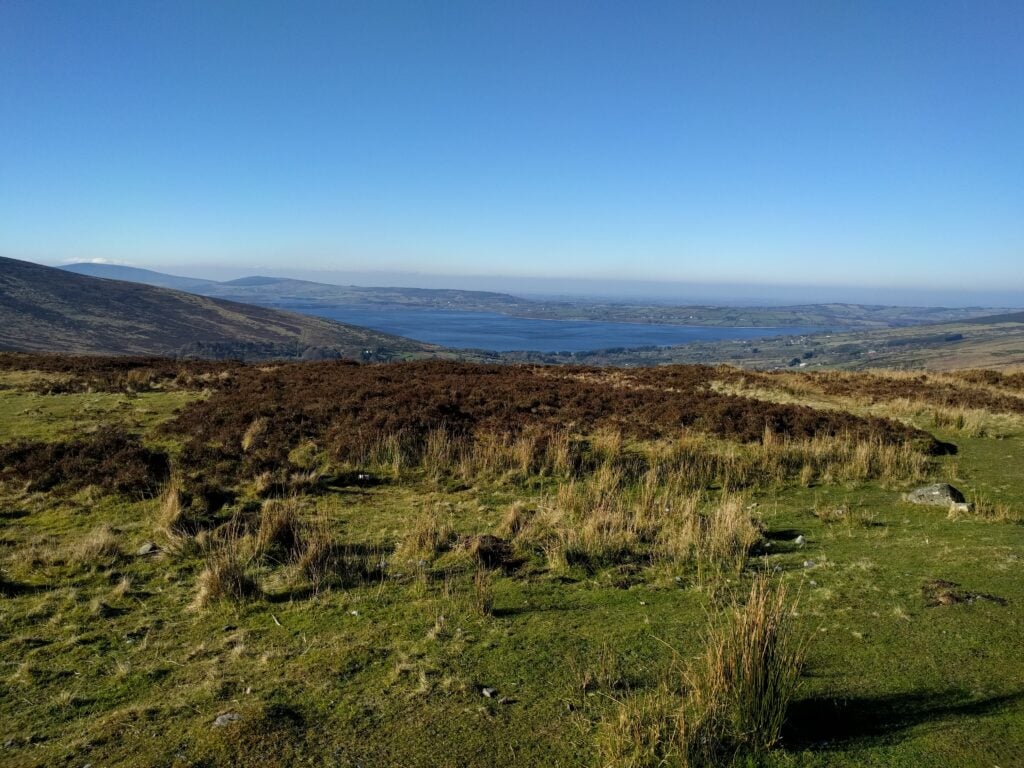
At the top, I set up in the shelter of the cairn as it was nice and quiet and, now that the haze of the last couple days had cleared, there were some very nice views. Don’t let the blue sky deceive you, though – the wind was still cold and strong!
The view to the west from the top of Sorrel HillPoulaphouca Reservoir, near Blessington, seen from the climb up Sorrel Hill
Overall, this is a lovely hill and very easy for six points. I made 20 30m CW QSOs from here and, out of the wind, it was a very nice activation. It was quite surprising that it had only been activated 7 times before.
EI/IE-044 Saggart Hill
If it was surprising that Sorrel Hill was so little activated, Saggart Hill is even more of a mystery. This was the fourth ever activation of this hill, despite the fact that it is located very close to the N81, the main road heading south west from the M50 (Dublin’s ringroad).
To be fair, I wasn’t originally planning to activate this little two-pointer either but with some time to kill before my flight, it wasn’t a great detour, and I’m glad I did it. It’s only about 15 minutes’ drive from Sorrel Hill and about 40 minutes from Dublin Airport.
There’s a steep and narrow, but perfectly fine, road leading from the N71 to a barrier at entrance to the woodland on the hill, and enough parking space for a few cars to park on the side of the road. This was quite a popular place on a sunny winter’s afternoon, and I was lucky to find a suitable spot.
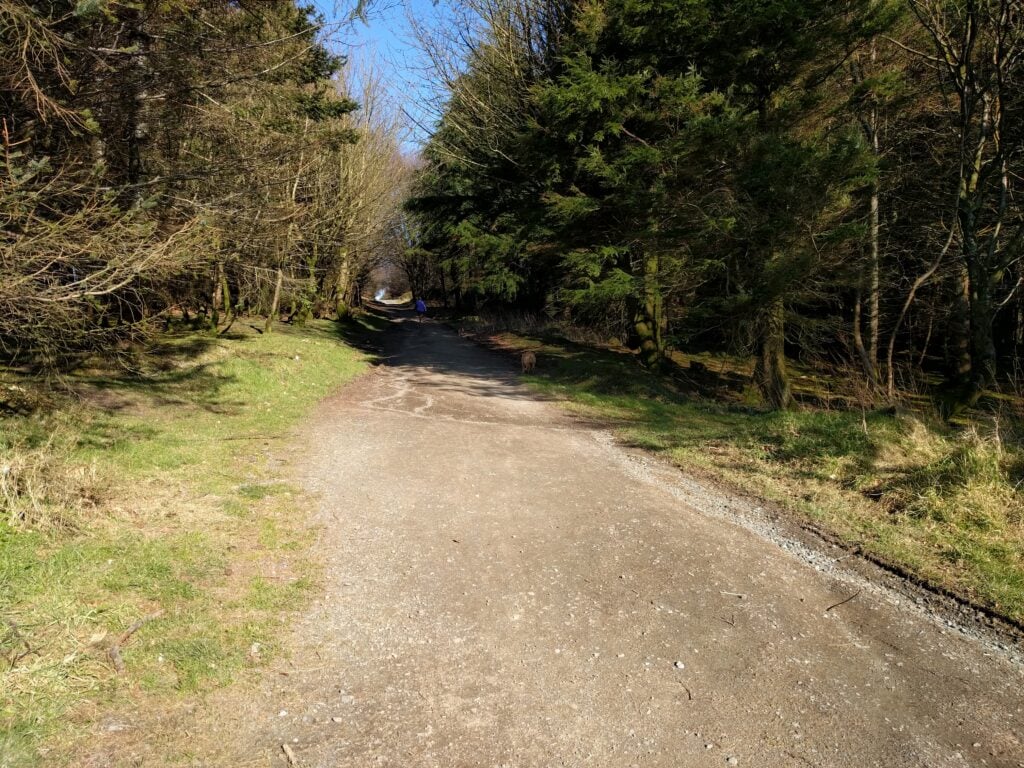
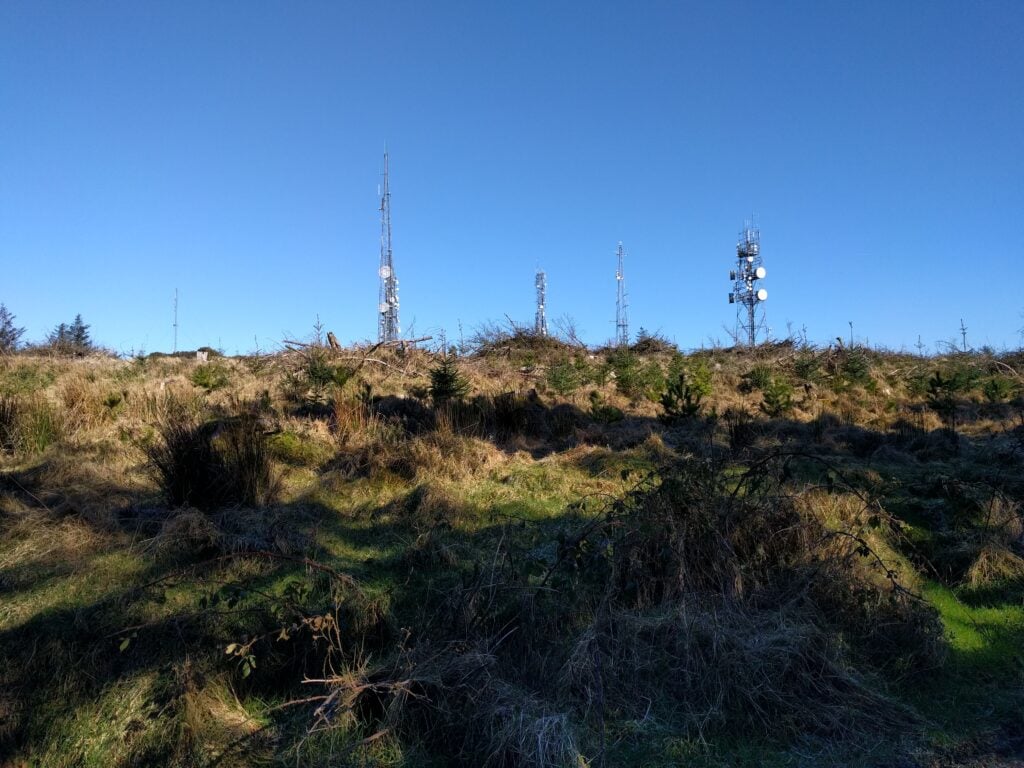
Getting to the top of the hill is easy. It’s a 10 minute walk up a simple track from the barrier through the woodland to the top of the hill which is covered in masts with various microwave dishes. One other website describes the hill as a ‘porcupine’ and that’s fairly apt – not all of them are visible in the picture below.
The track through the woodland on Saggart HillSome of the masts on the top of Saggart Hill
I found a quiet spot in a small clearing in the woodland to set up my own (fibreglass) mast. Given a lack of both space and time before my flight, I didn’t bother properly setting up the dipole and let the legs hang much more loose and lower than I would normally. As this was an unplanned bonus hill, I decided to accept a poor SWR and weaker signals if I could just get the four QSOs I needed for the points.
In the end, I was pleasantly surprised that the location wasn’t at all noisy on 30m (a particular surprise given that I was near an overhead powerline feeding the masts) and I managed 14 QSOs.
My quick setup in the woods on Saggart Hill
This brought me to the end of the three day trip around the Wicklow Hills, with 54 SOTA points (including Winter Bonuses) and 84 QSOs in the bag.
I’m staying at Tudor Lodge B&B in Laragh, just outside Glendalough, which is near to many of the mountains I’m climbing. It’s a lovely B&B. When I’m on these walking trips, I tend to have a large cooked breakfast, and then skip lunch, and then I will have a decent meal in the evening. The full Irish breakfast at Tudor Lodge certainly fits the bill, and Laragh’s Wicklow Heather restaurant has excellent fare for very modest price, so the location is working well for me!
EI/IE-007 Djouce
The breakfast meant that I left Laragh slightly later than planned, and headed about 20 minutes up the road to Djouce. This is another mountain that is worth 10 points plus winter bonus for SOTA, but like yesterday’s hills it is quite easy.
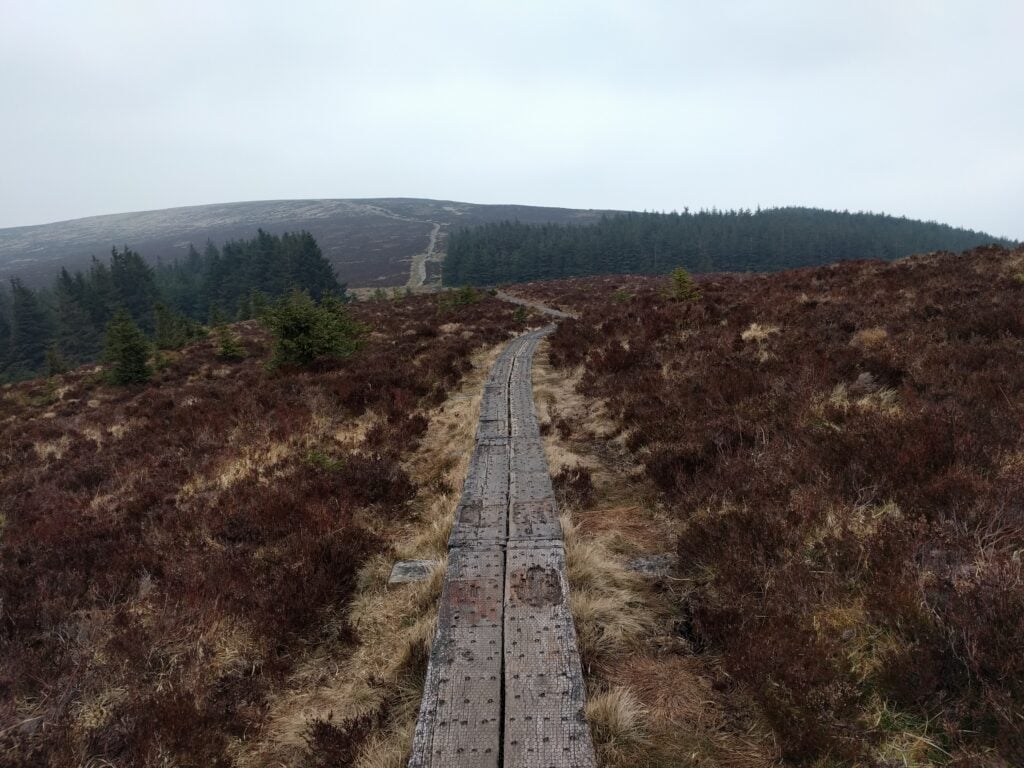
Having parked up in a layby at NGR O 169073, and then going through the thin line of trees beside the road, you quickly pick up a small path which in turn connects into the Wicklow Way, a major long-distance footpath. To reduce erosion, the Wicklow Way has been fitted with a boardwalk to railway sleepers covered in chicken wire. This makes the walk easy, and there’s little risk of going off-course!
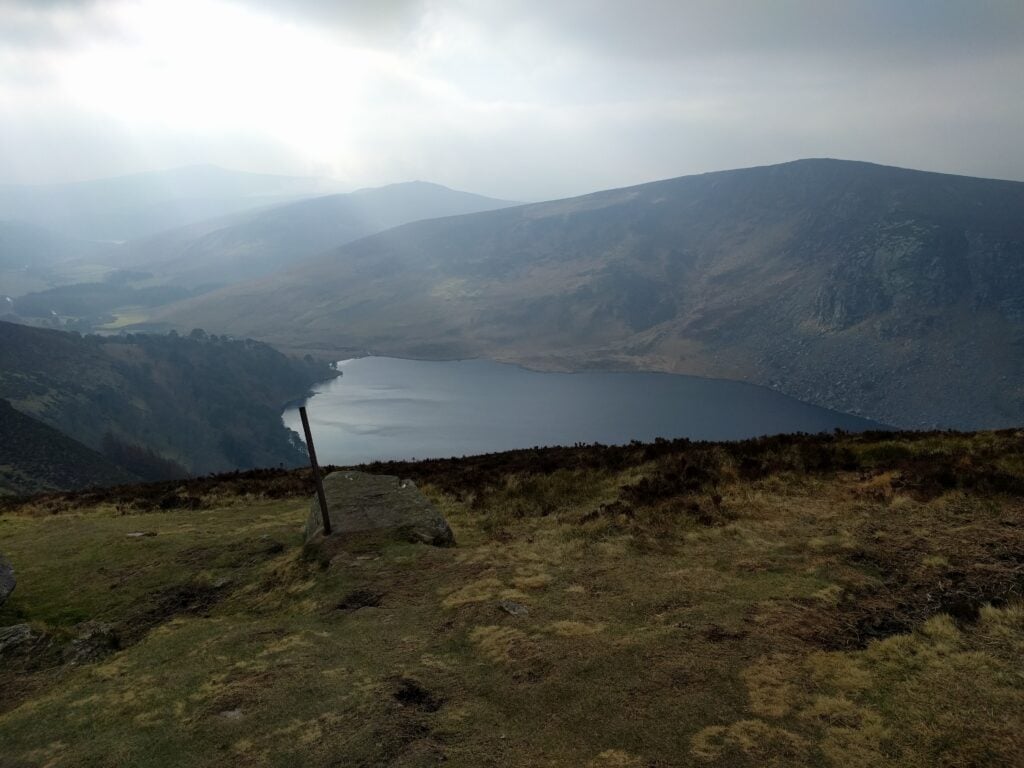
Soon after picking up the boardwalk, there are some wonderful views of Lough Tay, although it wasy quite hazy today.
The boardwalk forming the Wicklow Way to DjouceView over Lough Tay
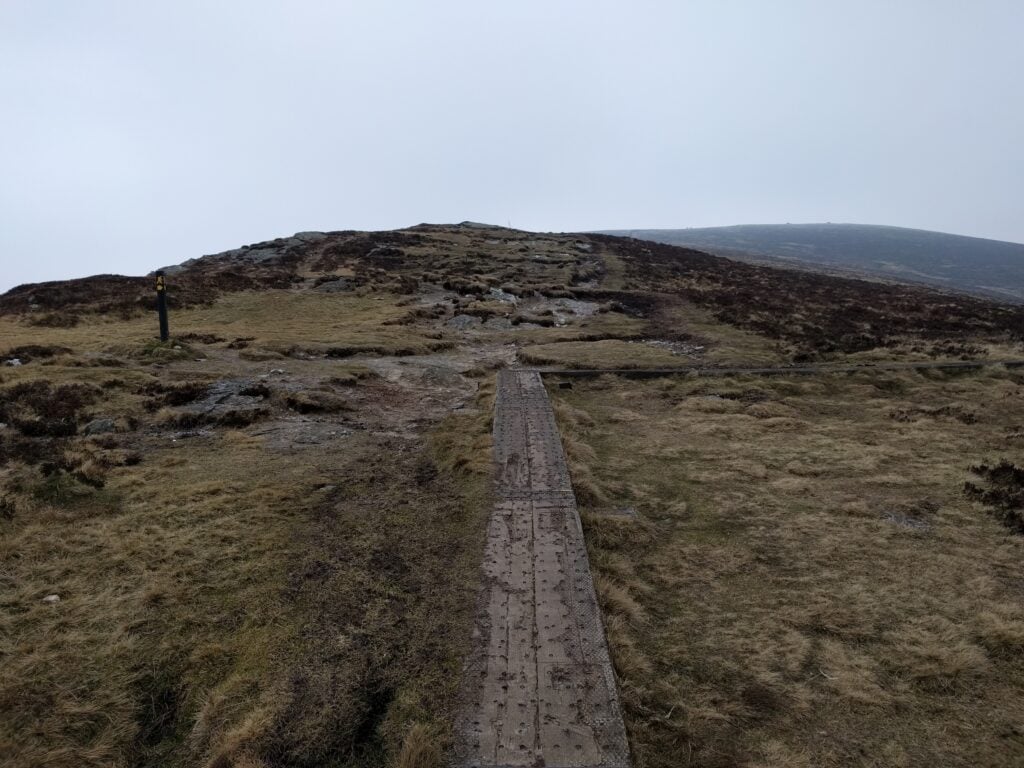
After the ascent of White Hill (630m, not a SOTA summit), the path descends a bit, shortly after which Djouce comes into view. The boardwalk continues most of the way towards Djouce, but turns at O 178097, where the Wicklow Way skirts the side of Djouce, continuing northwest. Leaving the boardwalk at this point, an easily visible track takes you to the summit.
Where the boardwalk turns to skirt around Djouce, continue straight ahead
This is a very easy walk and at no point is it particularly steep.
One of the things I’ve often found, however, is that there are some SOTAs that are easy climbs but then the radio activation is hard. Today, this was one such mountain. With the cold wind not much better than yesterday, I initially opted to take shelter behind the trig point and set my equipment up there. However, very quickly, more and more people started to arrive, all of whom (understandably) wanted to take shelter there too. I soon moved to another location nearby, where I could get a little shelter.
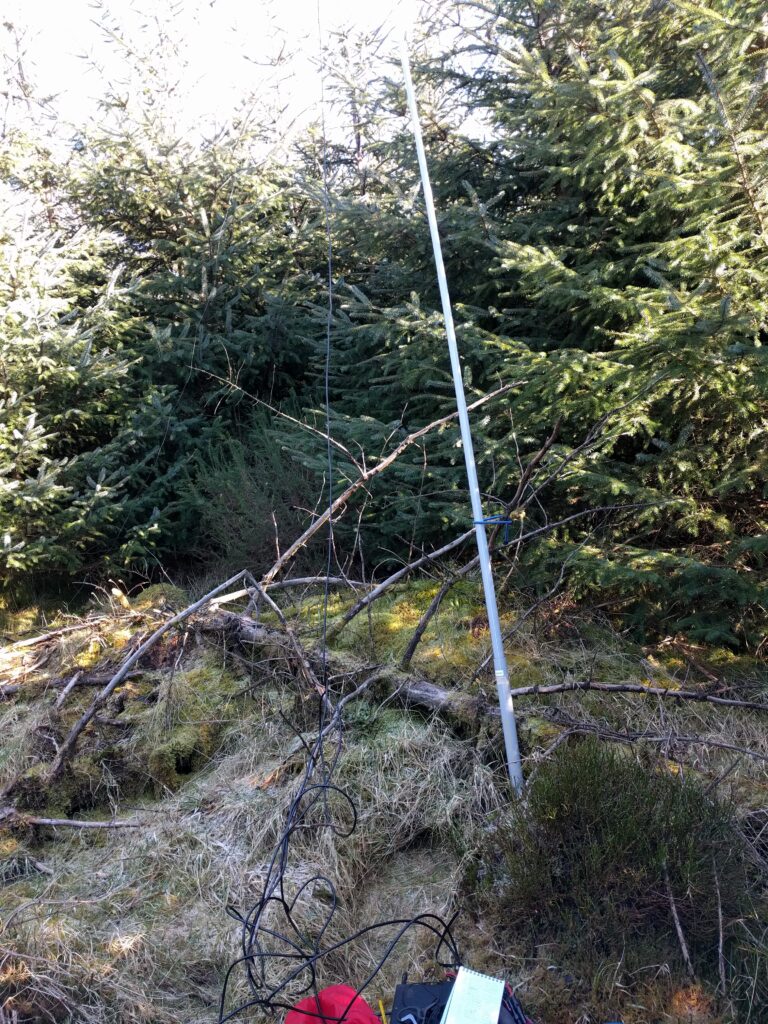
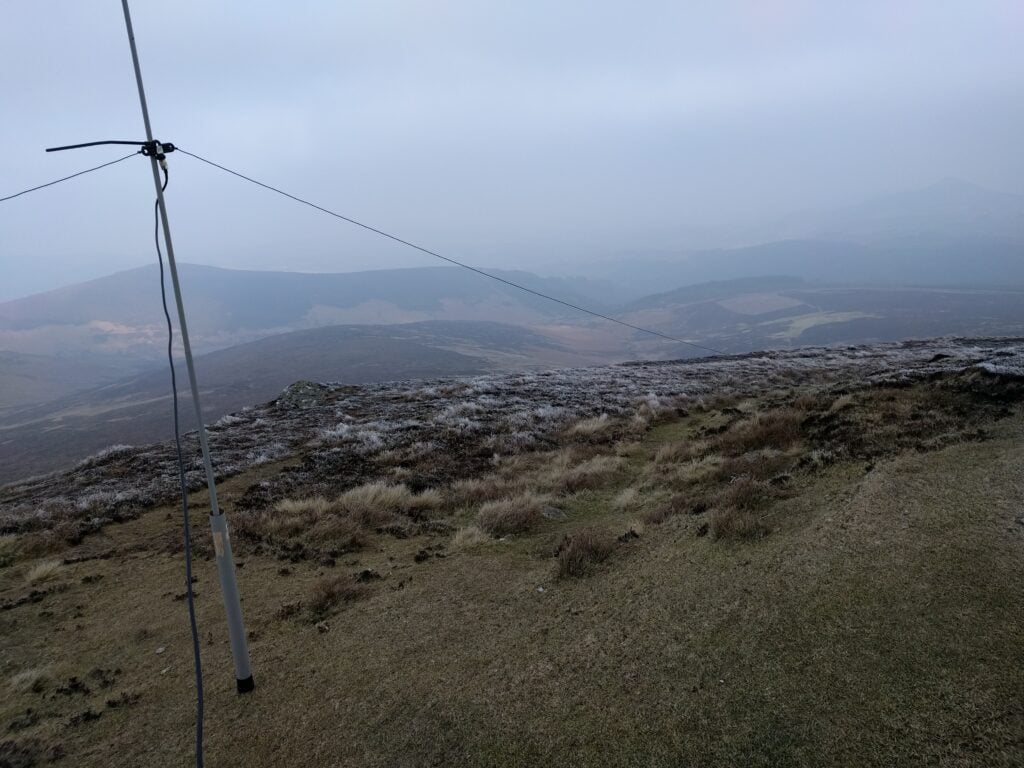
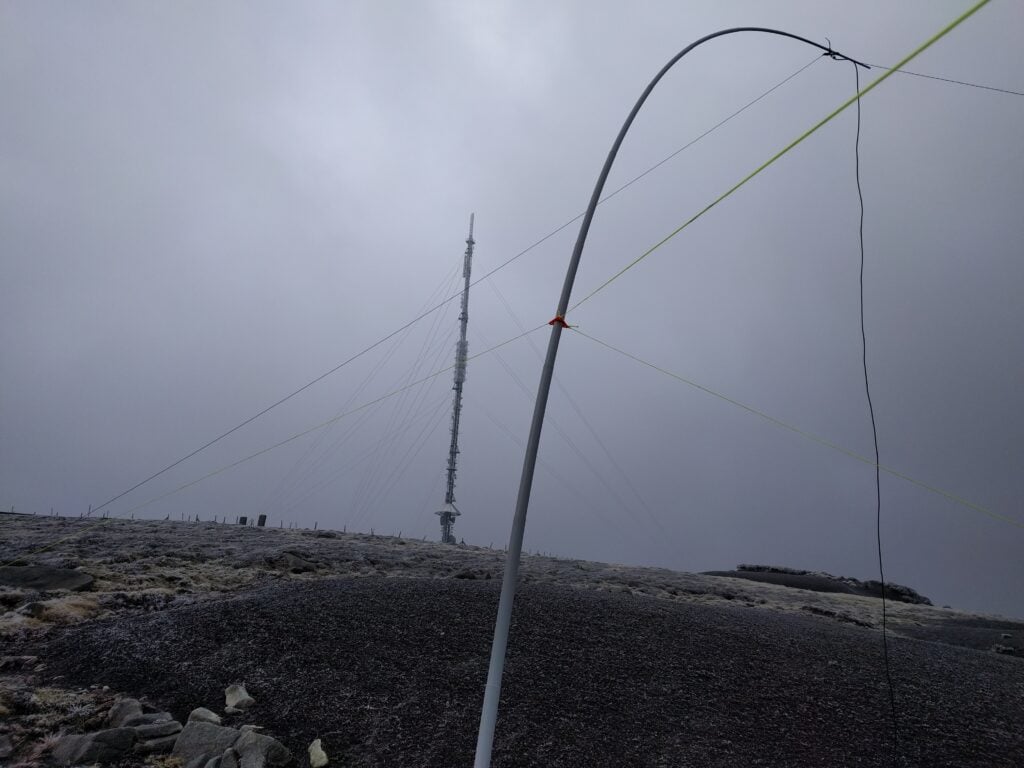
A quick call on 2m didn’t get any callers, so I soon started setting up on 30m. Trying to get the aerial to stay up in the wind was a problem, however, particularly as there were no useful rocks to tie off onto, and the ground was so frozen that I couldn’t get tent pegs into the earth to guy the mast. After about half an hour of faffing, I eventually decided to make do with keeping the SOTA pole low and just using the dipole as guys, me holding the coax as the third guy. This worked enough to get 8 CW QSOs, so comfortably enough for the activation.
Low SOTA pole over the frozen ground of Djouce
The ascent of Djouce took almost exactly an hour, and the descent about 45 minutes.
EI/IE-035 Trooperstown Hill
Although the SOTA scoring is based purely on mountain height, not difficulty of the climb, I’m sure many activators like me have an idea of what a hill ‘should’ feel like for a given points value. The previous three mountains were certainly among the easiest ten pointers I have done (outside Belgium, which is a different story). Trooperstown, however, felt more like the 4 pointer it is.
Trooperstown Hill is only about ten minutes’ drive from Djouce but part of the reason for it being a decent walk is that you start from just 150m ASL in the carpark at O 160969. This means that there are almost 300m to climb.
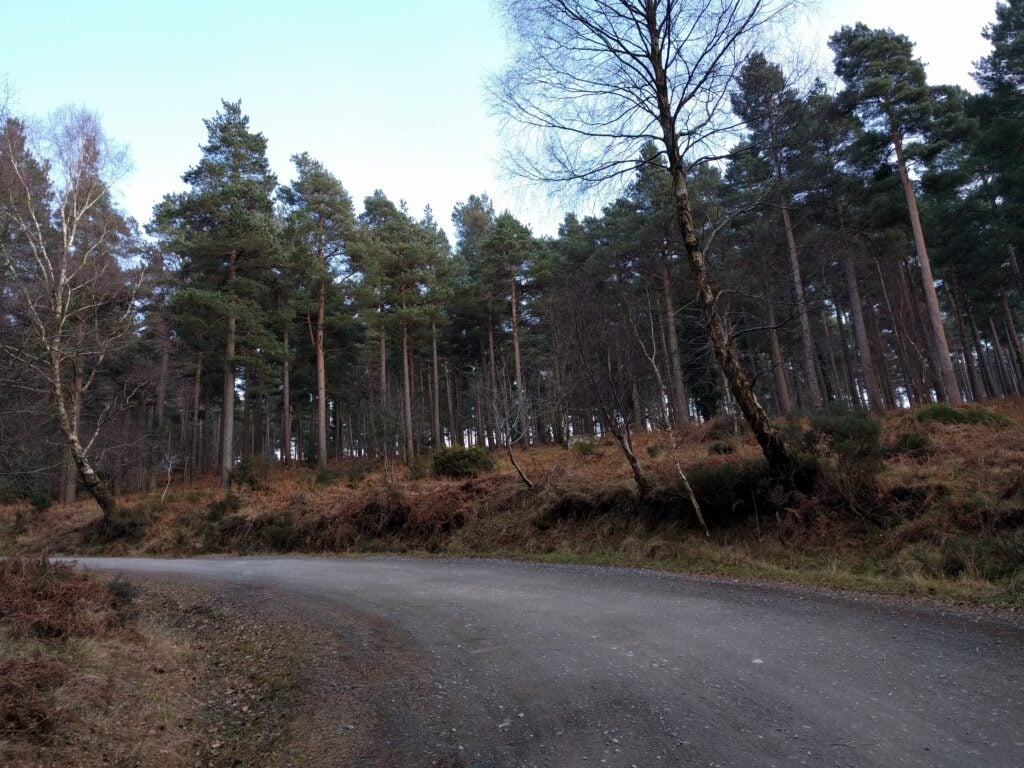
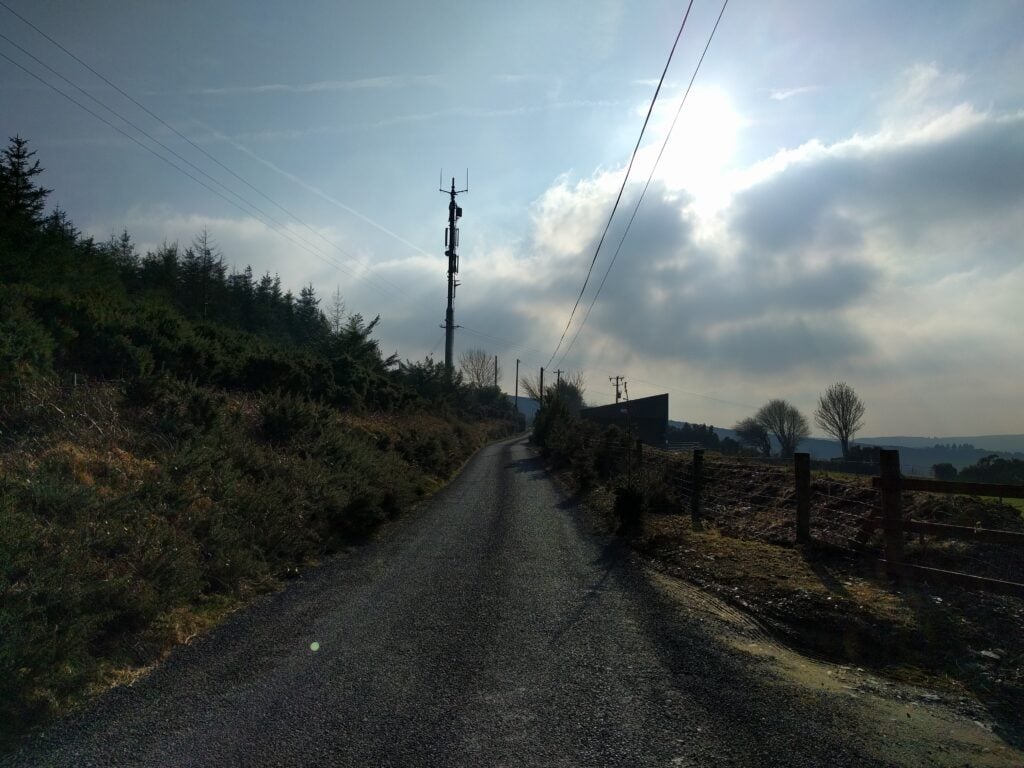
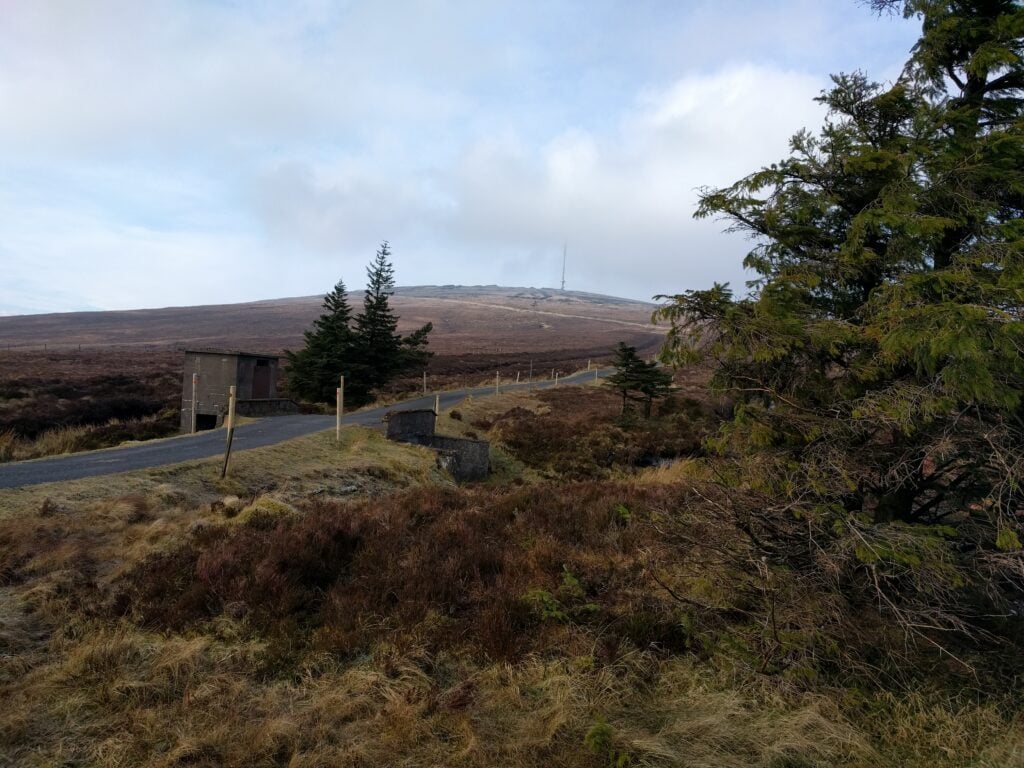
From the carpark, you follow the winding tarmac road through the pine forest. At the t-junction, turn right and head towards the local TV repeater mast.
Road heading through the pine forestFollow the road to the transmitter mast
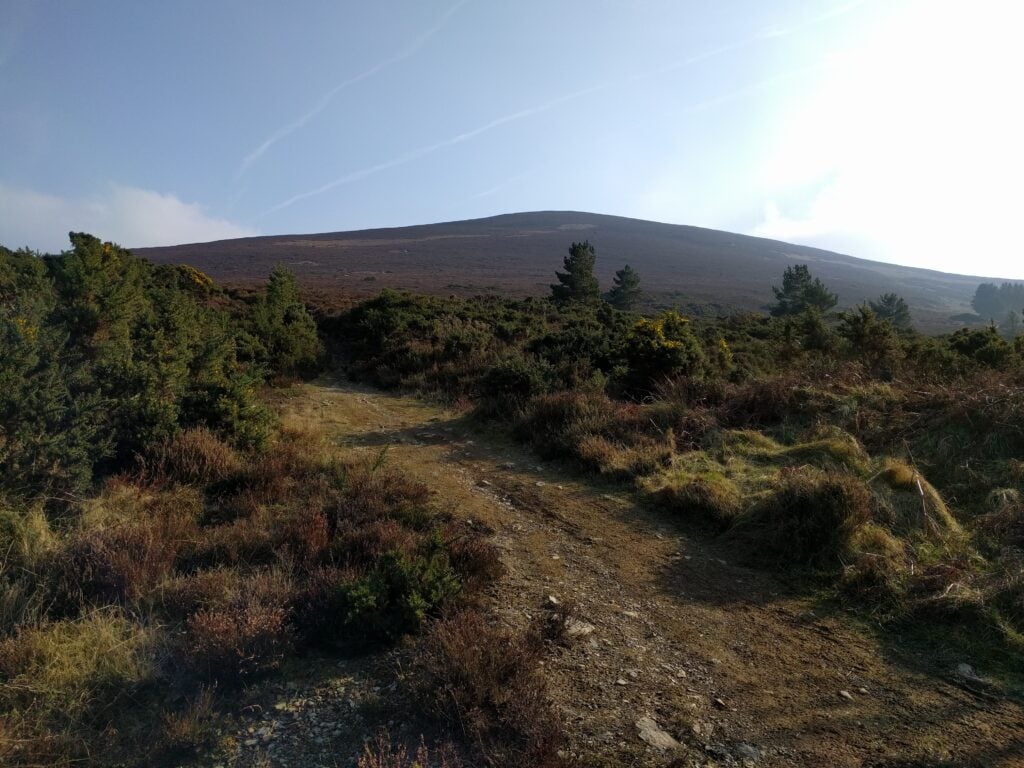
Immediately after the mast, head through the gap in the gorse bushes to get your first view of Trooperstown Hill and the various paths that head to its summit.
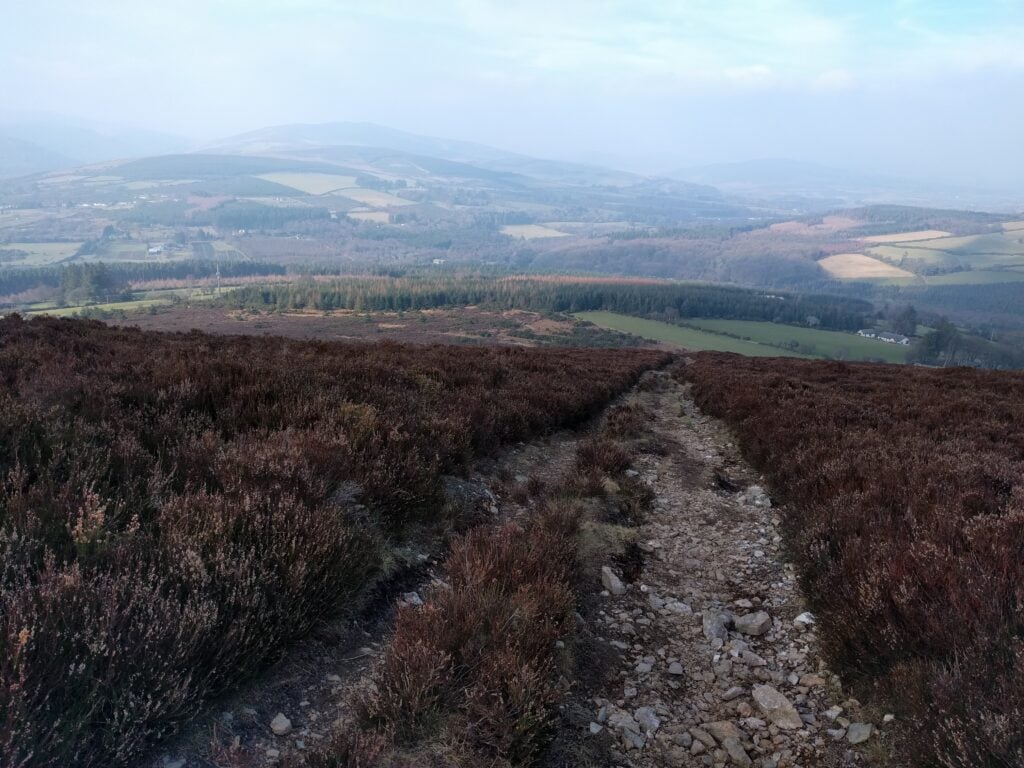
The main path starts off as a gentle grassy path but soon switches to a rather steeper path of loose rocks and stone. The steepness wasn’t impossible, and it certainly isn’t a scramble, but it was enough for me to be glad of my hiking pole on the descent. This continues most of the way to the top.
The lower part of the climb up Trooperstown: gentle grassy pathThe higher part of the path up Trooperstown: steeper, loose stones
The summit itself is quite flat, giving lots of space for operating, and unlike Djouce, I saw nobody at all, either on the walk or during the activation.
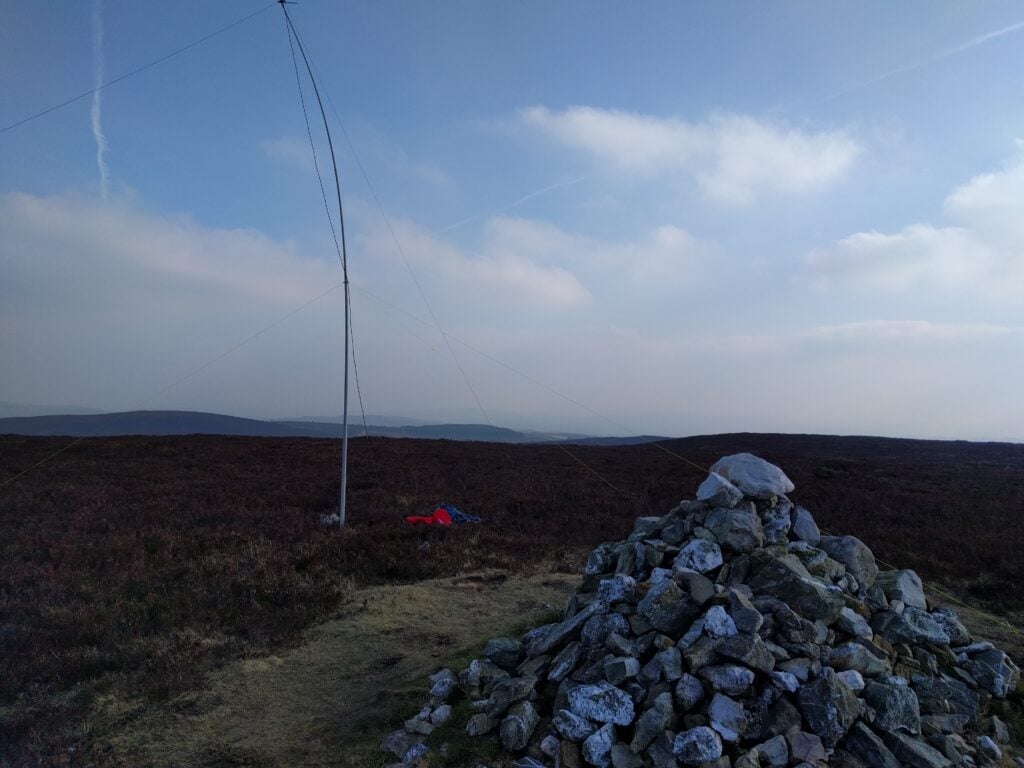
The activation was much more pleasant than Djouce because the wind had dropped unexpectedly, and the sub had started to come out, making this a much more comfortable activation. The lower elevation also meant there was no problem getting the guys into the ground in the heather around the trig point. After one quick QSO with GW0PTP on 2m FM, the other twenty QSOs I made were on 30m CW, including a SOTA-to-SOTA with HB9BIN/P on HB/SO-015.
Operating location on Trooperstown, with antenna behind Cairn
The walk up took about 50 minutes, and the descent about 30 minutes.
All-in-all, this was a very nice little hill to operate from but be aware that in the EI association, four point summits do not get winter bonuses. Only six points and above do.
I’ve taken the day off work today (Friday 23rd February) to come to the Republic of Ireland for a weekend doing Summits On The Air (SOTA).
Of course, walking up hills at this time of year is unreliable in terms of weather. It’s especially a risk if you have to book flights in advance, as I did for this trip. It could have been terribly wet, or the roads could have been impassable. The SOTA award recognises the problems of activating during winter by giving extra points as Winter Bonus points to people who go up mountains.
The Wicklow mountains stand out on the SOTA map, as there are loads of 10 point mountains (the highest) in a small area of each other, making them apparently good options for a run collecting a load of Winter Bonus points. And that’s exactly why I chose these mountains for this trip.
The weather has indeed been the main thing I’ve had to battle on this trip. It has been dry today, but the wind has been biting and relentless. A Southerly is normally a warm direction, but today it is coming down from Siberia, across continental Europe, down the English Channel and is then making a sharp turn to the North over the Republic of Ireland. The resulting wind chill has been down to -8c.
EI/IE-005 Kippure
Having flown into Dublin last night, staying at the Premier Inn at Dublin Airport (which is comfortable enough), I picked up a rental car this morning and headed straight for Kippure. This is one of the nearest 10 pointers to the capital city, and is the site of the main TV transmitter mast for the area. It’s a really easy way to get 10 points. Having driven about 40 minutes from Dublin airport (Note: You’ll need to pay the M50 Toll for the ringroad), you leave you car in the layby, and then walk about 3.5kms up the tarmac access road to the mast. This took about 45 minutes for the ascent and 30 for the descent, much quicker than I had projected.
The access road to Kippure transmitter site
A sign at the bottom of the road warns that you should not approach within 200m of the transmitter mast due to the potential of falling ice. With the weather so cold, I considered this a realistic danger, so as soon as I was within the activation zone, I stopped and set up the station just off the road. The wind made the set up quite slow but I was relieved to hear a call on my 2m handheld from GW4TQE/P and GW4VPX/P on SOTA GW/MW-011 while I was still sorting out the dipole, so that gave me my first two QSOs.
As soon as I was ready on 30m CW, I quickly got a number of callers thanks to the SOTA Reverse Beacon Network gateway (a system that automatically decodes callsigns from Morse Code, checks whether that callsign is expected on a hill soon, and if so, alerts everyone immediately). Ten stations from across Europe were worked on morse code in this way.
My 30m dipole in the shadow of the transmitter mast on Kippure
Given how easy this summit is, I was amazed it had only been activated 15 times before me.
I was back at the car by 12:00, about 2h15 since I had left it, and about an hour earlier than I had expected. It was then a short 20 minute drive to the next mountain, Tonelagee.
One word of warning – when researching this trip, several sources mentioned that car break-ins are common at Kippure, and indeed there was plenty of broken glass in the carpark. I suspected I was OK on such a cold day as nobody in their right mind would have been out, but I would have had more concern about the suitcase in my car on a warmer day.
EI/IE-003 Tonelagee
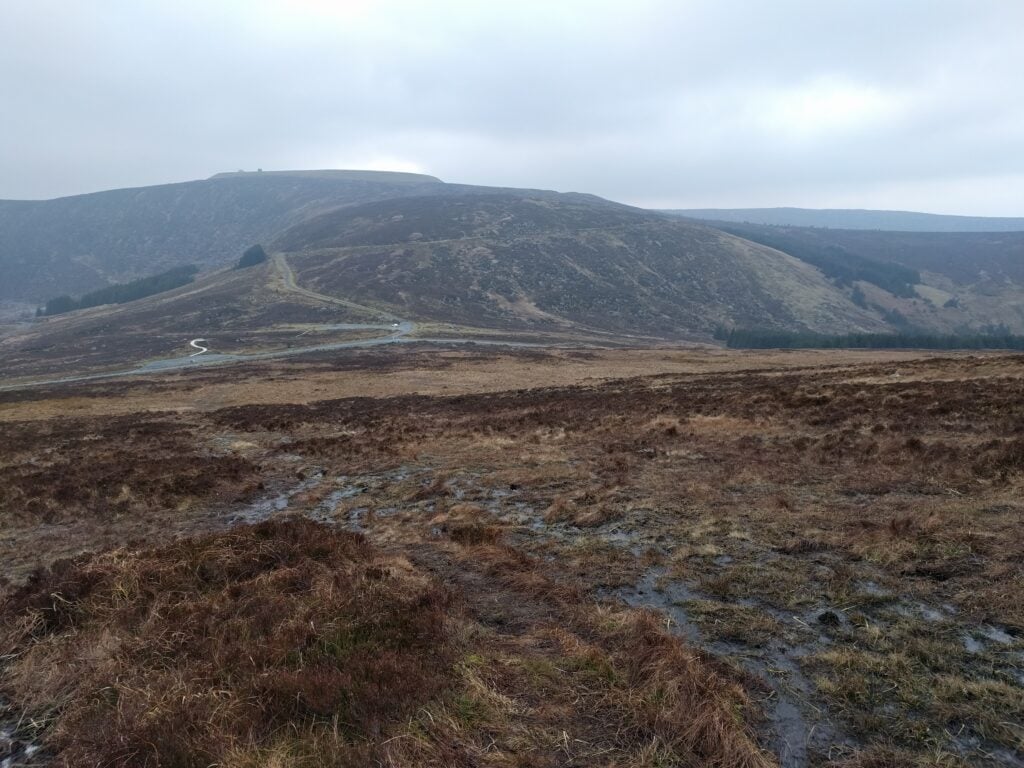
Tonelagee is another easy way to get ten points plus Winter Bonus, but it has barely been activated more than Kippure. Just 20 activations before mine. There’s no tarmac access path this time but it’s one of those hills where you get out of your car in a car park at the bottom and basically head straight up. The path is hard to distinguish in the flatter area around the carpark but you’ll soon pick it up if you head in a straight line. That flatter area is incredibly boggy with heather outcrops, so you do need to watch where you are walking. Even when you start climbing, the boggy conditions continued to about 550m ASL, where the slope becomes a little more pronounced.
The lower part of the ascent of Tonelagee, looking down to the carpark. The path is barely visible and boggy!
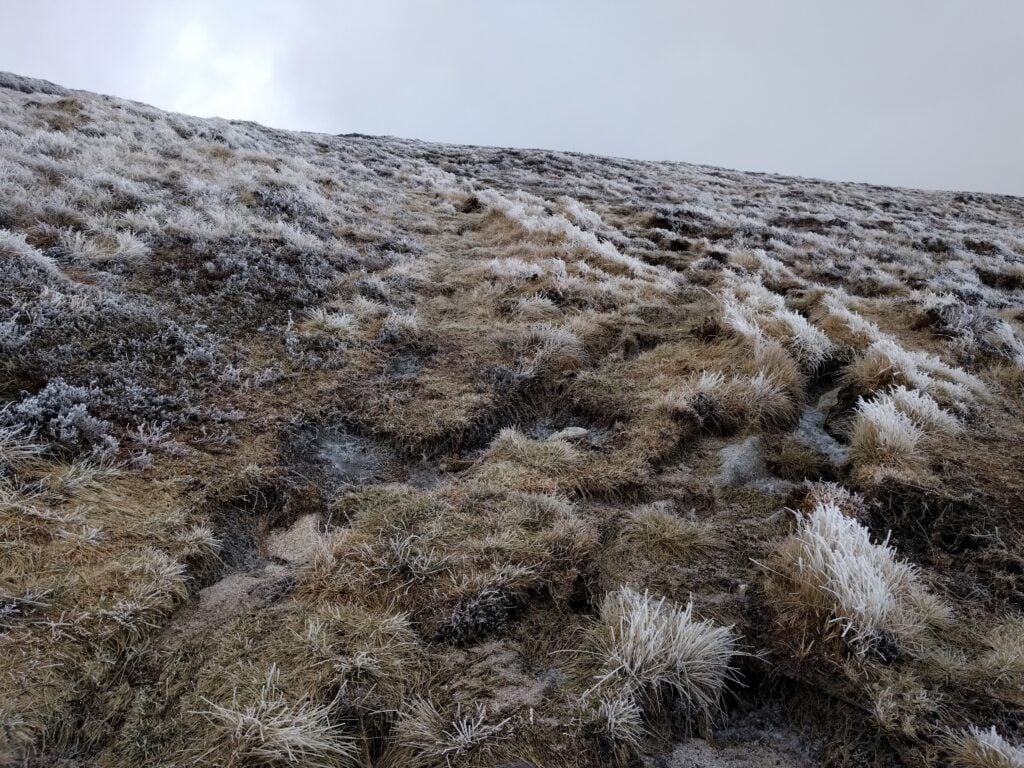
The next 100 metres of climb were pretty pleasant, but around the 700m point, there was a very hard frost on the ground. The walking became harder as it was a mixture of frozen puddles and hard bog. At least the wind was behind me for most of the ascent. It’s worth noting that the carpark is visible below you until you are almost at the summit – something I always find reassuring for navigation.
The hard frost on the ground on the upper part of the ascent of Tonelagee
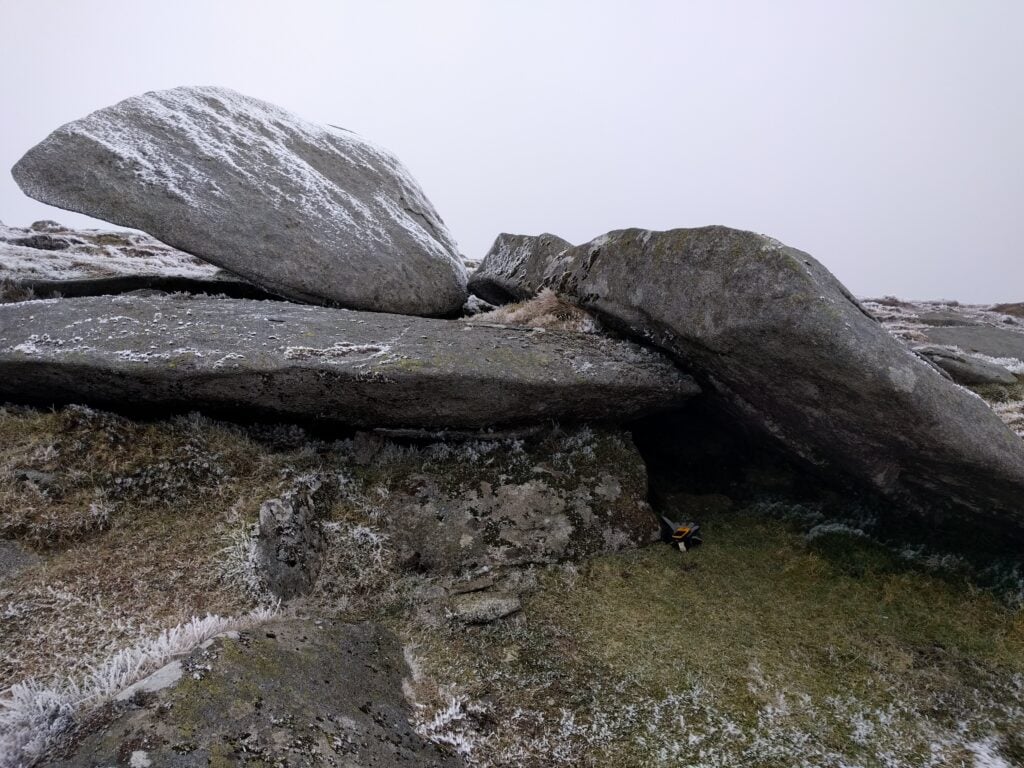
Tonelagee has a pretty flat top, meaning there’s a sizeable activation zone. Although it is mainly barren, I found a useful stone shelter where I set up the station out of the wind. It was actually fairly comfortable when I was crouched down operating behind the stone, but the SOTA pole bent almost at right-angles was a continual reminder that it was not so good beyond my little cave… and that was with the SOTA pole not at full height.
The handy shelter I found on the summit of Tonelagee
I had enough shelter to get nine stations in the log on 30m CW. I did call on 2m FM but didn’t hear any replies (which was lucky, as I would have had to stop crouching behind rocks).
By way of indication as to just how cold it was, my smartphone shut down on the top while taking a photo, presumably with voltage drop (batteries don’t like the cold). As soon as it was back in the relatively warm car, it booted up again with 60% battery remaining. Yet another reason not to rely on mobile phones when hiking.
Again, I did this one much quicker than expected. The walk took a similar amount of time to Kippure – about 45 minutes up and 30 down, meaning I was in the warmth of the car just after 3pm.
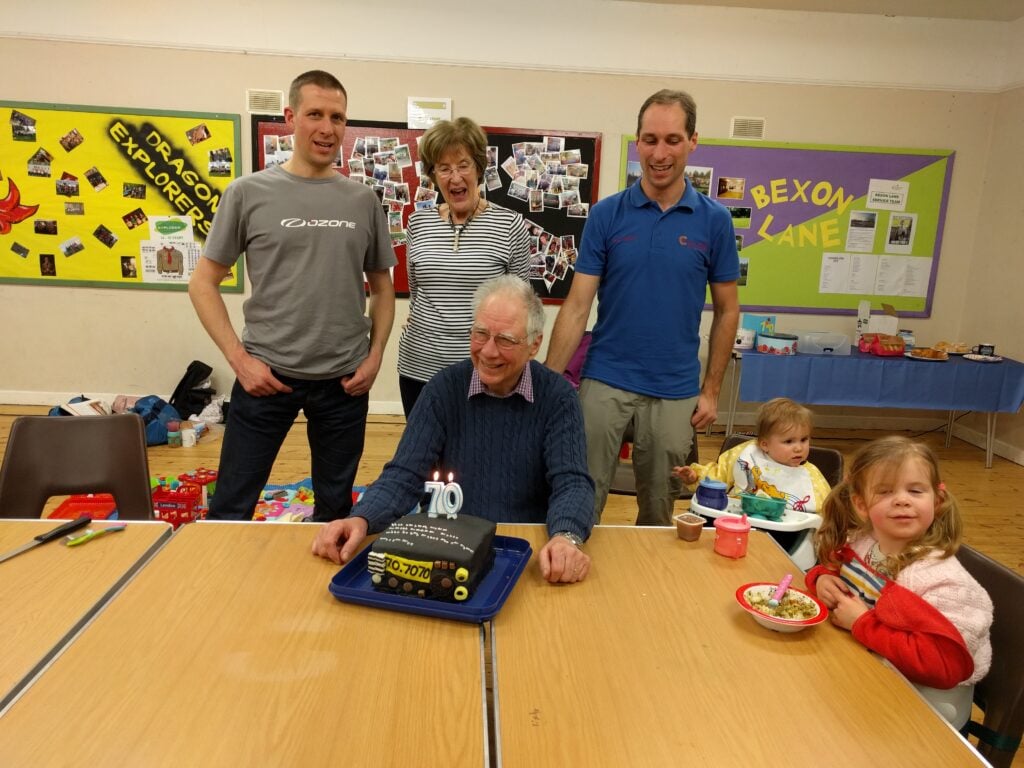
This weekend I was fortunate to be invited to Terry G3VFC’s 70th birthday party with a difference. Planned by his sons Richard 2E1EVK and Rob M0VFC, the object was for a group of us to set up stations in a local Scout hall and to make QSOs with 70 DXCC entities.
G3VFC with his 70th birthday cake
In the end, we didn’t quite manage it – we made a total of 430 QSOs with 55 DXCCs. This was partly due to a noisy location (though a separate RX antenna did help), and also the ARRL DX CW contest, which meant that there was little DX that could be worked on that mode. Conditions were also atrocious, especially on the Saturday.
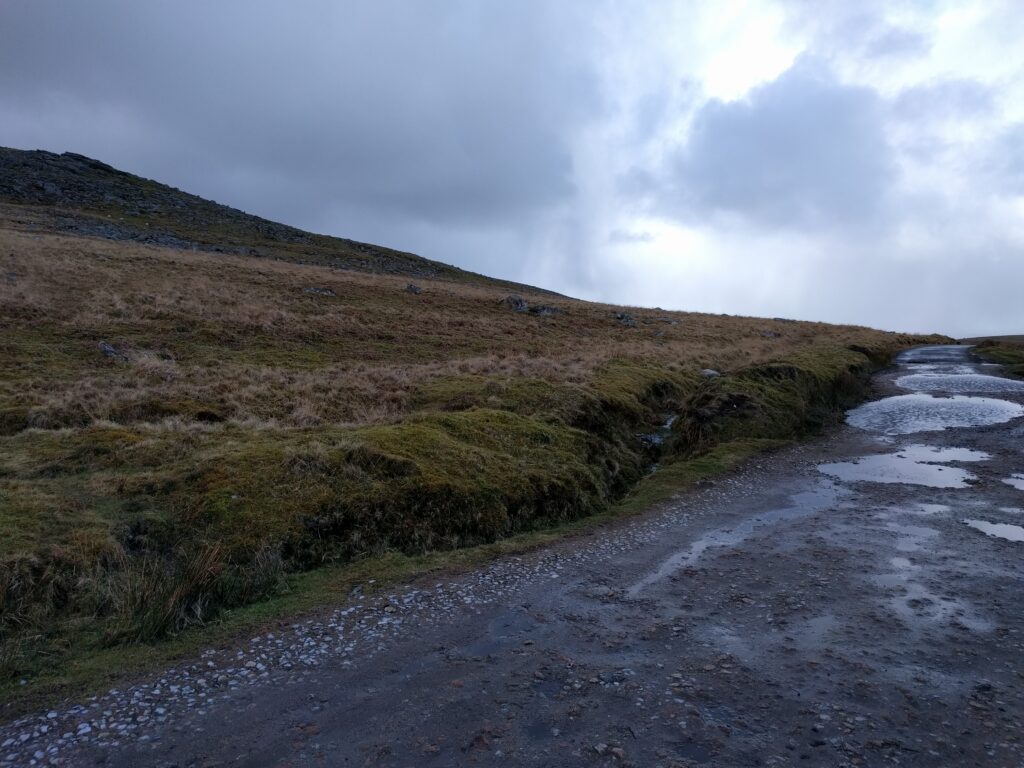
A trip home to visit my parents in Devon gave me the opportunity for my first SOTA activation of 2018: High Willhays, the highest point on Dartmoor. It’s also the only SOTA summit on the moor, as most tors don’t have sufficient prominence to meet the P150 rule.
This is a nice easy way to get four points (plus three winter bonus points at this time of year). Before attempting the hill, however, it’s imperative to check the Dartmoor Firing Notice, since High Willhays is part of the Okehampton Firing Range, so you need to be sure that the army is not using the area for live firing.
For the easiest walk in, the following is my recommended route:
In the centre of Okehampton, turn up Station Road, signposted ‘Camp’.
Continue until you reach the barrier at the perimeter of the military camp at SX592932.
Drive over the cattle grid and immediately turn right (don’t cross the brook), meaning that you end up following the stone wall on your right
Follow the obvious tarmac track until the tarmac runs out and the road surface becomes rough at SX592913. This is as far as private vehicles are permitted.
Park where the tarmac runs out, by West Mill Tor (Looking North)
Leaving the car here, you’ll have West Mill Tor to the south-west, with the path continuing due south. Walk along the path to where the path splits at SX592906.
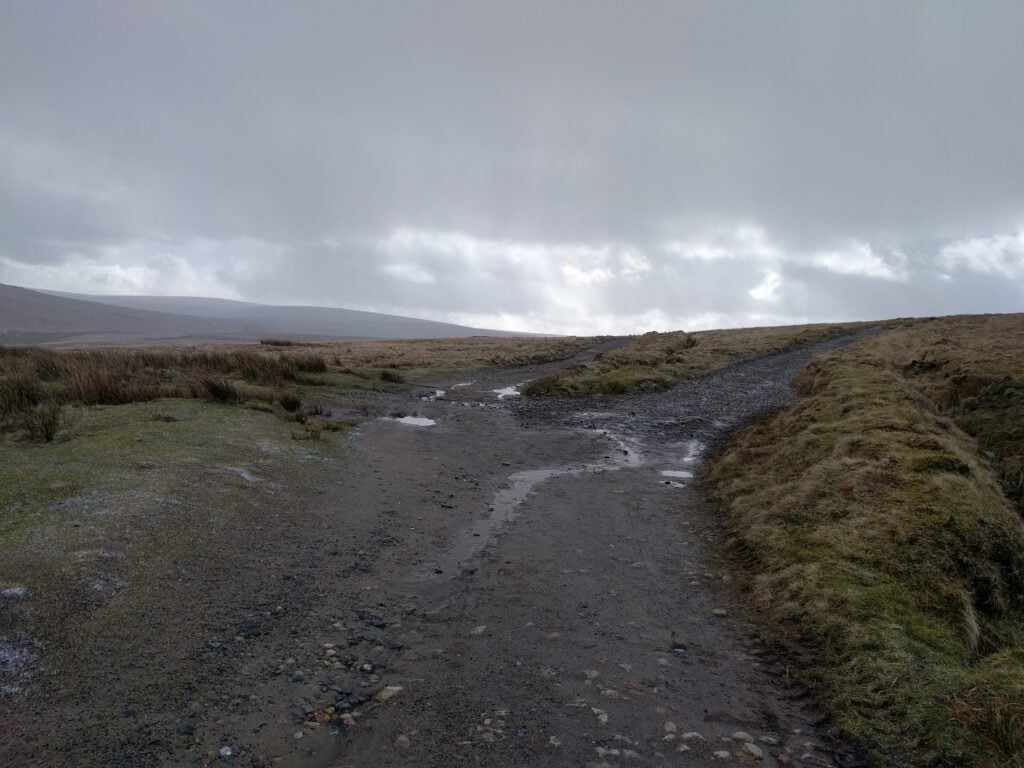
Bear right, heading south-west towards Yes Tor, with the obvious flag pole on top. (If there’s a red flag flying on the pole, turn back; it means there is live firing in the area.)
Bear right where the path splits
The path continues to the ridge half-way between Yes Tor (to the north) and High Willhays (to the south) at SX581899.
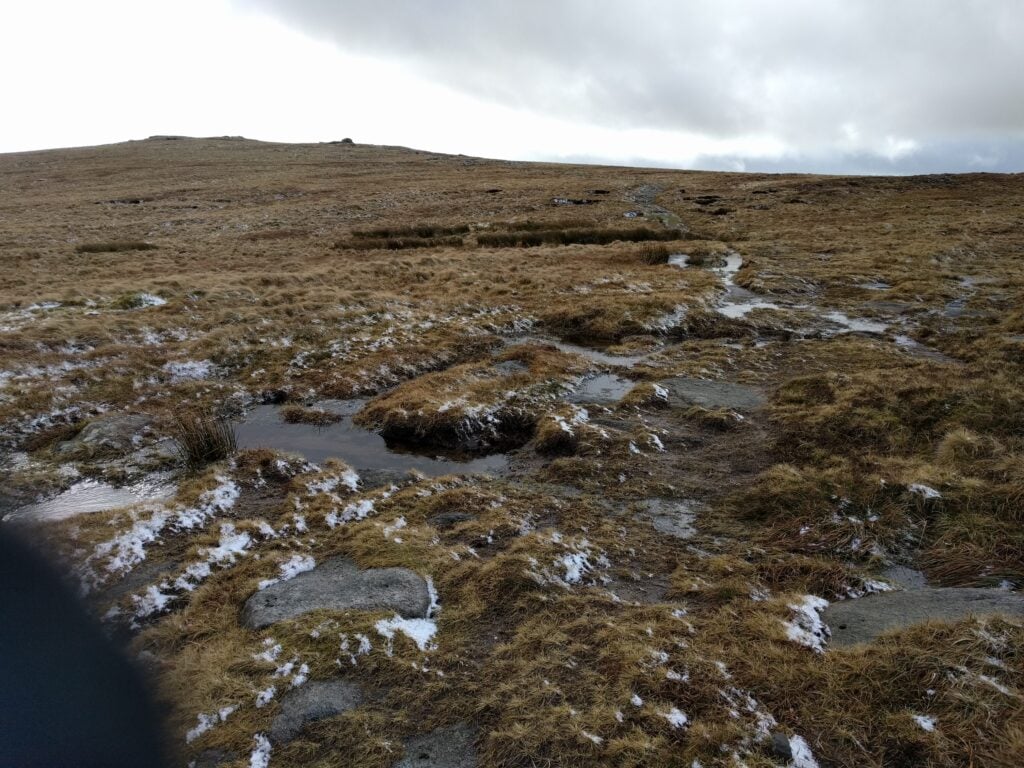
Bear left and take the barely-visible track that heads straight towards High Willhays. Note that this path can be boggy.
Take the path to reach High Willhays on the horizon
You will soon reach High Wilhays (SX580892), about 50 minutes after leaving the car. It’s a fairly unimpressive tor by general Dartmoor standards, and it’s quite flat, giving a sizeable activation zone, so plenty of room to set up HF dipoles.
My activation today was a very quick one, only getting 6 QSOs on 30m CW. There were some very squally showers of sleet, hail and snow grains that were accompanied by some strong gusts. With the bitterly cold winds, and the fact that my parents were with me getting cold, I was keen not to spend more time on the hill than necessary. Sorry to those I missed.
We always aim to have at least five stations on from the Camb-Hams for any of the AFS events, because it’s the top four scores in the team that are counted for the Super-league, and you never know when failure might befall one of the stations.
Today, it was our turn to suffer from equipment problems.. I was operating from Gavin M1BXF’s QTH near Newmarket with Mark M0MJH. All was going well before the start of the contest but just two minutes before the beginning, while checking signals with G3PYE/P, our receiver suddenly became deaf.
The fault was quickly diagnosed as a failure of the masthead pre-amp, which meant that the mast had to come down as the contest was starting. While Gavin concentrated on fault-fixing, Mark and I carried on the contest using a mixture of an X-Quad 9-element satellite antenna (the first time I’ve used right-hand circular polarisation in a contest) and the 2×21 ele stacked yagis, once the pre-amp was off the mast. As you would expect, the lack of pre-amp in the stacked yagis meant that we really struggled to hear the most distant stations. Sorry if you tried to contact us and we couldn’t hear you.
Gavin trying to fix the pre-amp mid-contest
Despite the handicap, however, we finished with an OK score of 57 QSOs. Best DX was MM0CEZ on CW, with only one French station worked, even with the overlap in the British and French contest times.
And with this contest, we’ve reached the end of the AFS Super-league season, which started back in October. So far, it’s looking good overall for the Camb-Hams, but we’ll see what happens in the final results.
Update: Results have now been published and, as expected, we were put in the Camb-Hams B team, which came in 13th place overall. Camb-Hams A came in 2nd place, which was sufficient for Camb-Hams to come first in the AFS Super League for the 2017-18 season.
Once in a while, two Cambridge primary schools, Queen Emma and Queen Edith join together for a day of extra-curricular, but curriculum-linked, activities for their students on a Saturday.
Today, the theme was ‘Spoken Word’ and so Cambridge 105 Radio were invited along to give the pupils an experience of being on the radio. So, we took our Outside Broadcast van, Flossie, along to the school for a very unusual event.
The basic principle of what we did with each child was simple: a one-minute talk-up, formed of general conversation, to ensure the children weren’t too nervous. This was followed by a real news story to read for the older children. For younger children, they could read the weather forecast or, for those who weren’t of a reading age, they were allowed to make up the weather forecast. Finally, they were allowed to choose a song they would want played after the news.
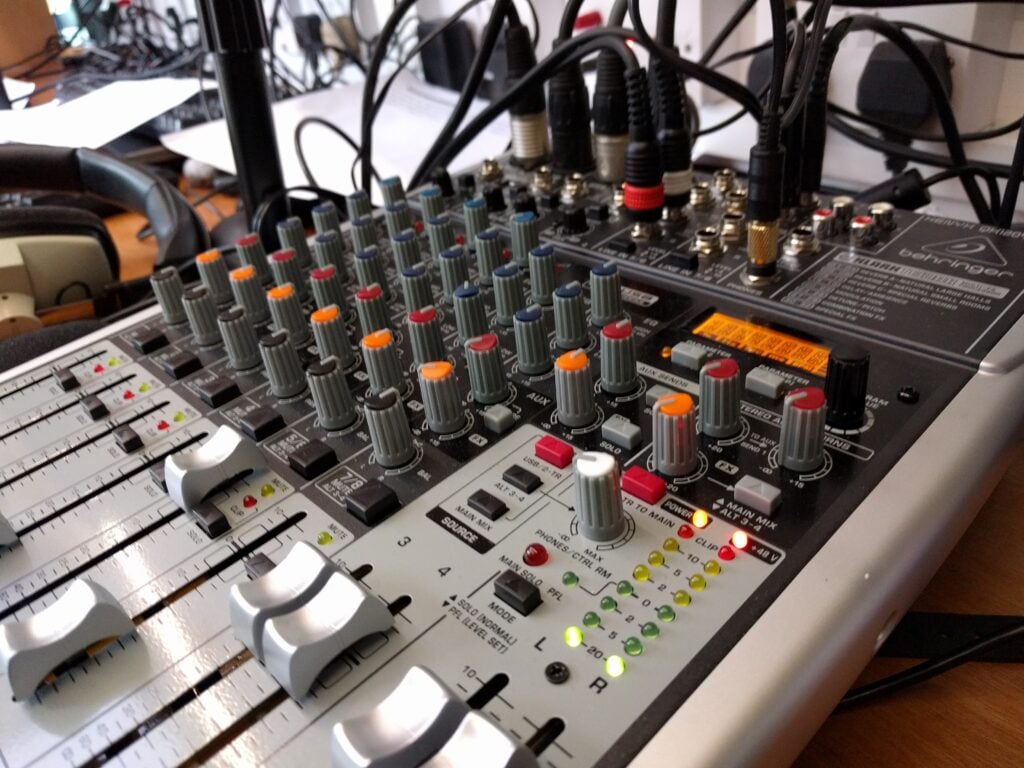
Mixing desk in the Outside Broadcast van
While none of this was broadcast live on-air, it was all recorded, and we are making the recordings available to the schools for distribution. We have also created a short ‘package’ of the material, which is scheduled for broadcast on Monday at about 4:30pm. The entire thing was, however, ‘broadcast’ in the playground over a set of PA speakers, so that friends and family could hear.
The objective was to demonstrate that reading from a script with little preparation time is surprisingly hard, and so the TV news readers they might see are actually doing a difficult job. I must say that the children, even the youngest ones, did a great job and despite some complex words in the scripts, the quality of the ‘reads’ was very high.
While there, we were also given a 30 minute slot to give a short presentation to the children about how radio works, and how you make a radio station. Naturally given the age range of the target audience, we were limited in the detail we could go into, but we were able to cover the basic principles of the electromagnetic spectrum, Morse Code, AM radio, programme scheduling, and the need to put aerials somewhere high.
Our thanks to the schools for inviting us for a very fun event. It seemed to go down very well with the pupils too, with at times a decent queue outside the van, despite the chilly weather. We were also pleased to hear that many children were leaving us excited about the opportunity we’d been able to give them .